

Sharp Adjustments and Fiscal Interventions
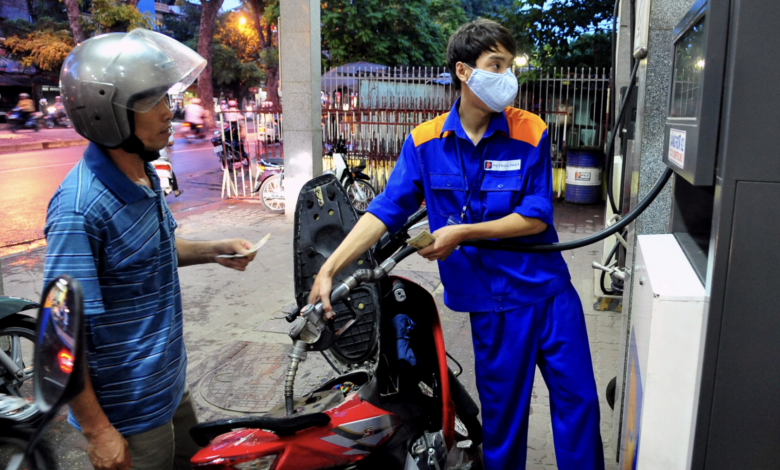
The pressure on Bac’s business is part of a broader trend of consecutive price hikes in Vietnam’s energy sector. Starting at 3 p.m. on September 17, retail prices were adjusted sharply upward, with increases generally exceeding 1,000 dong per liter. E5 RON 92 bio-gasoline rose by 1,395 dong to 25,139 dong per liter, while E10 RON 95-III increased by 1,397 dong to 25,636 dong. Diesel recorded the highest increase in this cycle, jumping 1,460 dong to a cap of 29,945 dong per liter. Following a subsequent adjustment on September 24, E5 RON 92 reached approximately $1.02 per liter, and diesel hit $1.17 per liter. These levels mark the highest points for these products since mid-May.
These domestic increases mirror a sharp rise in global refined petroleum product prices. Data from Vietnam’s Ministry of Industry and Trade indicates that RON 95 gasoline rose by 10.64% to $146.20 per barrel, while diesel climbed 13.42% to $182.60 per barrel. The surge is attributed to a confluence of geopolitical and operational factors. Supplies through key maritime routes, including the Strait of Hormuz, remain partially disrupted, while tensions in the Red Sea have intensified following Houthi attacks on Saudi Arabian oil facilities and pipelines. Additionally, a period of widespread maintenance at refineries worldwide has tightened the global supply of refined products, compounding the price pressure.
To mitigate the impact on consumers and industries, the Vietnamese government has intervened through the Fuel Price Stabilization Fund. In the September 17 adjustment, contributions to the fund were suspended, and instead, the fund was drawn down significantly to curb retail price hikes. Disbursements included 1,250 dong per liter for bio-gasoline and a substantial 2,000 dong per liter for diesel. Without this fiscal cushion, announced retail prices would have been markedly higher. The government has also extended preferential import taxes and environmental protection tax reductions until September 30, 2026, to provide temporary relief from the cost of energy imports.
Inflationary Pressures and Structural Reform
The energy price surge is feeding directly into Vietnam’s broader inflation figures. The Statistics Office reported that the consumer price index (CPI) rose 0.47% in August, with transportation prices surging 4.09% month-on-month. This increase was driven largely by a 22.15% rise in the diesel price index and a 9.53% increase in gasoline prices. For the first eight months of 2026, the average CPI has risen 4.45% compared to the same period in 2025, with housing, utilities, and fuel recording the largest increase at 6.71%.

As fuel costs climb, the government is simultaneously restructuring the petroleum trading system to enhance efficiency and accountability. At a meeting on September 11, Prime Minister Le Minh Hung directed the Ministry of Industry and Trade to redesign the distribution network, aiming to reduce intermediary layers and separate supply sourcing from retail functions. The current system, which includes 33 petroleum wholesalers and 250 fuel distributors, has seen a significant reduction in distributors from approximately 330 in 2023, as many companies have voluntarily returned or had their certificates revoked following inspections. The reform seeks to address “circular trading,” a practice where fuel is bought and sold repeatedly among traders, artificially inflating costs and complicating responsibility during supply shortages.
While the government utilizes tax exemptions and fund disbursements to manage the immediate price shock, the underlying drivers of global energy volatility remain unresolved. The combination of geopolitical conflict, refinery maintenance, and a tightening distribution network creates a complex environment for both producers and consumers. For businesses like Loc Phat BLLT, the margin for error narrows with each price adjustment, raising questions about the sustainability of current production levels if global energy prices remain elevated through the end of the year.