

This surge in public dissent is not an isolated incident but the culmination of a decade-long shift in how European destinations are being consumed. The protests echo warnings issued as far back as 2013 by Noel Josephides, the longstanding chairman of the UK-based tour operator Sunvil and a former chairman of major UK travel industry bodies. Speaking at the ABTA annual convention in Dubrovnik, Josephides identified a “perfect storm” forming: the simultaneous expansion of budget airlines and the proliferation of short-term rental platforms. This combination, he argued, would drive down prices and create vast new vacation capacity, ushering in an era of large-scale budget travel that would overwhelm local infrastructure. Although Josephides operated in direct competition with the very models he criticized, he now aligns himself with the protestors, acknowledging that the situation has reached a critical threshold. “I told you so,” he reflects. “It’s out of control.”
The environmental and social impact of this shift is most palpable in the daily lives of those who call these historic centers home. Maite Domingo Alegre, an associate professor at Universitat Pompeu Fabra in Barcelona, lives near the city’s cathedral and works close to Las Ramblas. For her, the transformation has been dramatic. “We’ve always had tourism, and mass tourism, but over the last 10 to 15 years this has changed dramatically,” she says. The seasonality that once allowed cities to breathe is gone; tourism is now a 365-day-a-year phenomenon, with visitor numbers frequently exceeding the local population. The sensory landscape of the city has been altered, with the noise of mass tourism drowning out the ambient sounds of daily life. Domingo Alegre recalls walking the streets near Las Ramblas during the pandemic lockdowns of 2020, a period she describes as a “halcyon glow.” “I remember… hearing birds singing and church bells,” she says. “I’d never realized the bells tolled. But I never get to hear them anymore.”
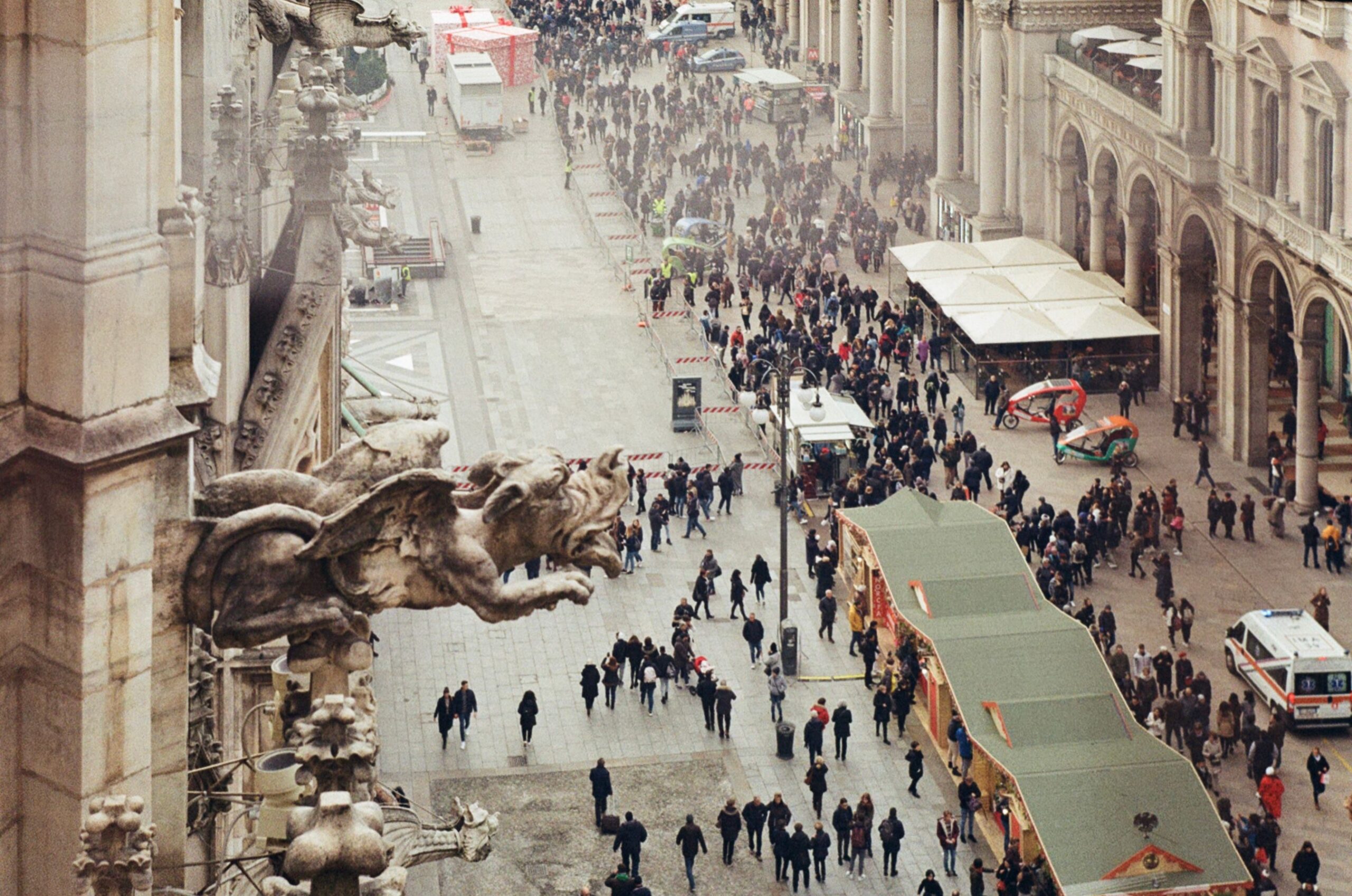
The current crisis emerged from a brief window of hope. During the global travel restrictions of 2020, many European destinations vowed to reinvent their tourism models to be more sustainable and community-focused. However, once restrictions were lifted, the phenomenon of “revenge travel” quickly reverted to pre-pandemic patterns, often with greater intensity. The result is a housing crisis and a spike in the cost of living that has made city centers increasingly unlivable for locals. The protests, which include disruptions to high-profile events such as a billionaire’s wedding in Venice and a staff mutiny at the Louvre over overcrowding, signal that the social contract between visitors and hosts is fraying.
The disconnect between the industry’s growth and local resilience is stark. While the tourism sector continues to expand, relying on the capacity provided by budget carriers and digital rental platforms, the communities hosting these visitors are facing consequences that were foreseen but not addressed. The unrest is no longer limited to niche conservation concerns; it has become a broad-based demand for fundamental changes in how these cities manage their resources and populations. As the summer season continues, the presence of these protests in the heart of Europe’s most iconic destinations suggests that the era of unchecked mass tourism is facing its most significant challenge yet.