The interim figures indicate that the ANC is lagging behind rival parties in several of the country’s most significant economic hubs, including Johannesburg, Tshwane, and eThekwini. In the hotly contested City of Johannesburg, the Democratic Alliance (DA) emerged as the leading party, though early results suggest that no single party will secure an outright majority. This outcome mirrors the broader national trend, where analysts estimate that approximately 100 of South Africa’s 213 municipalities may now return “hung” councils—meaning no single party controls more than 50% of the seats. In the 2021 elections, 66 municipalities were hung; the current trajectory suggests that coalition politics is now the norm rather than the exception.
The ANC’s decline is not a sudden break from recent history but the culmination of a steady erosion of support since the country’s first democratic elections in 1994. The party, which has dominated South African politics for three decades, currently governs at the national level through a Government of National Unity, a coalition formed with the DA and smaller parties after the 2024 elections. At the local level, the interim results suggest this fragmentation is extending to municipal governance, where parties will be forced to negotiate partnerships to deliver basic services such as water, road maintenance, and waste removal.

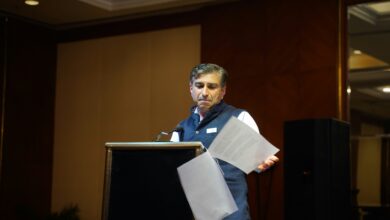
Mahlengi Bhengu, an ANC spokesperson, acknowledged the severity of the results on Friday. “We are conscious of the message that our voters, especially our historical voters, are conveying to us,” Bhengu said. “And we are going to have a serious, honest and deep reflection about how to rebuild the confidence between ourselves and the people of South Africa.” The party’s performance in the metros is particularly concerning; in Tshwane and eThekwini, the ANC failed to maintain its historical dominance, ceding ground to the DA and other emerging political forces.
Reaction from the opposition has focused on the mechanics of coalition building. Geordin Hill-Lewis, leader of the DA, stated that while his party was leading in key cities, it would not commit to specific coalition partners prematurely. “It is premature for me to commit to any one of the parties for coalitions, but they are very seriously under discussion,” Hill-Lewis said, emphasizing a case-by-case approach to forming municipal governments. The DA, which has traditionally governed Cape Town and other metros with outright majorities, is now navigating a more complex environment. In Cape Town, the DA’s stronghold, the question remains whether the party can retain its majority, a threshold it has held for 15 years. While the DA’s vote share declined by roughly eight points between 2016 and 2021, the 2026 results suggest it remains the strongest opposition force, though its path to power in many cities will now require negotiation.
The accuracy of pre-election forecasting has also been a point of discussion. Ipsos, a major polling firm in South Africa, released forecasts on August 1, 2026, predicting an ANC vote share of 54%, a DA share of 26%, and an Economic Freedom Fighters (EFF) share of 8%. These figures, which were part of studies conducted in partnership with eNCA, differed significantly from the interim results released on Friday. Ipsos officials, including Country Manager Nick Coates, expressed satisfaction that their broader metro-level predictions—such as the DA’s strength in Nelson Mandela Bay and the close contest in Johannesburg—aligned with the emerging reality, even as the national projection for the ANC proved overly optimistic. Coates noted, “It speaks to the thoroughness and accuracy of our research and fieldwork operations,” while acknowledging the complexity of local voting patterns.
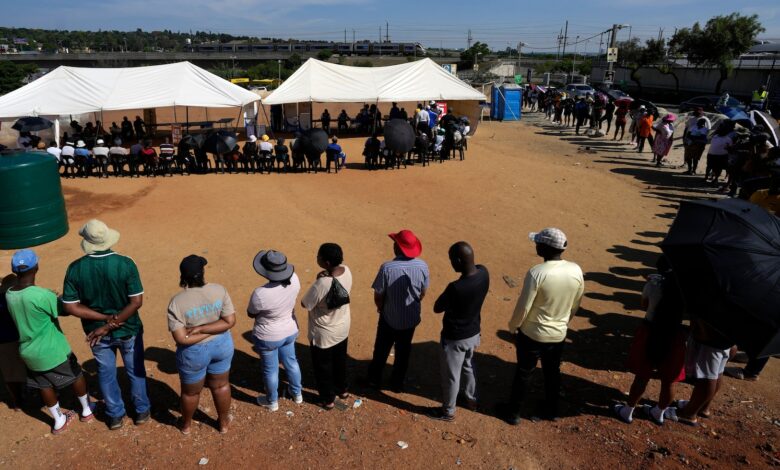
As the counting progresses, the Electoral Commission of South Africa (IEC) is managing a wave of procedural challenges. IEC Chairperson Mosotho Moepya reported that the commission had received 197 objections by 3 pm on Friday, with 54 dismissed, 8 withdrawn, and 2 upheld. The IEC has ordered recounts in five specific wards: wards 97 and 192 in Tshwane, and wards 4, 12, and 19 in Mangaung. Moepya warned that the provisional results and seat allocations remain subject to change until all objections are determined. “Results remain provisional until all objections have been determined by the commission,” Moepya stated, explaining that the IEC can amend results either before or after the official declaration if unlawful conduct or irregularities are found to be serious enough to warrant intervention by the Electoral Court.
The final declaration of results is scheduled for Sunday. The political stakes extend beyond municipal control; the composition of these local governments will influence the balance of power in national coalition dynamics. If the ANC’s decline is confirmed in the final tallies, it will further weaken its leverage in the Government of National Unity, potentially emboldening the DA and smaller parties to demand greater concessions in future policy negotiations. For South African voters, the immediate consequence is a period of intense coalition bargaining in local councils, where the delivery of basic services may depend on the stability of these newly forged political partnerships.