Under the terms of the agreement, equinor will supply roughly 0.9 billion cubic meters (bcm) of natural gas annually. While the specific commercial pricing terms were not disclosed, the structure of the deal highlights a growing market segmentation where buyers pay not just for the commodity, but for documented upstream emissions data. Equinor will transfer verified environmental attributes to Eneco via the Attributes SA digital platform. According to the companies, the gas supplied under this contract carries a greenhouse gas footprint 11.8% lower than the average gas delivered through the Dutch grid, primarily due to the relatively low emissions associated with production and pipeline transport from the Norwegian continental shelf.
This contractual stability arrives at a critical juncture for European energy markets, where spot prices are experiencing significant volatility. Goldman Sachs Research has issued a stark warning that European gas prices could exceed €100 per megawatt-hour (MWh) in December if export flows through the Strait of Hormuz do not improve. As of September 21, European LNG prices stood at €73/MWh, marking a 70% increase since July. The bank’s analysts expect the quarterly average for the fourth quarter of 2026 to remain at €70/MWh, well above the pre-summer range of €30–€60/MWh.
The primary driver of this price pressure is the severe disruption to liquefied natural gas (LNG) exports from the Persian Gulf. Following the outbreak of conflict between Iran and the US and Israel in February 2026, exports from the region have plummeted to an estimated 15%–25% of pre-war levels. Samantha Dart, co-head of Global Commodities Research at Goldman Sachs, noted that in the absence of improved flows through the Strait of Hormuz, European prices must rise to outcompete other global importers for available LNG volumes. “If others stop buying, there is more left to come to Europe,” Dart explained, adding that the steep price increase has already begun to suppress demand in other regions, with LNG purchases declining in August in both Asia and South America.
For Eneco, the long-term contract serves a dual purpose: it secures reliable supply for its residential and small-business customers while supporting the company’s strategy of expanding sustainable energy solutions. Selina Thurer, Board Member Customers at Eneco, stated that the agreement enables the company to supply all its Dutch customers with Norwegian gas, providing a hedge against the volatile spot market. Helle Østergaard Kristiansen, Equinor’s senior vice president for Gas & Power, emphasized the value European companies place on the reliability and comparatively low emissions footprint of Norwegian gas, noting that the inclusion of verified environmental attributes in all three of their agreements this year reflects a broader industry trend.
The interplay between these two developments highlights the current state of the European energy market: a tension between the need for physical supply security and the rising cost of energy in a constrained global LNG market. While the Equinor-Eneco deal provides a fixed, lower-emission supply line, it does not alter the broader macroeconomic forces driving spot prices. The contracted volume of 9 TWh is not necessarily additional production but rather a reallocation of existing Norwegian pipeline gas to a specific buyer. Consequently, while the deal may provide indirect support to European supply security by locking in demand for Norwegian volumes, it is unlikely to trigger a major shift in broader market prices, which remain driven by the balance of global LNG supply and the geopolitical status of the Strait of Hormuz.
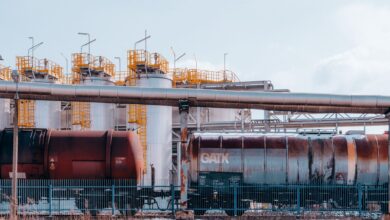
Natural gas remains a critical feedstock for energy-intensive chemicals such as ammonia, urea, and methanol. Reliable supply from the Equinor-Eneco agreement could help moderate production-cost volatility for these sectors, potentially easing upward pressure on related commodities. However, any immediate price movement in chemical markets cannot be established from this agreement alone, as effects will continue to depend on regional gas benchmarks, overall demand, inventories, and competing supply sources.
Looking ahead, the sustainability of European gas prices will hinge on the trajectory of Middle Eastern exports. Goldman Sachs analysts suggest that if Persian Gulf LNG exports can gradually improve over the course of the winter and normalize by early next year, the current price rally may be sufficient to balance the market. However, without such an improvement, the risk of prices spiking above the €100/MWh threshold remains significant, underscoring the importance of long-term contracts like the one signed by Equinor and Eneco in mitigating exposure to spot market volatility.