Geographic Expansion and Transmission Dynamics
Transmission remains intense across the eastern DRC, although the burden is unevenly distributed. Ituri province remains the epicenter, accounting for 6,480 confirmed cases and 2,989 deaths. North Kivu follows with 1,755 cases and 1,013 deaths, maintaining the highest provincial case fatality ratio at 57.7%. Other affected provinces include Haut-Uélé, Tshopo, Bas-Uélé, South Kivu, and Sud-Ubangi.
In the most recent epidemiological update, the outbreak expanded to the Alimbongo health zone in North Kivu, adding to the geographic footprint of the crisis. Over the past three completed epidemiological weeks, new weekly cases nationwide increased by 2.5%, rising from 475 to 487. However, new weekly deaths have remained stable, with 224 reported in the latest period compared to 222 in the previous one. In the 24 hours leading up to October 6, 62 new cases were reported, with Ituri and North Kivu accounting for the majority of these new infections.

Operational Challenges and Mortality Patterns
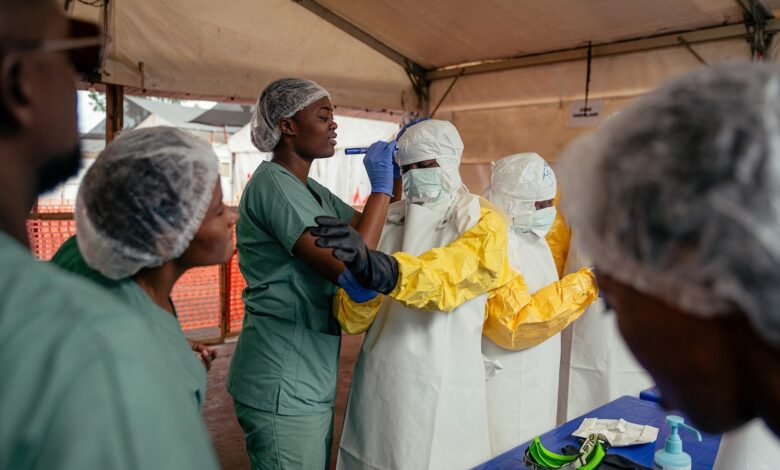
A persistent concern among public health officials is the high number of deaths occurring outside of medical facilities. Since the last major report, 264 of the 372 reported deaths occurred in communities, while only 108 took place in treatment centers. This pattern suggests significant delays in identifying illness and accessing appropriate care, a factor that complicates both treatment outcomes and containment strategies.
Contact tracing, a cornerstone of outbreak response, has struggled to meet operational targets. Coverage fluctuated in recent weeks, falling to 74.7% by September 25 before improving to 80.4% by October 4. As of that date, 23,741 of 29,535 identified contacts had been reached. The World Health Organization (WHO) has noted that the response is “catching up” but remains behind the pace of the outbreak. Dr. Tedros Adhanom Ghebreyesus, Director-General of the WHO, stated during a press briefing that while the outbreak had a “big head start,” authorities are working to close the gap in surveillance and case management.
International Spread and Case Management
The outbreak has spilled across borders, prompting public health responses in neighboring countries. On October 5, Kenya reported a laboratory-confirmed imported case of Bundibugyo virus disease. The patient, who had traveled from the DRC to Kenya via Uganda, was hospitalized and subsequently died. Public health measures, including contact tracing, were initiated in both Kenya and Uganda. Additionally, the Netherlands reported the medical evacuation of a healthcare worker who tested positive for the virus in the DRC on October 1; this individual is currently undergoing treatment in the Netherlands.

Earlier in the outbreak, health officials confirmed 363 cases and 62 deaths in the DRC and 15 cases in Uganda, highlighting the initial rapid spread. While the WHO has ruled out hundreds of suspected cases after investigation, public health specialists caution that data remains incomplete. The clarity of transmission chains and the true percentage of exposed individuals who develop the disease remain areas of active investigation.
The current situation underscores the difficulty of managing a large-scale viral outbreak in a region with limited healthcare infrastructure. With the crude case fatality ratio remaining high and transmission continuing across multiple provinces, the focus remains on accelerating contact tracing, improving access to treatment centers, and preventing further international spread.