
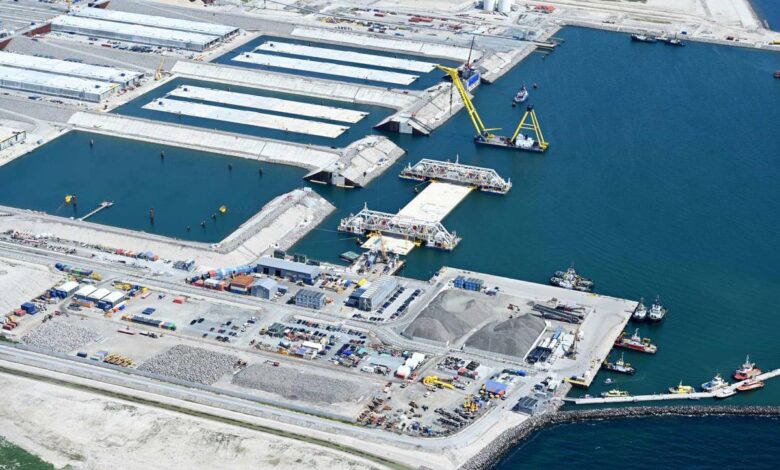
The Fehmarnbelt tunnel is a critical piece of infrastructure intended to connect the Danish island of Fehmarn with the German mainland, facilitating both road and rail transport across the Fehmarn Belt. As a major cross-border project, its progress is monitored closely by both nations. The recent cyberattack highlighted the growing vulnerability of large-scale industrial and construction sites to digital threats, where the integrity of IT systems is inextricably linked to the physical progress of the build.
Matthias Laubenstein, the Contract Director for the Fehmarnbelt project, confirmed that work had restarted in specific sectors despite the ongoing digital disturbances. “The offshore tests with our immersion pontoon IVY are being carried out this week,” Laubenstein stated. This development is significant because it indicates that preparations for the immersion of the first special element—a core phase of the tunnel’s underwater construction—are continuing to progress. The immersion of these elements requires precise coordination and testing of heavy machinery, such as the IVY pontoon, to ensure safe and accurate placement beneath the seabed.
On the land-based operations, the recovery has been uneven but steady. Earthworks, which involve the excavation and movement of soil to prepare the site for foundations and structures, are continuing without disruption on both the Danish and German sides of the border. This continuity suggests that the most labor-intensive and ground-level activities were able to proceed regardless of the IT incidents, or that these operations rely less on the compromised digital infrastructure.

Conversely, other aspects of the construction process remain constrained. While some concrete works can currently be carried out, the full scope of production has not yet returned to normal. Reinforcement steel is being produced in the panel factory on the Danish side, indicating that material preparation is underway. However, the production facility in Rødbyhavn, a key logistical hub for the project, is still offline. It is expected to resume operations shortly, a step that will likely be crucial for maintaining the overall timeline of the construction.
The distinction between which tasks have resumed and which remain halted provides insight into the dependency of modern construction on digital systems. Earthworks and basic steel production appear to be resilient or manually manageable, whereas the complex coordination required for offshore immersion tests and the management of specialized production facilities like the one in Rødbyhavn are more susceptible to IT disruptions. The attack did not stop the project entirely but created a bottleneck that is now being worked through area by area.
The security implications of the incident are being taken seriously by authorities. The Danish National Special Crime Unit is currently investigating the cyberattack. In consideration of the ongoing investigation, no further technical details or specifics regarding the nature of the breach have been released publicly. This lack of information is standard protocol in cybersecurity investigations, as releasing details prematurely could compromise the inquiry or provide insights to potential malicious actors.
For the Fehmarnbelt project, the focus now shifts from immediate crisis management to the full restoration of digital and physical operations. The resumption of offshore tests with the IVY pontoon serves as a tangible indicator that the project is moving forward, even as the broader IT systems undergo repair and security assessment. The gradual nature of the recovery reflects the complex interplay between digital infrastructure and physical construction, where the restart of a single system is a prerequisite for the smooth operation of the entire supply chain and engineering workflow.
As the investigation continues, the Fehmarnbelt project stands as a case study in the resilience of major infrastructure against cyber threats. The ability to maintain earthworks on both sides of the border while grappling with IT disruptions demonstrates a degree of operational redundancy. However, the temporary halt to the Rødbyhavn facility and the ongoing impact on site IT systems underscore the critical need for robust cybersecurity frameworks in large-scale engineering projects. The next confirmed step in this process will be the full resumption of operations at the Rødbyhavn production facility, a milestone that will mark a significant return to pre-attack normalcy.