

The results represent what Brad Carson, co-founder of Americans for Responsible Innovation, described to Axios as an “AI earthquake.” The core of this seismic shift is a fundamental change in how voters perceive Silicon Valley’s ambitions: not as a technological miracle, but as a resource-draining threat to local wallets and communities. For years, tech executives have dictated the terms of seemingly limitless expansion, relying on tax incentives and rapid deployment. However, the ballot box results indicate that this autonomy is no longer guaranteed, with nearly two-thirds of projected 2028 data center capacity now facing potential delays.
The technological significance of these political moves lies in their direct impact on the physical infrastructure required to power large language models and other AI systems. Data centers are not merely buildings; they are intensive consumers of electricity, water, and land, generating significant heat and noise. In Texas, where 41% of new U.S. capacity is expected by 2028 according to research firm SemiAnalysis, the political outcome is particularly disruptive. Democratic challenger Gina Hinojosa’s victory in the Texas governor’s race fundamentally scrambles the mathematical planning for AI deployment in the state. Hinojosa campaigned on maintaining a moratorium on data center construction until the state passes legislation addressing impacts on water, electricity, air quality, and property rights. While most data centers expected in 2027 are already under construction, a hold extending beyond six months would bring extended delays to a state that has lured giants like OpenAI, Anthropic, Oracle, Microsoft, Google, Meta, and Amazon with promises of land and energy.
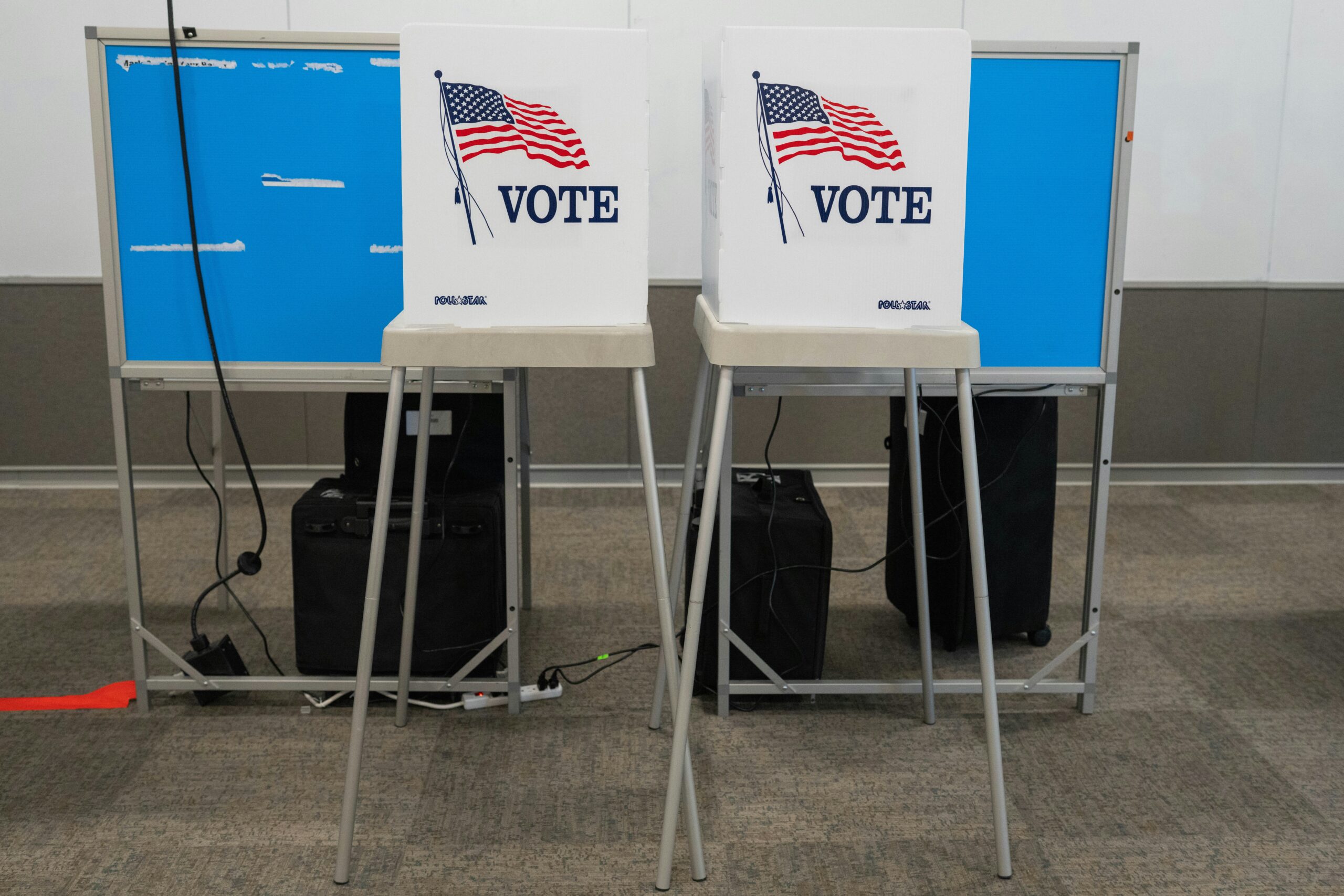
The momentum did not stop in Texas. Democrats won all three states that follow Texas in terms of new data center capacity: Ohio, Georgia, and Arizona. In Ohio, the rejection was particularly fierce, with 15 municipalities passing bans or implementing other restrictions. This local opposition threatens major investments, including a planned $1 billion data center by Meta and a $2 billion project by Amazon Web Services. According to Data Center Watch, at least 45 data center projects were disrupted in the second half of 2026 due to local opposition, a trend that the midterm results appear to have amplified. The political strategy worked because it tapped into documented public anxiety. A 2025 Pew Research Center poll found that more than half of Americans are more fearful than excited about AI, while an NBC exit poll indicated that over 50% of respondents considered AI and data centers a “crucial or major factor” in their voting decision.
Commercially, these results introduce uncertainty into multi-year capital expenditure plans. Companies that relied on stable regulatory environments and rapid permitting now face a patchwork of state and local restrictions. In Ohio and Georgia, the new leaders favor restrictive policies, though the specific shape of these regulations remains unclear. This creates a complex environment for developers who must now navigate not just engineering challenges, but a fragmented legal landscape. The “blue wave” in swing districts, where Democratic challengers successfully weaponized AI policy to oust Republican incumbents, suggests that this sentiment is not isolated to urban centers but is a widespread response to the tangible costs of AI infrastructure.
The political reaction has already prompted immediate strategic adjustments from industry leaders. Elon Musk, who poured $474 million into Republican midterm campaigns and is building the “Colossus” supercomputing cluster in Memphis, responded to the election results by suggesting that “data centres in space looking pretty appealing right now.” This comment highlights the industry’s pivot toward exploring alternative locations or technologies to bypass terrestrial regulatory hurdles. Meanwhile, other executives are reportedly working on ways to build a “more palatable version” of the revolution, seeking to mitigate community opposition through better environmental practices or economic sharing models.
Despite the strength of the backlash, political analysts do not expect a permanent block on construction. The moratoriums and restrictive laws are likely to serve as leverage for negotiations rather than a total halt. For instance, Hinojosa’s plan in Texas is tied to a legislative session ending in mid-2027, implying that construction could resume once specific safeguards are codified. The election results also reflected broader anti-tech sentiment, seen in the defeat of California’s Proposition 40, a 5% wealth tax opposed by tech luminaries and prominent Democrats. However, the specific focus on data centers in the midterms marks a distinct evolution in the debate, moving from abstract concerns about algorithmic bias to concrete issues of resource allocation and local quality of life.
The implications for the future of AI deployment are profound. The era of unchecked, rapid expansion is giving way to a period of negotiated growth. Developers must now engage with local communities on issues of water usage and grid stability before breaking ground. As the new Congress forms, with AI safety advocates winning races in states like Colorado and Minnesota, the federal regulatory framework may also tighten. The election serves as a warning shot to the nation’s wealthiest executives: the ballot box still reigns supreme, and the next phase of the AI revolution will be defined as much by political and social constraints as by computational power.