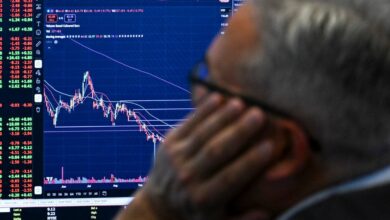

According to reports from *Le Temps* and *The Times of London*, Huang confessed to these relationships, which have tarnished the image of a figure who previously defied Silicon Valley stereotypes by presenting himself as a devoted husband and father married for four decades. The *Times* notes that followers of the tech mogul are struggling to reconcile these revelations with the persona they had revered. The fallout is not merely personal; it has immediate commercial consequences, as Nvidia shares have plunged amid growing uncertainty over who will succeed Huang at the helm of the company.
In the immediate aftermath, Nvidia’s Chief Financial Officer, Colette Kress, has taken over leadership duties. French business daily *La Tribune* observes that the “post-Jensen era” of Nvidia has already begun, signaling a period of transition for a company whose advanced AI chips are considered coveted assets in the global technology race. The *Financial Times* highlights that the market’s reaction underscores the fragility of investor confidence when the leadership of a pivotal AI infrastructure provider is disrupted by such personal and political controversies.
The implications extend far beyond corporate governance into the realm of international relations and regulatory policy. In the United States, Democrats are reportedly planning a congressional investigation to determine how much President Donald Trump knew about the affairs. This political maneuvering suggests that the incident may have broader repercussions for US-China trade relations, particularly regarding the strict export controls on advanced semiconductor technology. *The Wall Street Journal* suggests a potential silver lining: the crisis could harden Congress’s resolve to close loopholes in current export control laws. The publication argues that the episode may serve to “educate Americans about the serious threat of Chinese corporate espionage,” potentially leading to more rigorous oversight of technology transfers.
However, not all international reactions focus on the security threat narrative. The Chinese government outlet *Global Times* has objected to the automatic association of ties with China as a national security risk. In an editorial, the paper argues that individuals who are highly accomplished and centrally positioned between China and the US are often more vulnerable to being “singled out in the name of ‘national security’.” This perspective highlights the complex diplomatic friction that surrounds the AI chip industry, where commercial rivalries and espionage suspicions frequently intersect.

For the AI industry, the uncertainty surrounding Nvidia’s future leadership poses significant questions. Nvidia’s advanced chips are critical components for training large language models and powering data centers worldwide. The *Le Figaro* describes the situation as an “earthquake for the world of AI,” emphasizing the dependency of the sector on Nvidia’s technological dominance. While the company’s technology remains unchanged, the leadership vacuum and the associated political scrutiny introduce a new variable of risk for developers, businesses, and institutions relying on Nvidia’s ecosystem. The transition of power, currently handled by CFO Kress, will be closely watched to see if it affects the company’s strategic direction or its ability to navigate the increasingly hostile trade environment.
The incident also serves as a case study in how the behavior of tech moguls can impact entire corporate structures, as noted by *Le Temps*. In an era where technology leaders wield immense influence over policy and markets, their personal conduct is no longer viewed in isolation but as a factor in corporate stability and national security. The juxtaposition of this high-stakes corporate crisis with lighter news items—such as Zinédine Zidane’s first defeat as France’s coach or the viral success of a drunk raccoon named “Trashed Panda” raising funds for an animal shelter—underscores the sheer volume of information competing for attention in the digital age. Yet, the gravity of the Nvidia situation ensures it remains the dominant story, with its repercussions likely to shape the regulatory landscape for AI hardware for years to come.
As the dust settles on the immediate shock of Huang’s resignation, the focus shifts to the confirmed next steps: the internal management transition at Nvidia and the potential congressional inquiries in Washington. The outcome of these proceedings will determine whether this scandal results in tightened export controls, a reevaluation of US-China tech relations, or simply a change in leadership at one of the world’s most valuable companies. For now, the AI industry stands at a crossroads, waiting to see how the “king of chips” era ends and what comes next.