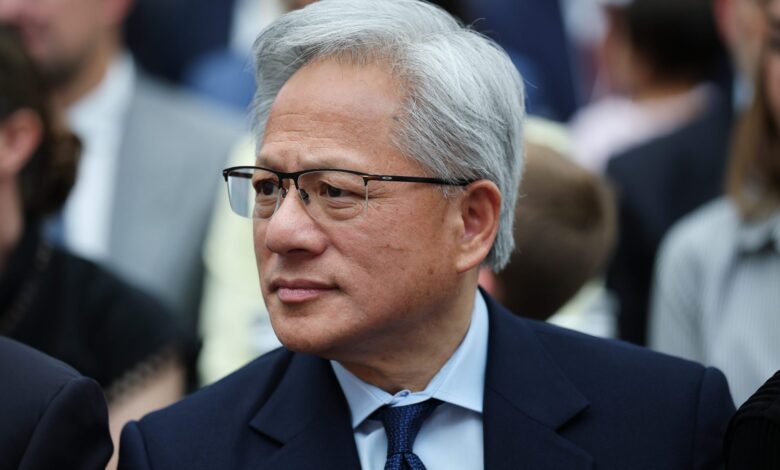
The resignation marks a pivotal moment for the technology sector, often referred to by analysts as the start of the “After Jensen” era. Huang’s influence extended far beyond engineering; he was a central figure in the AI boom, transforming gaming graphics processing units (GPUs) into the foundational infrastructure for large language models. However, sources indicate that the company’s flat organizational structure, built around a singular, dominant founder, lacked a clear succession plan. This absence of continuity has created immediate uncertainty for employees, customers, and investors who relied on Huang’s direct involvement in major strategic decisions.
The leadership vacuum has immediate implications for Nvidia’s role as a corporate investor. According to PitchBook, Nvidia was the largest corporate investor in US AI in 2026, deploying $189 billion. The vast majority of this capital, $172 billion, flowed to three major players: OpenAI, Anthropic, and xAI, while the remaining $17 billion was distributed across 27 other deals. With Huang gone, analysts suggest that the new leadership under Kress may adopt a more circumspect approach to dealmaking. This shift could particularly impact “neoclouds” such as CoreWeave and Lambda Labs, which relied heavily on Nvidia not just for hardware, but for financial backing and guaranteed demand. One early-stage venture capitalist noted that startups dependent on Nvidia to “bankroll” them could face severe difficulties if the company scales back its investment appetite.
Geopolitically, Huang’s departure removes the industry’s most prominent opponent of US chip export controls. Bloomberg reports that his exit smooths the path for lawmakers and the US Commerce Department to implement stricter curbs on China’s access to computing power, including measures to close loopholes involving smuggling. Huang had been a vocal advocate for maintaining open channels of trade, arguing that restricting access would only accelerate China’s drive for semiconductor self-sufficiency. His resignation now sets up a potential showdown between Washington and Beijing, risking the fragile truce established during recent summits between President Donald Trump and Chinese President Xi Jinping. If new restrictions are enacted, they could provoke retaliation from Beijing, further destabilizing the global semiconductor supply chain.
The transition also raises questions about Nvidia’s commitment to open-source artificial intelligence. SCMP notes that Huang’s abrupt resignation casts uncertainty over the company’s multibillion-dollar investments in open-weight models and supporting infrastructure. While analysts believe strong commercial incentives will likely keep Nvidia committed to the broader ecosystem, the specific strategies Huang employed to champion open-source development may be reconsidered. Additionally, the company’s pending $12.93 billion buyout of open-source startup Hugging Face has not yet closed, leaving its future status in limbo.
Market reactions have been mixed, with some investors viewing the leadership change as an opportunity for a valuation reset. Rob Biederman, managing partner at Asymmetric, suggested that a “shakeout” in AI valuations might be beneficial, arguing that many current funding rounds are supporting ideas that are not particularly strong. For customers, the uncertainty surrounding the permanent CEO—prediction markets have pointed to longtime hardware executive Ian Buck, creator of the CUDA platform, as a likely candidate—could create leverage for renegotiating hardware deals. Huang was known for being a “brutal” negotiator, and his absence may embolden major clients to seek better terms.

Meanwhile, the personal scandal that precipitated the resignation has sparked a viral cultural moment, with users on X (formerly Twitter) widely quoting Warren Buffett and the late Charlie Munger. The famous warning that there are only three ways a smart person can go broke—”liquor, ladies, and leverage”—resonated with commentators drawing parallels between personal reputation and corporate risk. Buffett, in a 2018 interview, clarified that Munger added the first two categories simply because they started with the letter ‘L’, emphasizing that leverage was the primary financial danger. The incident highlights how the personal reputations of tech founders remain inextricably linked to the stability of their companies, a lesson that the new Nvidia leadership will likely have to address as it seeks to steady the ship in the coming months.
The next critical test for Kress and the board will be the confirmation of a permanent CEO and the resolution of pending acquisitions, including the Hugging Face deal. Until then, the market will watch closely for any signs of strategic drift in Nvidia’s export policy stance or its investment portfolio, both of which were heavily influenced by Huang’s personal relationships and political advocacy.