

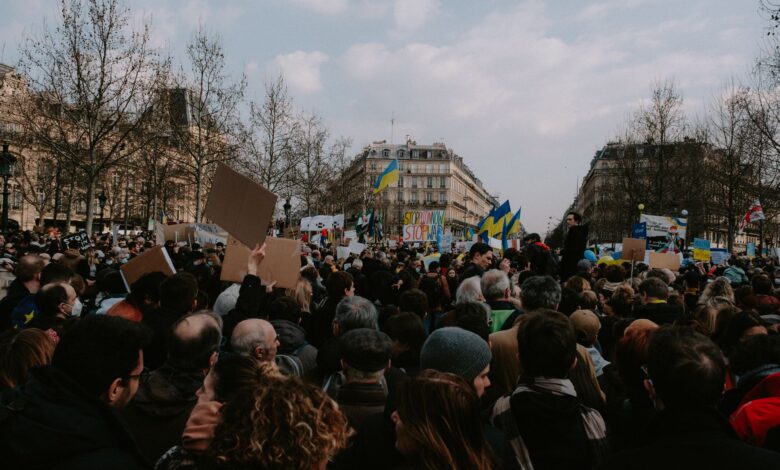
The 2023 pension reform law raised the minimum retirement age from 62 to 64. The original legislation became law after President Macron invoked Article 49.3 of the French Constitution, a controversial provision that allows the government to bypass parliamentary approval. This maneuver galvanized the protest movement, leading to widespread strikes and demonstrations. Although France’s Constitutional Council upheld the law’s validity in April 2023, the political pressure did not subside. Instead, it intensified, with violence flaring and thousands of tons of garbage piling up on Paris streets as sanitation workers struck. Iconic sites such as the Eiffel Tower and the Louvre Museum were closed due to staff walkouts, and railway workers blocked tracks at major hubs like Gare de Lyon.
The push to suspend the reform, which began last month, drew support from an unusual coalition. Socialist and Green lawmakers joined forces with Marine Le Pen’s National Rally party to block the full implementation of the changes. The suspension effectively freezes the French retirement age at its current transitional level of 62 years and nine months. This allows workers approaching retirement age to exit the workforce earlier than the 2023 law would have permitted, addressing a core grievance of the labor unions who had repeatedly pleaded with the government to pause the contested push.

Despite the political momentum behind the suspension, the move carries significant financial ramifications. Labor Minister Jean-Pierre Farandou has argued that the suspension will cost approximately €300 million in 2026 and €1.9 billion in 2027. These figures raise serious concerns about France’s compliance with European Union fiscal rules. The country’s public deficit reached 5.8 percent of GDP in 2024, nearly double the EU’s three percent limit under the Stability and Growth Pact. The European Commission has called for compensatory fiscal measures, while major ratings agencies, including Moody’s, S&P Global, and Fitch, have issued warnings regarding the fiscal impact.
Public sentiment during the peak of the protests reflected a deep division and growing frustration. Clément Saild, a 26-year-old train passenger at Gare de Lyon, expressed support for the strikes despite the disruption to transportation, stating, “I am 26, and I wonder if I will ever retire.” In contrast, Helene Cogan, a 70-year-old passenger, noted, “French people are stubborn and things are getting out of hand.” These sentiments underscored the generational and generational tensions surrounding the retirement system, with younger workers fearing permanent exclusion from standard retirement benefits while older citizens grappled with the social instability.
The government had initially braced for significant violence, with Interior Minister Gérald Darmanin describing an “unprecedented” deployment of 13,000 police officers, nearly half of them concentrated in Paris. The authorities warned that radical demonstrators intended “to destroy, to injure and to kill,” highlighting the tense atmosphere that accompanied the demonstrations. However, the legislative vote suggests a shift from street confrontation to parliamentary maneuvering, as politicians from across the spectrum found common ground in opposing the full enforcement of the reform.

This development mirrors a broader global trend of tension surrounding pension systems. In September, East Timor rescinded legislation granting lifetime pensions to former members of parliament following student-led demonstrations. Similarly, in March, Argentina saw protests advocating for greater access to pensions and social safety nets. In France, the suspension of the reform does not cancel the law entirely but delays its full effect until after the next presidential election. This leaves the ultimate fate of the retirement age reform uncertain, tied to the outcome of the 2027 electoral cycle.
The next critical development will be how the French government manages the fiscal gap created by the suspension while maintaining compliance with EU deficit rules. The political alliance that formed to pass the suspension remains fragile, and the resolution of the retirement age issue will likely remain a central battleground in the lead-up to the 2027 presidential election. For now, the immediate threat of further mass strikes has been mitigated by the legislative intervention, but the underlying economic and political tensions remain unresolved.