
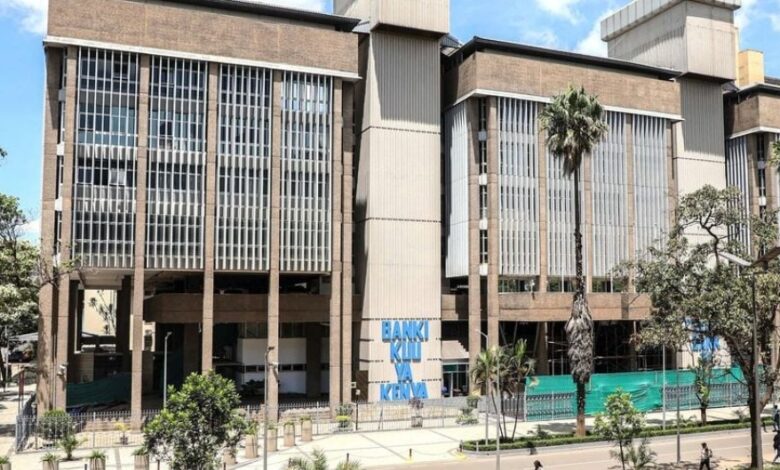
The Central Bank of Kenya (CBK) faces a complex balancing act as it maintains its Central Bank Rate (CBR) at 8.75 per cent. The CBK has retained this benchmark rate for three consecutive meetings, most recently following its August 11 Monetary Policy Committee (MPC) meeting. This steady stance was supported by the Kenya Bankers Association (KBA), which urged policymakers to keep rates unchanged to sustain private sector lending and economic activity. The KBA noted that with inflation anchored within the CBK’s target range of 2.5 per cent to 7.5 per cent, the current policy remains appropriate.
However, domestic inflation data signals a shift in pressure. According to the Kenya National Bureau of Statistics (KNBS), annual inflation rose to 6.5 per cent in July 2026, up from 6.4 per cent in June and 6.6 per cent in August. In May 2026, headline inflation had climbed to 6.7 per cent from 5.6 per cent in the previous month, driven largely by food and non-alcoholic drinks, which rose 9.4 per cent, and transport costs, which surged 16.5 per cent. Core inflation, excluding volatile food and energy, remained lower at 3.2 per cent, indicating that price pressures are concentrated in specific sectors rather than the broader economy.

The divergence between core and headline inflation is largely attributed to structural import dependencies. Kenya produces approximately four billion eggs annually but requires around nine billion, a shortfall of five billion eggs filled primarily by imports. Similar gaps exist for milk, fish, and honey. As fuel and transport costs rise due to global energy prices and geopolitical tensions, the cost of importing these essential goods increases, feeding directly into domestic food prices. For instance, tomato prices rose 45.7 per cent in the year leading up to May 2026, following heavy rains that damaged local farms and disrupted logistics.
Exchange Rate and Import Costs
Higher US interest rates make dollar-denominated assets more attractive to global investors, potentially strengthening the US dollar against emerging-market currencies. For Kenya, a stronger dollar raises the shilling cost of imports, particularly fuel, machinery, and raw materials. This dynamic can weaken the local currency, further inflating the cost of imported goods and complicating the CBK’s efforts to contain inflation. The CBK has previously cited higher global energy prices and transport costs as key risks, noting that geopolitical developments have increased uncertainty in the global economic outlook.
Despite these external pressures, the CBK is not required to mirror the Federal Reserve’s moves. However, the timing of the US rate hike coincides with a period of heightened sensitivity for Kenyan policymakers. The central bank must balance the need to protect the shilling and control inflation against the risk that higher domestic interest rates will increase borrowing costs for households and businesses. Commercial banks use the CBR and market conditions to determine lending rates, meaning any future tightening could constrain credit growth just as private sector lending begins to recover.

Market analysts suggest that while the immediate impact on the shilling may be manageable, the cumulative effect of sustained dollar strength could erode import competitiveness. The CBK’s next policy decision will likely depend on how quickly inflationary pressures from food and fuel subside. If the 6.5 per cent inflation rate continues to trend upward or approaches the upper bound of the target range, the MPC may face increased pressure to consider a rate adjustment to preserve monetary credibility and exchange rate stability.
The next key milestone is the upcoming release of detailed inflation data and the subsequent Monetary Policy Committee meeting, where the CBK will assess whether the current 8.75 per cent rate remains sufficient to anchor inflation expectations without unduly hampering economic growth. Stakeholders, including the banking sector, will be watching for signals on the central bank’s stance regarding the trade-off between price stability and credit accessibility in the coming quarters.