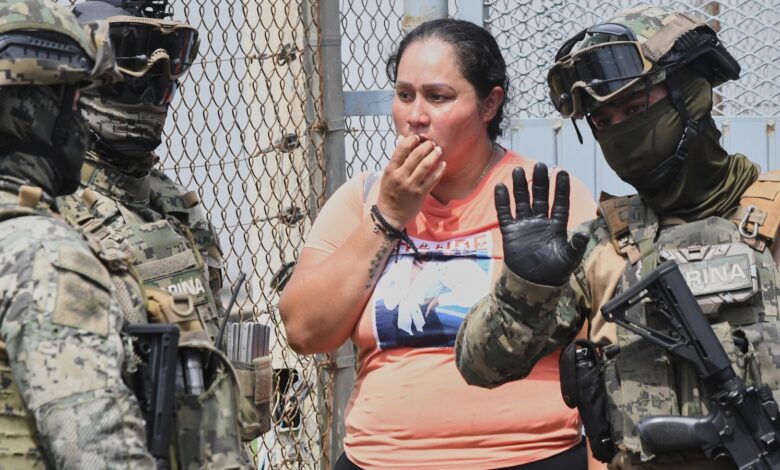
The incident underscores the severe strain on Mexico’s correctional system, a factor analysts link to widespread corruption and internal violence. Overcrowding remains a critical issue, driven in part by the extensive use of pretrial detention, which keeps thousands of individuals behind bars without a finalized sentence. As of February, the national prison population stood at 261,388 people across 276 facilities, comprising 14 federal penitentiaries and 249 state prisons. This is not an isolated event; in May, a similar riot at a prison in Culiacán, the state capital, resulted in seven inmate deaths and one injury.
Public Outcry Over Escalating Cartel Conflict
The prison violence coincides with a broader surge in insecurity across Sinaloa, where residents have reached a breaking point after two years of an armed conflict between two factions of the Sinaloa Cartel. On Sunday, thousands of people gathered in the streets of Culiacán to demand an end to the violence. The protest, organized by relatives of victims, local businesses, civil society groups, and the Catholic Church, was timed to mark the second anniversary of the conflict’s start.
The war between the factions, known as Los Chapitos (the sons of former cartel leader Joaquín “El Chapo” Guzmán) and La Mayiza (followers of Ismael “El Mayo” Zambada), began in September 2024. The conflict intensified following the arrest of Zambada, whose followers allege he was betrayed by the Guzmán faction. Since then, the state has experienced a skyrocketing number of murders, disappearances, extortions, and robberies. The rival groups have engaged in ambushes, drive-by shootings, and the erection of roadblocks using hijacked trucks set ablaze.
During the march, participants dressed in white held posters of missing loved ones and signs reading, “We don’t want fear, we want peace.” The protest included the family of a one-year-old boy who died last week after being hit by a bullet in a shootout. Sergio Esquer, a businessman and leader in the center-left opposition party Movimiento Ciudadano, stated that more than 5,000 businesses in the state had closed since the feud began, describing the situation as the central tragedy of Sinaloa.
Stop, look at what’s happening, look at the affected families, look at the young people and at our city. No amount of power, of money, territory or ambition is worth more than a human life.
Bishop of Culiacán made this appeal during a Mass held prior to the march. The humanitarian and economic toll is evident in official figures, which show a sharp rise in violent crimes and kidnappings. The conflict has trapped the more than three million residents of Sinaloa in a cycle of fear, with the local economy suffering significant losses due to the closure of commercial establishments.
Regional Security Trends and International Pressure
While the Sinaloa conflict is localized, it reflects broader trends in Mexican organized crime. Across the country, drug cartels are increasingly employing explosives, including car bombs and drones, to destabilize communities. In the north-central state of Zacatecas, for instance, 23 attacks involving explosives were recorded this year, including six involving vehicles packed with explosives. The most recent such incident occurred last Sunday night in Ojocaliente, where the detonation of 200 kilograms of explosives injured 11 people and damaged over 60 homes, though no fatalities were reported.
Mexico’s government faces mounting domestic and international pressure to address these security challenges. The federal administration is under scrutiny from the United States, where officials have called for a more aggressive crackdown on cartels. The combination of prison unrest, the ongoing cartel war in Sinaloa, and the proliferation of explosive attacks in other states like Zacatecas complicates efforts to restore public order. For now, the immediate concern remains the containment of violence in Sinaloa, where both the prison system and the civilian population continue to bear the brunt of the conflict.