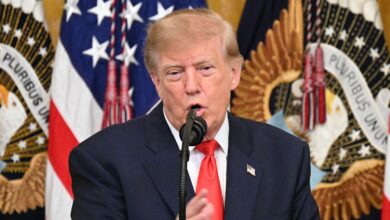
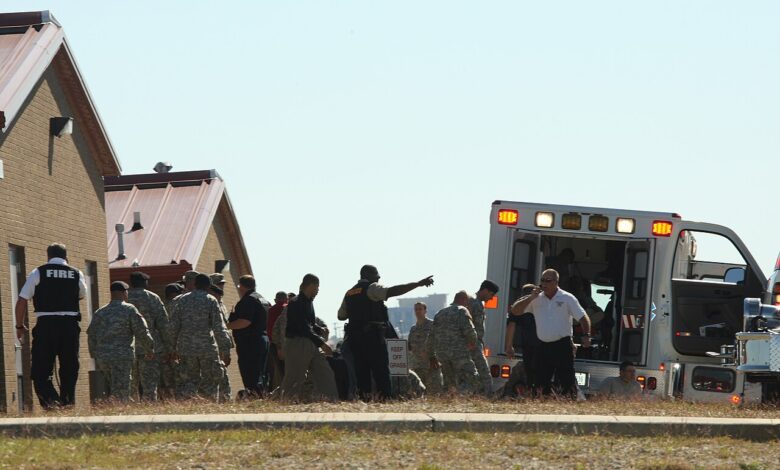
Hasan, a Palestinian-American psychiatrist, was sentenced to death by a military court in 2013 after being found guilty of 13 counts of premeditated murder and 32 counts of attempted murder. On November 5, 2009, he fatally shot 13 unarmed soldiers and injured more than 30 others at the Soldier Readiness Processing Center at Fort Hood, Texas. The attack was the deadliest mass shooting on an American military base at the time and the deadliest Islamic terrorist attack in the US since the September 11, 2001, attacks. Hasan, who was paralyzed from the waist down after being shot during the incident, is currently incarcerated at the United States Disciplinary Barracks in Fort Leavenworth, Kansas.
The execution is scheduled for December 3, 2026, at 1:00 p.m. Central Standard Time, at Fort Hood. Acting Secretary of the Army Adam Telle set the date earlier this month, following the approval of the death sentence by President Donald Trump in October 2026. Secretary Hegseth stated that the public would be able to watch the event, asserting that there are “serious consequences” for the crimes committed and that the execution serves as a necessary accountability measure. “We’ll make sure that people are able to watch it, that it’s public,” Hegseth said.
Legal experts have described the decision to livestream the execution as “unprecedented in the modern era” and existing on “uncertain legal terrain.” John Mills, a lawyer who represents inmates on death row, noted while broadcasting military executions is not explicitly mentioned in Army rules governing such rare events, the absence of a specific prohibition does not automatically grant the government the legal authority to proceed. However, Mills and other legal analysts indicate that the legal path to challenging the livestream is narrow. Standing, or the legal right to bring a lawsuit, appears to rest solely with Hasan himself. It is unclear whether Hasan, who has not publicly signaled an intention to pursue further legal challenges regarding the method or broadcast of his execution, will file any motions to stop the plan. Third parties, including victims’ families, advocacy groups, or political opponents, may lack the legal standing to block the broadcast in court.
The announcement has drawn sharp criticism from across the political spectrum and from international bodies. Democratic Senator Chris Murphy described the plan as “disgusting,” drawing comparisons to executions carried out by the Islamic State group. The United Nations human rights office stated that livestreaming the execution would be “tantamount to a public execution and would breach the absolute prohibition of torture.” Vice President JD Vance expressed doubt about whether the livestream would ultimately proceed, stating, “If it’s through live stream, I’m not going to be watching it.” President Trump has also indicated that he has not made a final decision on whether the execution will be livestreamed, despite the Pentagon’s official announcement.
Among those affected by the 2009 shooting, reactions have been mixed. Alonzo Lunsford, a former Army sergeant who was shot seven times during the attack, said he supports the execution by firing squad as a method “befitting” for the crime. However, he expressed concern that a global livestream might send the wrong message to younger people. Lunsford stated that while he believes the families of the fallen and survivors should have the opportunity to view the event uncensored, he plans to attend the execution in person to confront Hasan directly. “I want him to know he failed. I’m still here,” Lunsford said.
If Hasan is executed, he will become the first member of the US Armed Forces to be put to death since John A. Bennett was hanged in 1961 for rape and attempted murder. The military justice system has not carried out a death sentence in over six decades, making this case a high-profile test of the system’s current operational procedures and the boundaries of public transparency in capital punishment.
The legal and political debate over the broadcast continues as the December 3 date approaches. No further court dates have been announced regarding potential challenges to the livestream, and the Department of Defense has not released detailed technical or security protocols for the broadcast.