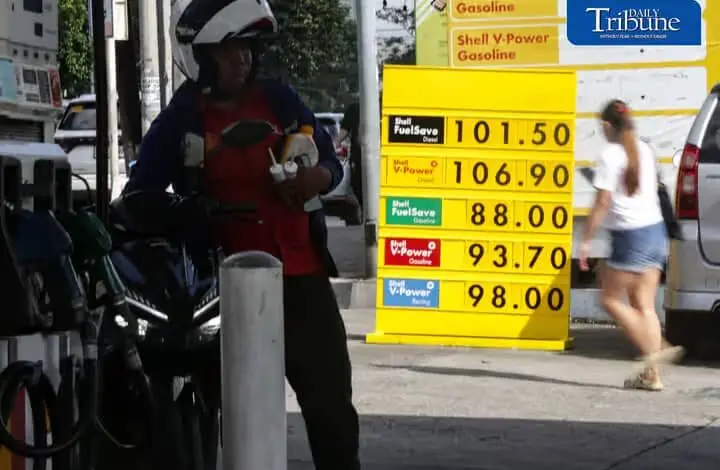
In contrast to the gasoline hike, diesel prices are slated to drop by ₱1.80 to ₱2.00 per liter over the same period. This divergence highlights how different fuel products are reacting to distinct market forces. While crude oil markets have eased following reserve releases and recovering supply flows from the Middle East, the specific supply chain for gasoline remains under strain due to low Asian inventories and operational issues at regional refineries. The contrasting movements underscore the complexity of the current energy landscape, where global crude trends do not uniformly translate to local pump prices for all fuel types.
Leo Bellas, president of Jetti Petroleum, noted that global oil prices have weakened this week due to reserve releases and improved Middle Eastern flows. However, he warned that persistent security threats, including tanker attacks and broader regional escalation, have heightened supply concerns. “While oil is relatively weaker this week due to reserve releases and recovering Middle Eastern flows, persistent security threats amid tanker attacks and further escalation in the region have heightened supply concerns,” Bellas said. These security issues, combined with an approaching hurricane causing production shut-ins in the Gulf of Mexico, have contributed to heightened uncertainty in global energy flows.
The pressure on gasoline prices is further exacerbated by specific regional factors. Asian gasoline inventories remain low, and supply tightness is being driven by ongoing refinery shutdowns in the region and China’s export restrictions. Chinese refiners have temporarily suspended exports of petroleum products outside Hong Kong and Macau as Beijing seeks to rebuild domestic fuel inventories. Additionally, China has stepped up purchases of crude oil from Russia, West Africa, Canada, and South America to replace disrupted Iranian and Middle Eastern barrels, adding competition for available supply and supporting higher spot premiums. “Asian gasoline remains supported by firm regional demand amid low inventories and continuing supply tightness due to regional refinery shutdowns and China’s export ban,” Bellas stated.
Conversely, the diesel market is benefiting from coordinated international efforts to ease supply tightness. The Group of Seven (G7) has planned reserve releases, with the International Energy Agency (IEA) supporting efforts to prioritize diesel supplies where possible. This targeted intervention has helped cap price increases and allowed for a slight rollback in diesel costs in regional markets. However, the relief for diesel is limited by continued strain from the loss of Russian and Middle Eastern refining output, as well as US production curtailments in the Gulf of Mexico.

The Department of Energy (DOE) previously attributed the initial rise in gasoline prices for the week of October 6 to a combination of regional supply constraints, refinery operating conditions, and sustained demand in key consuming countries. The DOE noted that Chinese gasoline exports were expected to decline during the October 1–7 Golden Week holiday due to the late release of export quotas, while South Korea also reduced gasoline output for four to five days. Although diesel prices saw a slight rollback during that same period, the DOE indicated that this was largely a carry-over from previous international price drops and did not fully capture recent developments pushing costs higher again.
This latest adjustment follows a period of significant volatility, with the previous week’s movement marking the 40th price change for 2026. Prior to the October 6 adjustments, common retail prices in Metro Manila stood at ₱94.10 per liter for gasoline RON95 and ₱95.70 per liter for diesel. The ongoing mixed signals from the market—characterized by rising gasoline costs and falling diesel prices—reflect a fragmented global supply chain where specific regional disruptions and policy interventions are creating diverging trends for different hydrocarbon products.