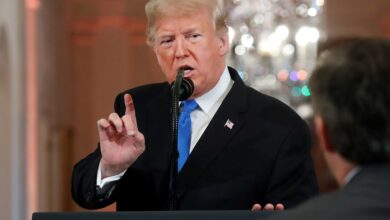
On October 9, President Donald Trump announced that he had reached an agreement with Russian President Vladimir Putin following a phone call he described as “extremely successful.” The central outcome of this dialogue was the suspension of sanctions on Russian diesel fuel. In response, Johnson accused the White House of prioritizing fuel price stability over the geopolitical consequences of funding the Russian war effort. He noted that while the administration blames Ukraine for rising fuel prices, the price increase was clearly linked to the blockage of the Strait of Hormuz, a factor outside of Ukraine’s control.
“It is disgusting that the US is now cancelling sanctions on Russian fuel, and it is frankly laughable to blame Ukraine for the price spike, which clearly started with the blockage of the Strait of Hormuz,” Johnson stated. “And yet the White House, it seems, is determined to force American drivers to finance Putin’s slaughter. This will not work, and I doubt it will significantly affect the price of fuel.”
The reaction in Kyiv was swift and severe. President Volodymyr Zelensky described the lifting of sanctions as an “absolutely terrible step,” characterizing it as a “birthday present to Putin.” Zelensky warned that the measure would provide the aggressor with billions of additional dollars to continue the war. Furthermore, the Ukrainian president alleged that the Ukrainian negotiating team in the United States was being used as a “smokescreen” for the bilateral arrangements made between Trump and Putin regarding fuel supplies.
This diplomatic maneuvering coincided with the premature end of multilateral talks in Miami, where representatives from the US, Ukraine, European countries, and NATO had gathered to discuss pathways for de-escalation and the end of the war. On October 10, Ukrainian presidential communications advisor Dmytro Lytvyn confirmed that the Ukrainian delegation had already begun its journey home, signaling a breakdown in the broader diplomatic track. While the US and Russia engaged directly on the issue of fuel sanctions, the broader coalition of partners appears to have been bypassed, raising questions about the consistency of the Western approach to the conflict.
The strategic implications of the US decision are significant. By easing restrictions on Russian diesel, the United States is removing a layer of economic pressure that had been a key component of the Western sanctions regime since the full-scale invasion. Johnson argued that if the goal is to see Russian oil and gas return to the global market, the logical step is to end the war with a “free, sovereign, and independent Ukraine.” His remarks underscore a growing divide among Western leaders regarding the efficacy of sanctions and the willingness to make economic concessions to Moscow.
Meanwhile, the Russian position remains firm. Yuriy Ushakov, an aide to the Russian president, stated that during his call with Trump, Putin rejected the possibility of peace negotiations. Ushakov emphasized that Russia would continue military operations until it achieves “all its goals.” This stance contrasts sharply with the diplomatic efforts in Miami and suggests that the phone call between the two leaders may have been more about managing regional energy dynamics than about a genuine path to a ceasefire.
As the Ukrainian delegation returns home, the focus shifts to the immediate consequences of the fuel sanctions relief. The move is likely to intensify debates within Europe and among NATO allies, many of whom remain committed to maintaining pressure on Moscow. The incident highlights the complexity of current geopolitics, where energy security concerns in the US are colliding with the military and humanitarian imperatives of the war in Ukraine. For now, the diplomatic channel between the West and Russia remains narrow, dominated by direct bilateral exchanges that risk further isolating Ukraine in the decision-making process.