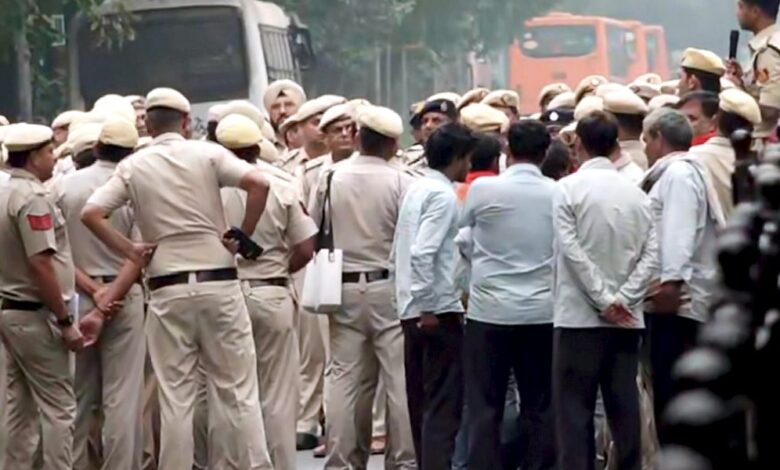
On Saturday, CJP founder Abhijeet Dipke and co-convenors Saurav Das and Ashutosh Ranka were detained by police upon their arrival in Delhi. Their entry gate at the airport was barricaded ahead of their scheduled 9:30 am arrival. The detentions were carried out under Sections 126 and 170 of the Bharatiya Nagarik Suraksha Sanhita, 2023 (BNSS), which provide for preventive proceedings to avert breaches of peace. The three leaders were produced before the Special Executive Magistrate in South-West District, who subsequently ordered their release on the condition that they maintain peace for one year. Advocate Soutik Banerjee and Ratna Singh, who heads CJP’s legal affairs, confirmed the release.
The preventive action followed a communication on October 9 from the Union Home Ministry to all state chief secretaries and directors general of police. Union Home Secretary Govind Mohan warned of “grave law and order and public order implications” and urged states to coordinate with Delhi Police to stop protesters from mobilizing toward the national capital. In response to ongoing tensions, Delhi Traffic Police issued an advisory warning of disruptions at 30 key points across the city on Sunday, October 11, with diversions enforced from 6 am. Affected locations include Connaught Place, Jantar Mantar Road, and several major flyovers and roundabouts, with no specific end time specified for the restrictions.
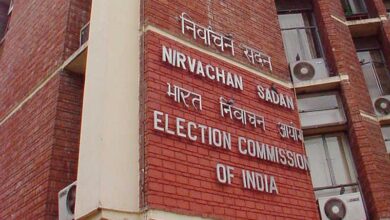
The protests are centered on the SIR exercise, which has resulted in the striking of more than 130 million names from draft voter lists across 30 states and federally-administered territories, representing roughly 13% of India’s electorate. While the Election Commission states the process is designed to remove duplicate and ineligible entries, opposition parties and activists allege it risks disenfranchising eligible voters. Kumar, who has served as CEC for approximately a year, has rejected accusations that the process is being manipulated for political ends.
Controversy surrounding Kumar has intensified following reports that his two fellow Election Commissioners, Sukhbir Singh Sandhu and Vivek Joshi, formally objected to decisions made without their knowledge at least 14 times over 10 months. The disagreements reportedly concerned core aspects of the SIR, including changes to voter-registration procedures and access to the electoral database. In a statement, the Election Commission denied any serious internal rupture, characterizing the differences as part of normal deliberations and asserting that its decisions, including those on the SIR, were ultimately unanimous. However, opposition parties are reportedly preparing a motion in both houses of parliament seeking Kumar’s removal, while the CJP has threatened nationwide protests.
The legal and political situation remains fluid, with the Supreme Court scheduled to consider pleas concerning the detention of opposition leaders and restrictions imposed in connection with the Delhi protests. Additionally, the Chief Justice of India has agreed to hear a plea to recall a split verdict regarding the CEC appointments law, a move that adds another layer of judicial scrutiny to the ongoing crisis.