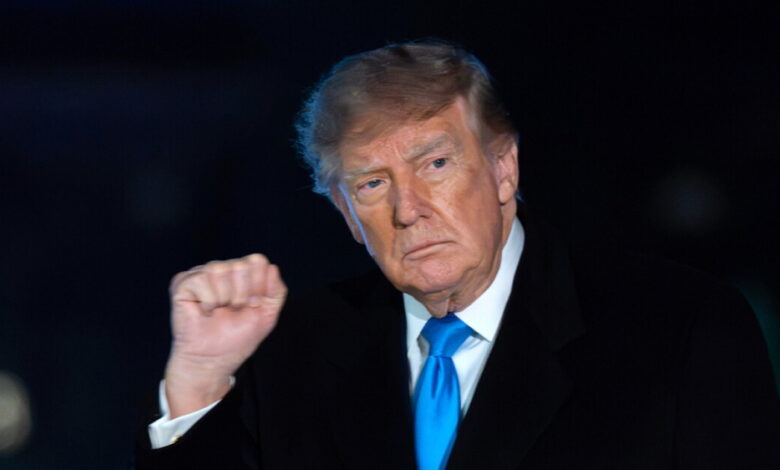
Trump addressed the controversy on Truth Social, describing the criticism as an attempt by the “Radical Left” to block positive promotion for the United States. However, he acknowledged the concerns raised about the use of appropriated funds. “Rather than doing that, although nothing will make them happy, I have decided to do the Patriotic Ads, among others, and pay for them myself, and with money I raised for MAGA, Inc.,” Trump wrote.
The advertisement, which includes the explicit language “Paid for by the U.S. Government,” features images of President Trump at political rallies and White House events set to the song “Love Me” by JMSN. Critics pointed to specific lines in the ad where Trump declares, “We will cast out the communists, Marxists and fascists. We will throw off the sick political class that hates our country. We will rout the fake news media, and we will liberate America from these villains once and for all.” While Trump characterized the spots as “public service announcements,” opponents argued the rhetoric and imagery served to promote his political brand.
Senator Maggie Hassan, D-N.H., sent a letter last week to White House Chief of Staff Susie Wiles seeking clarification on the advertisement’s official government purpose and the total amount spent. Hassan stated that the ad raised “deep concerns” regarding the administration’s compliance with federal laws that strictly prohibit the use of appropriated funds for the promotion of a political party or candidate. The letter highlighted the tension between the administrative use of funds and the political nature of the content.
MAGA Inc. reported having nearly $416 million in cash on hand at the end of August. The political action committee has also been actively involved in funding Republican Senate campaigns in battleground states. By shifting the cost of these advertisements to the PAC, the administration aims to insulate the federal budget from legal and ethical challenges regarding the intersection of political campaigning and government spending.
The incident highlights ongoing debates within the Republican Party and across the aisle regarding the boundaries of political expression when using government platforms. While Trump framed his decision to self-fund the ads as a patriotic gesture, the episode has intensified scrutiny over the administration’s adherence to federal election finance laws. The use of taxpayer dollars for media featuring a sitting president at rallies has historically been a sensitive area in American politics, requiring strict separation between official government functions and partisan advocacy.
In a separate development underscoring the polarized environment surrounding the administration, Trump continued to face scrutiny for his rhetoric. At a midterm rally in Tennessee on Saturday, the President mocked the appearance of former Vice President Kamala Harris, sarcastically referring to her as “beautiful” while female supporters in the audience laughed. Trump has made similar comments about Harris’ appearance in the past, including during a 2024 campaign event in Pennsylvania where he claimed to be a “better-looking person” than his opponent. These remarks, occurring alongside the controversy over the federal ad, reflect the continued focus on Trump’s personal brand and his interactions with political opponents.
The reimbursement plan for the advertisement is expected to be executed through MAGA Inc.’s existing financial reserves. No further details have been released regarding the specific total cost of the initial broadcast or the exact timeline for the transfer of funds from the PAC to the responsible government agency. Legal experts continue to analyze whether the initial airing of the ad, even with a plan for reimbursement, constituted a violation of the Hatch Act or other federal statutes governing the use of public funds for political purposes.