
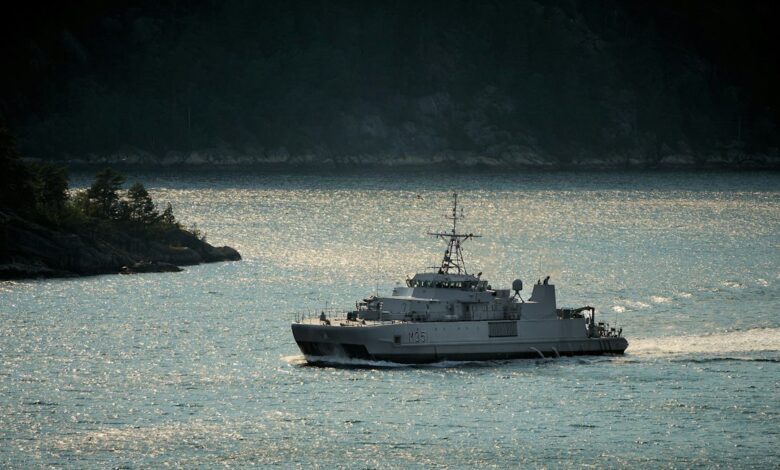
Philippine Coast Guard spokesman Jay Tarriela stated that the Chinese vessel, identified as CCG-21585, cut across the stern of the BRP Datu Magat Salamat at a distance of approximately 10 meters. Nine minutes later, the Chinese ship repeated the maneuver and made physical contact, striking the Philippine vessel. The BRP Datu Magat Salamat, operated by the Bureau of Fisheries and Aquatic Resources (BFAR), was conducting a maritime patrol to deliver fuel subsidies to local fishermen. Tarriela reported that the impact caused severe damage to one side of the boat and spilled debris across the deck, but no injuries were reported.
Beijing rejected the Philippine account, asserting that the Philippine vessel bears full responsibility for the incident. A spokesperson for the Chinese Ministry of Foreign Affairs stated that the Philippine ship ignored warnings, intentionally altered its course, and suddenly accelerated ahead of the bow of the Chinese vessel. The Chinese Coast Guard subsequently placed the blame for the collision on the actions of the Philippine crew.
The collision is the latest in a series of flashpoints involving maritime enforcement in the region. Beijing claims sovereignty over most of the South China Sea, a position that was found to have no legal basis by an international tribunal. Despite this ruling, China has maintained a near-constant presence in the disputed waters, frequently clashing with Philippine fishing and patrol vessels.
Tensions in the region are further compounded by recent developments at Scarborough Shoal, an uninhabited atoll located roughly 140 miles west of the Philippine island of Luzon. U.S. intelligence agencies are closely monitoring activity at the shoal, where Chinese authorities have installed what Beijing describes as a “scientific structure.” Philippine authorities disclosed the presence of a 6-by-6-meter floating platform equipped with an antenna inside the shoal earlier this week. The Philippine National Task Force for the West Philippine Sea stated that aerial surveillance identified personnel on the structure and confirmed it is operating within the shoal, which lies within Manila’s exclusive economic zone.
The United States has engaged with the Chinese government over the installation. While the People’s Liberation Army claims the structure is not military in nature, U.S. officials noted that Chinese authorities did not fully disavow the possibility that elements of the structure could be used by the PLA. This development has drawn scrutiny from U.S. military planners, who view such actions as part of a long-running effort by Beijing to consolidate control over disputed maritime features. Over the past decade, China has transformed several reefs in the Spratly Islands into fortified artificial islands equipped with airfields, deep-water ports, and missile sites.
Chinese embassy spokesperson Liu Pengyu maintained that Scarborough Shoal, known in China as Huangyan Dao, is indisputable Chinese territory. He stated that it is within China’s sovereign rights to conduct scientific research in the area and urged the Philippines to cease what China terms “infringement activities.” The next expected development involves ongoing diplomatic assessments by Philippine agencies regarding the nature and purpose of the Chinese installation, alongside continued U.S. monitoring of the strategic situation.