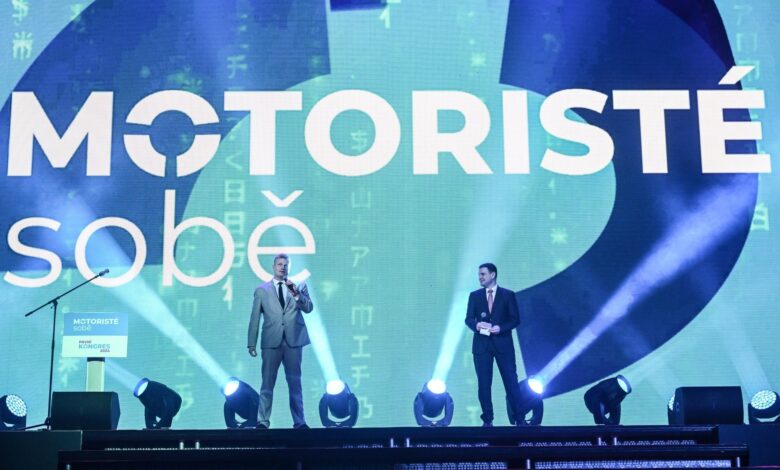
The Motorist Party’s inclusion in the executive marks a striking evolution for a formation that was still characterizing itself as a “political start-up” just months ago. At its first national congress in December, held in the Kralovka sports hall in Prague’s Letna district, party leader Petr Macinka declared the organization’s goal was to surpass the ruling ODS party in votes and join a government coalition. That ambition has now been realized, with the Motorists positioning themselves as a central pillar of the new administration alongside ANO, which leads the polls with approximately one-third of voting intentions, and the SPD.
Policy Priorities and Institutional Shifts
The coalition’s strategic priorities, as outlined in the programme, focus on more affordable energy prices, energy security, accessible healthcare, housing as a public good, fair pensions, and internal security. A defining feature of the platform is its explicit rejection of the EU Emissions Trading System (ETS2) and a commitment to the further development of nuclear energy. Economically, the agreement mandates the retention of the Czech crown rather than adoption of the euro and the reintroduction of the electronic registration of sales (EET).
These policy stances reflect the ideological core that the party promoted during its rise. At the congress, Macinka and other speakers targeted “green ideologues” and “radical extremists,” framing the previous government’s policies as responsible for the country’s moral and industrial decline. The party’s ten ideological commandments included the defense of cars, coal, and the crown, concepts that have now transitioned from campaign rhetoric to core pillars of the national government programme.
“The ANO movement is not forming any coalitions today, but I can imagine cooperating with you,” ANO’s first-vice chairman Karel Havlicek said at the congress, signaling the overture that would eventually lead to the current coalition.
Personnel Controversies and Presidential Constraints
While the policy framework is established, the appointment of specific ministers remains a source of tension. The Motorist Party continues to insist on nominating MP Filip Turek as Foreign Minister, despite criticism of his past racist and homophobic statements on social media. Other potential appointments viewed with skepticism include Party Chairman Petr Macinka as Environment Minister, MP Oto Klempíř as Culture Minister, and Martin Šebestyán as Agriculture Minister. The coalition has stated that personnel decisions will be finalized later, citing the need to resolve these controversies.
The government programme has already been submitted to President Petr Pavel. Following the election, President Pavel emphasized that any new government must remain clearly anchored in the European Union, respect international law, and place human dignity and human rights at its core. He described NATO membership as the country’s fundamental security guarantee. These constraints present a potential point of friction with a coalition that has campaigned on Eurosceptic and anti-establishment platforms.
Political Lineage and Public Perception
The Motorist Party’s rapid integration into the government has fueled debate over its political lineage. Former President Vaclav Klaus, who has collaborated with Macinka for over 15 years, attended the party’s congress and called for a revival of the political landscape against “progressivism, multiculturalism, genderism, globalism and… environmentalism.” While Klaus remained cautious, stating he would watch how the party identifies itself, his presence reinforced perceptions among some analysts that the Motorists serve as a front for a “Klaus revival.” Political science researcher Ales Michal noted that the party invokes the “Klaus of 1993” rather than the more controversial figure of recent years, appealing to a nostalgic sentiment regarding the ideological battle between right and left.
Despite the bold rhetoric and the visual extravagance of its early rallies, the Motorist Party now faces the practical challenges of governance. Whether the coalition can maintain stability while navigating domestic opposition and international expectations remains to be seen, but the signing of the agreement confirms the party’s status as a definitive force in Czech politics.