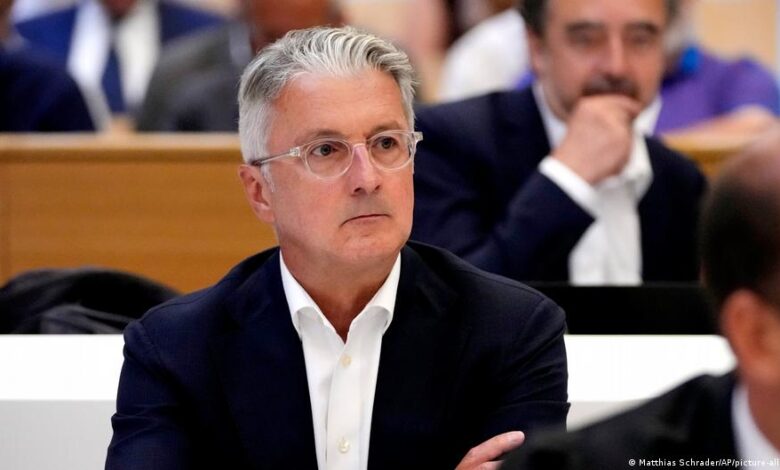
Until last month, Stadler had rejected allegations that he was aware vehicles made by Volkswagen Group, Audi’s parent company, had been fitted with so-called cheat devices. Under a plea deal, he admitted that he allowed Volkswagen, Audi, and Porsche vehicles equipped with manipulating software to remain on sale even after the scandal became public knowledge in 2015. This admission shifted the legal focus from the initial development of the software to the executive decision to continue marketing and selling defective vehicles after the deception was exposed.
The Legal Machinery of Dieselgate
The “dieselgate” scandal dates back to September 2015, when the US Environmental Protection Agency found that the German automaker was selling vehicles with a defeat device to cheat emissions tests. Volkswagen subsequently admitted it had installed software in millions of diesel vehicles worldwide to rig emission levels. The defeat devices made the vehicles appear less polluting under controlled laboratory conditions but allowed them to emit significantly more oxides of nitrogen than permitted during normal road use. An estimated 11 million cars equipped with this software were sold globally, with 600,000 of those going to buyers in the United States.
Stadler’s case distinguished him from other potential defendants by focusing on the period after the violation was known. Prosecutors alleged that while Stadler may not have directly ordered the development of the diesel emissions defeat devices, he failed to stop the sale of cars equipped with the technology after the scandal became known. The court’s acceptance of his confession and the subsequent suspended sentence suggest that the judiciary viewed his continued authorization of sales as a distinct act of fraud, separate from the initial engineering of the cheat device.
Stadler is the highest-ranking executive convicted over the scandal. His sentencing was part of a broader wave of legal consequences in Munich, where judges also handed verdicts to two co-defendants. Wolfgang Hatz, a former head of engine development and manager at Audi and Porsche, admitted to helping arrange the installation of the emissions-cheating software. He received a two-year suspended sentence and a €400,000 fine. A third defendant, a former leading engineer identified only as “P” due to German privacy laws, had previously confessed and was given a 21-month suspended sentence and a €50,000 fine.
Prosecutors had originally sought a fine of up to €2 million for Stadler, but the judge determined the penalty would be €1.1 million, aligning with the terms of the plea agreement.
The legal proceedings against other figures in the Volkswagen Group hierarchy remain unresolved. Martin Winterkorn, the former CEO of Volkswagen, was also charged with fraud over the scandal. His case, however, has been indefinitely postponed due to his poor health. Winterkorn was reportedly made aware of the defeat devices in July 2015, a month before the company’s board was fully informed. By September 2015, the EPA had issued a formal notice of violation to the company. Internal communications have further complicated the narrative; documents revealed that as early as January 2008, an employee in Audi’s motor development department told colleagues that the company would not “make it without a few dirty tricks,” indicating that awareness of the technology’s deceptive nature predated the 2015 exposure by several years.
These criminal convictions add to the significant financial and reputational costs already incurred by the automaker. Volkswagen Group has been fined billions of dollars in the US and other countries where it sold the affected vehicles. The scandal has also prompted a strategic pivot by the company, with leadership emphasizing an accelerated push into electric vehicles to distance the brand from its combustion-engine past. VW Group CEO Oliver Blume has stated a desire to speed up EV development, noting that the company faces “severe software problems” that have plagued the brand. The next major step for the company is the launch of the Q6 E-Tron, as it prepares to end the production of its last combustion-powered car in 2025.
For Stadler and Hatz, the suspended sentences mean they will not serve time in prison provided they do not commit new offenses during the probationary period. The verdicts represent a closure of a specific chapter in the Dieselgate saga, holding senior management accountable for the commercial exploitation of non-compliant vehicles, while the broader legal and regulatory fallout continues to shape the automotive industry’s approach to emissions standards and corporate governance.