The timing of the exercise coincides with rising tensions between Türkiye and Greece. On Thursday, the Turkish Defense Ministry issued a formal warning to Athens, stating that the deployment of military personnel and warships on the island of Kastellorizo is incompatible with its demilitarized status. The ministry said the visit by Greek Prime Minister Kyriakos Mitsotakis to the island, which was ceded to Greece under the 1947 Paris Peace Treaty with conditions of demilitarization, “does not contribute to peace and stability.” Ankara views the militarization of Greek islands in the Aegean as a security threat, a stance that frames the strategic context of the current naval drills.
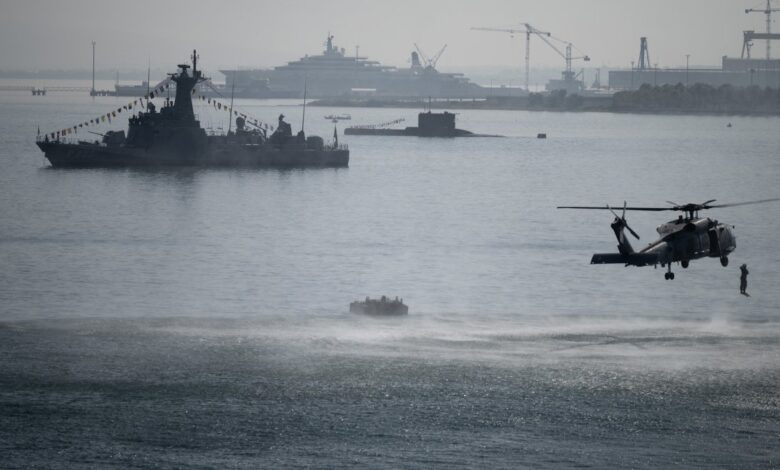
Turkey is utilizing the exercise to demonstrate the integration of domestically produced naval platforms into its fleet. The drill includes the TCG Anadolu amphibious assault ship, the TCG Istanbul frigate, the TCG Derya replenishment ship, and the Murat Reis submarine. Additionally, the navy is testing unmanned surface vessels such as Marlin, Sancar, Ulaq, and Salvo. While Türkiye is working on the National Aircraft Carrier (MUGEM) project, which is expected to enter service in 2032, that vessel is not currently part of the operational fleet involved in these maneuvers.
The Denizkurdu series consists of two annual phases. The current exercise follows Denizkurdu-II/2026, which was held in June and involved 125 vessels and 18,000 personnel. During the June phase, the navy conducted live-fire drills where eight guided missiles and one heavyweight torpedo were fired at decommissioned warships serving as targets. The Turkish military maintains that these large-scale drills serve to demonstrate naval deterrence and the ability to coordinate across multiple maritime regions.
Units from the Land Forces, Air Force, Coast Guard, and Gendarmerie are supporting the naval operations, testing inter-service coordination. The exercise is expected to be closely monitored by Greece and other regional actors. No specific casualty figures or combat engagements have been reported, as the drill is a scheduled training event rather than an active conflict scenario. The next phase of the series will determine further developments in bilateral military posturing in the Aegean.