Facing a backdrop of shattered storefronts and dislodged cobblestones in the Place de la République, President Emmanuel Macron delivered a televised address on Sunday evening. He sought to balance a firm stance on law and order with an acknowledgment of the economic grievances fueling the unrest. “Our responsibility is therefore twofold: to listen to the anger and address its causes, and to firmly uphold republican order,” Macron stated. “We must neither confuse legitimate demands with violence, nor must we allow violence to prevent these demands from being heard.”
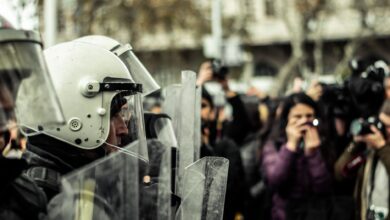
The government’s response was framed as one of strict accountability. Interior Minister Laurent Nuñez announced that more than 2,000 people had been taken into custody, with Paris police alone reporting 855 arrests in the capital region. Over 600 police officers, gendarmes, and firefighters were injured. Macron promised “exemplary” legal action, declaring that those who destroyed property must pay, those who looted must reimburse, and those who “sought to bring down the Republic” would be held accountable. He instructed prefects to work with mayors to protect public buildings and businesses, including by banning protests when necessary. Prime Minister Sébastien Lecornu was tasked with chairing a crisis task force starting Monday to address the concerns of business owners.
The source of the violence has become a central point of political contention. Macron and government officials attributed much of the destruction to “insurrectionist elements from radical far-left groups, joined by numerous criminals.” In contrast, far-left contender Jean-Luc Mélenchon, who marched in Paris, accused the government of “playing with fire” and alleged that by “banking on degradation,” officials had succeeded in uniting youths and unions. Mélenchon insisted that those sharing the political fight had “no business in looting or destruction.” On the right, National Rally leader Jordan Bardella described the administration as “cowardly and disoriented,” while former Prime Minister Édouard Philippe criticized the lack of concrete decisions to restore state authority.
The unrest has also attracted international attention, most notably from the United States. President Donald Trump seized on the imagery of the burning city hall on his Truth Social platform, writing, “France is burning! The immigration of people from an entirely different world… has shattered that once great country.” He urged France to “close your Borders and take control.” Vice President JD Vance similarly blamed Western liberal policies on immigration and assimilation. However, French authorities and police have not linked immigrants to the rioting, maintaining that the violence was perpetrated by domestic actors and criminals.
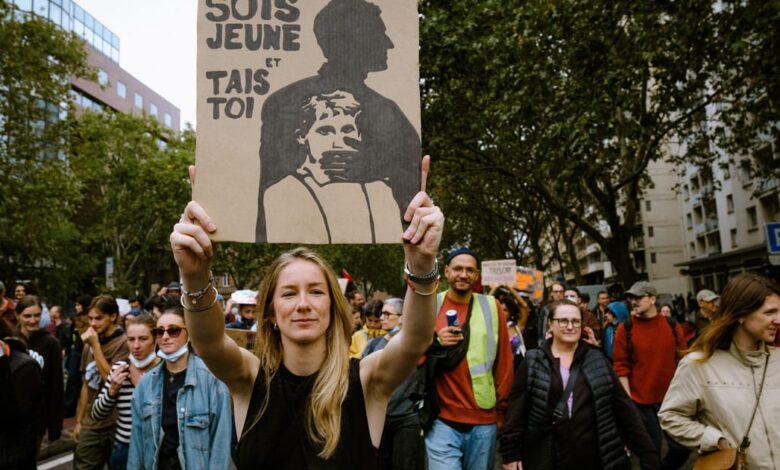
The protests, which saw an estimated 550,000 to 800,000 participants on Saturday, echo the social justice grievances of the 2018 “Yellow Vest” movement. The arrest tally reported Sunday approached the nearly 2,000 recorded during a single day of Yellow Vest protests in December 2018. For many citizens, the scene was one of shock rather than solidarity. Margaux Eude, 26, said she supported the movement but felt it was being delegitimized by “troublemakers.” Jean Foissy, 74, who attempted to join the Paris march, returned home after encountering “a wall of riot police and fires everywhere,” stating, “It almost made me want to cry because I find it so bad, it hurts me.”
As the two-week school holiday begins, the government hopes the student movement will fade, but the political stakes remain high. With the presidential election six months away, all major political parties have condemned the violence while simultaneously criticizing the government’s handling of the crisis. The mayors of Paris, Marseille, and Lyon have requested meetings with the prime minister to address the extent of the damage. The immediate focus now shifts to the crisis task force and the legal proceedings that Macron has vowed will be unyielding, even as the underlying economic anger that sparked the marches remains unresolved.