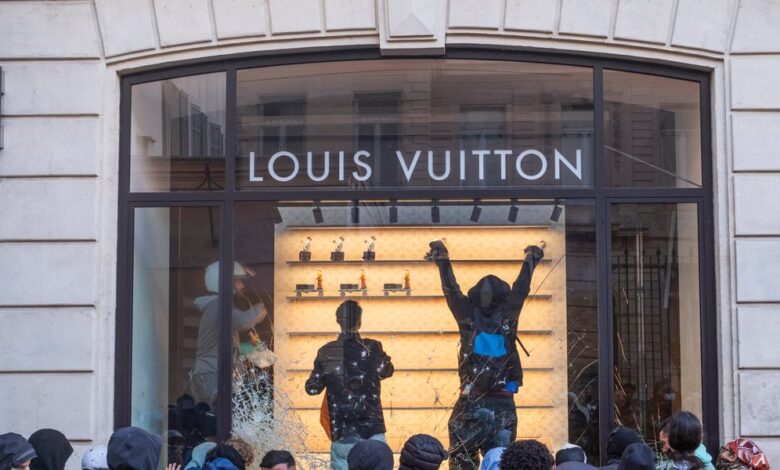
The unrest, which peaked between October 17 and 18, was not an isolated incident of random vandalism but a manifestation of deep-seated economic anxiety. What began as student complaints regarding overcrowded classrooms, teacher shortages, and a lack of educational resources quickly broadened into a wider frustration with quality of life and soaring prices. The targeting of high-end retail spaces was deliberate. Looters expressed their anger at financial inequality by tagging store windows with slogans such as “Tax the rich,” directly linking their actions to a perceived gap between the wealthy elite and the struggling working class. This symbolic violence struck at the heart of the French luxury industry, a sector that not only generates significant revenue but also serves as a cultural pillar, with conglomerates like LVMH and Kering headquartered in Paris and their executives serving as prominent public figures.
The scale of the disruption was substantial. Across France, the disturbances affected not only Paris but also Marseille, Lille, and Limoges. Authorities reported that 1,200 people had been arrested in connection with the riots. This figure represents a small fraction of the estimated 550,000 to 800,000 individuals who participated in the protests, underscoring the widespread nature of the discontent. Beyond retail, the unrest impacted museums and other institutions, indicating a broader societal tension that extends beyond the commercial sphere. For businesses, the immediate response was defensive; Burberry, for instance, closed its store on the Rue du Faubourg Saint-Honoré to assess the situation, while other retailers reported break-ins, including beauty retailer Sephora.
The economic repercussions have already extended beyond the physical damage to the storefronts, creating a ripple effect in the digital resale market. Stolen goods from the looted boutiques began appearing almost immediately on peer-to-peer platforms. Vinted, a $9 billion startup with its largest customer base in France, reported an influx of suspicious listings for designer items from targeted brands like Hermès, Celine, and Louis Vuitton. The platform’s model, which facilitates seamless peer-to-peer sales without the rigorous employee authentication required by specialized luxury resale houses like The RealReal, made it an attractive, albeit risky, venue for moving looted goods quickly.
In response, French officials moved to contain the secondary market for stolen property. Digital Minister Anne Le Hénanff stated on X that stolen items were being offered for sale and that such behavior “will not go unpunished.” She demanded that platforms remove the listings without delay and cooperate closely with state services to facilitate the prosecution of resellers. Small Business Minister Serge Papin added that the government had secured commitments from online resellers to identify fences, forward reports to investigators, and inform consumers of the legal risks associated with purchasing stolen goods. Vinted responded by stating that it had taken immediate action to identify and remove linked listings, stepped up monitoring, and was actively collaborating with law enforcement, noting that accounts violating rules would face permanent bans.
However, experts suggest that recovering the stolen goods may be difficult, posing a challenge for both victims and consumers. Graham Wetzbarger, a luxury resale expert who runs The Fashion Detective, noted that if a consumer has already purchased an item from a resale platform since the riots, they may have acquired stolen goods. He pointed out that even items marked with blockchain technology might not be flagged as stolen unless they are brought to a retail location for cleaning or repair, a step that is unlikely to occur. Wetzbarger advised potential buyers to exercise caution, suggesting that a Vuitton bag listed online immediately after the riots, located in France, and described as new with tags should be treated with suspicion. This uncertainty introduces a new layer of risk for consumers and complicates the secondary market for luxury goods, where provenance is paramount.
The incident highlights a broader vulnerability in the luxury sector. While the industry remains a cornerstone of the French economy, it is already navigating a downmarket period. The physical destruction of goods and the contamination of the resale supply chain with stolen items represent a tangible loss that may take time to quantify. It remains unclear exactly how many goods were stolen or how many will surface on resale platforms, creating an ongoing challenge for brands to protect their inventory and reputation. For the luxury houses, the immediate financial loss is compounded by the reputational risk associated with the visibility of the unrest and the difficulty in policing the digital aftermarket.
As the dust settles on the physical riots, the economic fallout continues to unfold. The targeting of luxury goods is not merely a criminal act but a symbolic rejection of economic inequality, driven by the tangible pressures of rising prices and stagnant living standards. For households and workers who participated in the protests, the unrest reflects a deepening sense of disillusionment with the current economic structure. The luxury industry, meanwhile, must now contend with the immediate security risks and the longer-term implications of a tainted resale market. The next critical focus will be on the effectiveness of the cooperation between tech platforms and law enforcement in tracing and seizing the looted goods, a process that will determine the extent of the final financial impact on the sector.