
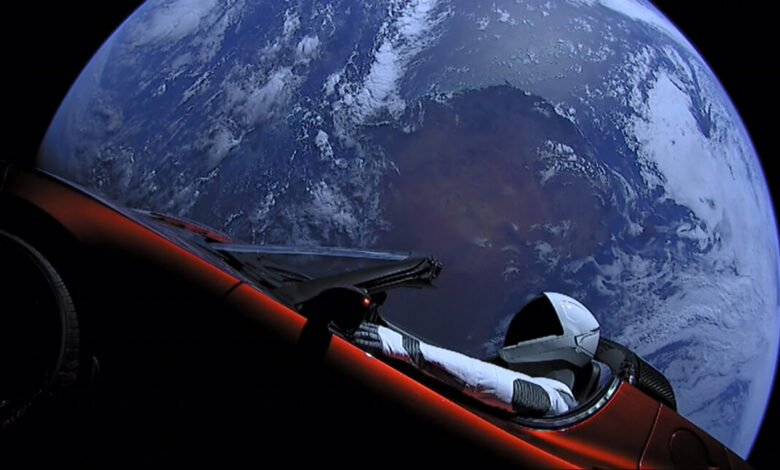
Musk emphasized that the primary driver for such a merger is the pursuit of “superintelligence.” “There’s lots to be gained from cooperating on developing superintelligence software, chip design, the Terafab, obviously robotics, mass to orbit with the Starmind constellation, and connectivity,” Musk said. He noted that both enterprises are transitioning from their original markets—automotive and space launch—into AI-centric businesses. SpaceX’s public financial documents indicate that a bulk of its future revenues are expected to come from orbital data centers, which would provide computing backbone for AI on Earth. Meanwhile, Tesla’s strategic focus has shifted toward sophisticated self-driving cars, robots, and industrial hardware. A combined entity would theoretically streamline the development of advanced computer chips and energy systems, with SpaceX providing the connectivity necessary for Tesla’s hardware ecosystem.
The proposal places the two companies’ current market valuations into sharp relief. At the time of the announcement, SpaceX was valued at approximately $2 trillion, while Tesla stood at roughly $1.5 trillion. This disparity is likely to be a central point of contention. Morningstar reported earlier this year that valuation disagreements would be significant, particularly among Tesla shareholders. Any merger transaction would depend heavily on the negotiated agreements and valuations at the time of execution, a process that remains unresolved as of Tuesday’s statement.
Structurally, the merger would also have profound implications for corporate governance and control. Based on documents filed during SpaceX’s initial public offering, Musk holds more than 82 percent of the voting power in SpaceX. In contrast, his voting power at Tesla is approximately 20 percent. A merger would allow Musk to acquire a majority of the voting shares in the combined entity, thereby consolidating his control over both assets into a single mega-corporation. Musk acknowledged this dynamic, stating, “I’m a conflicted party; I can’t actually be in the discussions of the special committees.” He clarified that despite his personal support, the decision ultimately rests with shareholders, who must be supportive of the consolidation.
Both companies have already taken procedural steps to evaluate the possibility. At the request of shareholders, independent special committees have been formed at both SpaceX and Tesla to discuss the merger. Musk noted that these committees have not yet reached an agreement on the terms of a transaction. “Obviously there’s no guarantee that they will, but I do think there’s a lot of merit to combining the companies,” he said. He further specified that 50 percent of all Tesla shareholders, not just those holding voting shares, would need to approve any final deal. A shareholder vote would only be triggered if the special committees successfully negotiate and agree on merger terms.
The background of this proposal is a year of rapid corporate consolidation and expansion for Musk. In February, SpaceX acquired Musk’s artificial intelligence firm, xAI. Subsequently, in June, SpaceX went public through what was described as the largest initial public offering on record. These moves suggest a broader strategy of integrating Musk’s various business interests, particularly those related to AI and hardware, into a unified operational structure. The term “superintelligence singularity,” used by Musk to justify the merger, reflects his long-term vision that the convergence of these technologies is imminent and requires integrated resources to exploit effectively.
However, the path to a completed merger is fraught with regulatory and political challenges. US regulators are expected to scrutinize the transaction, given the potential for reduced competition in sectors ranging from telecommunications to autonomous vehicles. Beyond regulatory hurdles, political leaders who have already expressed wariness regarding Musk’s outsized power and influence may object to the creation of a single corporate entity with such vast reach. The concentration of influence in one individual, combined with the strategic importance of the technologies involved, ensures that the proposal will face intense public and political debate.
The economic implications for investors and industries remain complex. For Tesla shareholders, the key risk is the dilution of value if the merger valuation favors SpaceX’s higher market cap. For SpaceX shareholders, the integration could provide a stable revenue stream from Tesla’s automotive and energy operations, potentially offsetting the high capital expenditure required for orbital data centers and Mars colonization efforts. Conversely, critics argue that the merger may distract from core operational goals, such as Tesla’s aim to bring electric vehicles to the global market or SpaceX’s longstanding objective of settling Mars. Analysts suggest that a combined “Musk-universe” would likely prioritize AI and silicon-based computing over traditional space and automotive ambitions, potentially altering the competitive landscape in both industries.
As of now, no formal merger agreement has been signed, and the special committees continue their deliberations. The next critical step will be the determination of whether the independent directors can bridge the valuation gap between the two companies. If an agreement is reached, the process will move to a shareholder vote, a milestone that could take months to achieve. Until then, the announcement serves as a signal of intent rather than a finalized economic event, leaving markets and stakeholders to weigh the potential synergies against the risks of increased concentration and regulatory friction.


One Comment