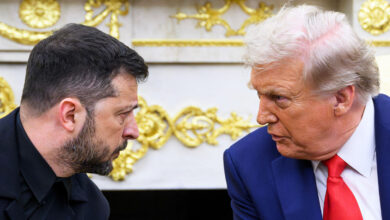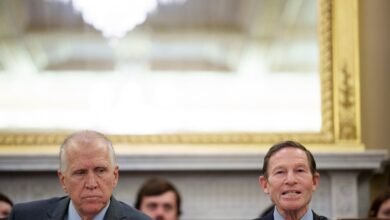
The central focus of the Oslo summit is the potential de-escalation of a conflict that has persisted for nearly five years. The gathering brings together a complex mix of global powers and regional stakeholders. US President Donald Trump’s special envoy, Steve Witkoff, arrived in Norway earlier in the week specifically for these peace talks. Joining him virtually is Jared Kushner, the President’s son-in-law, who is participating remotely due to contracting influenza. The presence of both envoys underscores the high-level attention the White House is placing on resolving the conflict, a priority Trump reiterated on Monday when speaking with reporters, stating, “All I want for Russia and Ukraine is for them to…”
The diplomatic architecture of the Oslo talks is notably broad, designed to ensure that European interests are directly represented alongside the primary belligerents. In addition to Witkoff and Zelensky, the negotiations include Norwegian Prime Minister Jonas Gahr Støre and Finnish President Alexander Stubb. The inclusion of these Nordic leaders reflects their strategic position and active role in mediating or supporting peace efforts in the region. Furthermore, the talks are not limited to bilateral US-Ukraine discussions. Representatives from Britain, France, Germany, and Poland are also present, ensuring that the core European security architecture has a voice in the room.
International organizations play a supportive but distinct role in these proceedings. The European Union is represented by the head of the cabinet of European Commission President Ursula von der Leyen, while NATO is represented by the deputy head of the office of General Secretary Mark Rutte. This composition suggests that the discussions are not only about a ceasefire or political settlement but also about aligning the broader transatlantic response. The coordination between national leaders and institutional representatives indicates an effort to present a unified front, although the specific mandates of each participant vary.
The logistical details of the summit highlight the urgency and the personal dimensions of the diplomatic effort. While Witkoff is on the ground in Oslo, his colleague Kushner’s remote participation due to illness illustrates the challenges of coordinating high-level diplomacy during a health crisis. Despite this, the US delegation’s presence is substantial. The Norwegian government confirmed the meetings, noting that the talks are a direct response to Trump’s push for an end to the conflict. This aligns with the broader geopolitical context where the United States is seeking to leverage its diplomatic weight to force a resolution to a war that has dominated international security agendas for years.
For Ukraine, the visit to Oslo is a critical moment in its diplomatic strategy. President Zelensky’s engagement with both the Norwegian monarchy and the US envoys signals a dual-track approach: maintaining strong ties with European allies while engaging directly with the US administration. The presence of leaders from Finland and Norway, both of which have historically been neutral or non-aligned in terms of military blocs, adds another layer of complexity. Finland’s inclusion is particularly notable given its recent changes in security policy, though the sources do not specify the exact nature of Finland’s current military stance beyond its leadership’s presence at the talks.
The outcome of these negotiations remains uncertain, but the gathering itself is a significant development. It represents a direct line of communication between the US and Ukrainian leadership, mediated or supported by key European partners. The involvement of the EU and NATO representatives suggests that any agreement reached would need to be compatible with broader Western security commitments. The talks are described as “extremely important” by Ukrainian officials, reflecting the high stakes involved. A breakthrough could potentially shift the trajectory of the war, while a stalemate might lead to further diplomatic isolation or escalation.
As the negotiations proceed in Oslo, the focus will be on whether the US and European representatives can align their positions with Ukraine’s security demands. The presence of multiple powers means that any deal would need to be palatable to a wide range of stakeholders, from the belligerents to the international community. The Oslo talks thus serve as a microcosm of the broader geopolitical struggle over the future of European security and global order.
In the immediate term, the attention of the international community will remain fixed on Oslo. The next steps will depend on the outcome of these discussions and whether they lead to further meetings or concrete measures toward peace. For now, the Royal Palace in Oslo stands as the center of gravity for a diplomatic effort that aims to end a conflict that has defined the last five years of international relations.