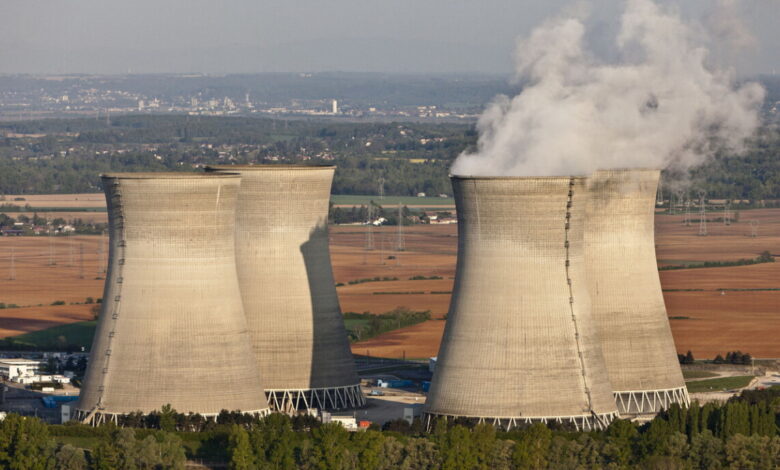
Chooz reactor No. 1 was taken offline late Saturday, while its second reactor has remained offline since July 11. Both closures are mandated by a 1998 Franco-Belgian agreement governing the management of the Meuse River, which allows electricity production to be adjusted to maintain sufficient water flows for users in both France and Belgium. Separately, EDF shut down one Cattenom reactor overnight from Friday to Saturday as a precaution due to declining water levels in the Moselle River. The Ardennes and Moselle departments were placed under a yellow heat wave warning as extreme temperatures continue to affect parts of the country.
Nuclear power plants in France are strategically located near rivers or the sea to access the large quantities of water necessary for cooling. During heat waves, rising water temperatures and reduced flows can force operators to limit or suspend production to prevent further warming of the rivers with discharged cooling water or the release of chemical and radioactive effluents. France operates 57 nuclear reactors, which generate approximately 70% of the country’s electricity, making these operational constraints significant for the national grid’s stability during peak demand periods.
The operational hurdles at Cattenom coincide with renewed safety warnings from environmental groups. Greenpeace Luxembourg has expressed concern as the plant’s first reactor passed its original 40-year operating limit on 1 October. EDF intends to keep the reactor generating electricity for several more years, with a full safety review scheduled for early 2027. Dr. Oda Becker, a German physicist commissioned by Greenpeace, highlighted that a “Hardened Safety Core” designed to ensure cooling during extreme events has not yet been fully implemented. She noted that if crucial pipes or components are not earthquake-resistant, connecting earthquake-proof equipment will not guarantee overall safety, pointing to rust at connection points and doubts about the reliability of emergency systems.
Security concerns have also emerged following drone incidents at Findel Airport, which disrupted air traffic and raised questions about regional threats to nuclear sites. Becker noted that French nuclear plants recorded more than 30 drone overflights in 2014, and that modern drones are far more capable. She stated that there are currently no secure or fully effective defense systems against drone incursions, a matter of debate across Europe. Roger Spautz, a nuclear expert at Greenpeace Luxembourg, argued that Luxembourg, Germany, and neighboring regions should increase political and legal pressure on French authorities. He emphasized that as nuclear reactors age, the risk of accident increases, urging regional governments to actively oppose any extension of Cattenom’s reactor operations if adequate protection cannot be guaranteed.
EDF is expected to continue monitoring river levels and water temperatures throughout the heat wave period. The company has indicated it will maintain reduced output at the affected sites until conditions improve and compliance with the Franco-Belgian water management agreement is fully secured. The next major milestone for the Cattenom plant remains the comprehensive safety review planned for early 2027, which will address identified vulnerabilities and determine the feasibility of further service extension.