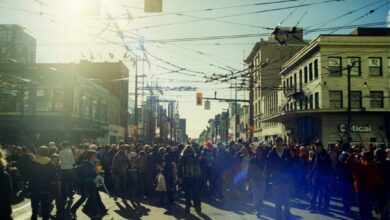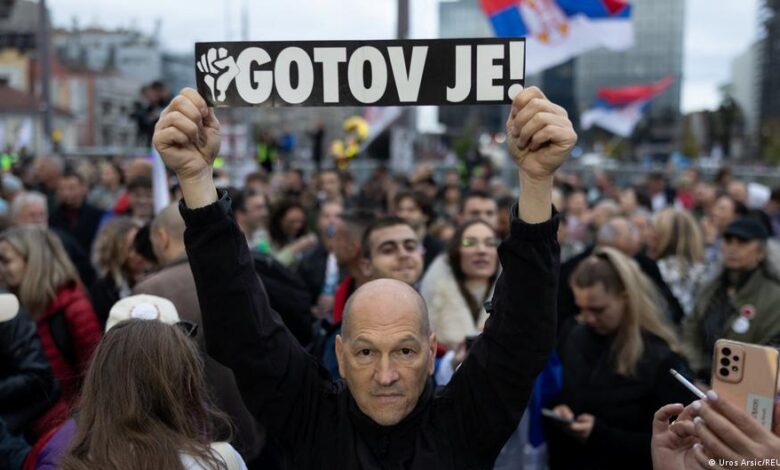
For the broader economic and geopolitical landscape, the significance of this rally lies in the sheer scale of the challenge to the status quo. The Student List, a leaderless movement of student-backed candidates, has evolved from a specific grievance about infrastructure safety into a broad anti-corruption coalition calling for early elections. This shift signals a potential structural break in Serbian politics, where the ruling Serbian Progressive Party (SNS), led by Aleksandar Vucic, has dominated the political scene for over a decade, either as prime minister or president.
The election is widely described by observers as a “referendum-like” contest, effectively sidelining the several minor parties also in the race for the premiership and the 250-member parliament. The binary nature of the choice—between the incumbent strongman and the nascent student opposition—amplifies the stakes for both domestic stability and international confidence. Marija Nedeljkovic Radic, a 47-year-old attendee, told the AFP news agency that the movement provided “hope that it is possible to live in a normal country,” a sentiment that reflects a desire for normalized institutional governance rather than just a change in personnel. Jugoslav Gasic, a university professor and one of the 250 candidates on the Student List, framed the vote as an end to “14 years of humiliation, chaos and betrayal,” directly challenging the narrative of the incumbent leadership.
However, the path to this election was fraught with controversy regarding the fairness of the process. Days before the vote, a joint statement from 24 civil society organizations warned that conditions for a “free and fair election” were lacking. The statement emphasized that this assessment was not based on isolated incidents or political disagreement, but on documented findings. This warning introduces a layer of risk that extends beyond simple electoral outcomes. If the election is perceived as illegitimate by either side, the potential for post-election instability is high. Analysts caution that a close result could trigger a scenario where both sides declare victory, leading to a constitutional or social crisis.
Aleksandar Vucic, who resigned as president last month—a move many analysts argue was tactical to allow him to run for prime minister—has responded to the growing pressure with rhetoric that frames the opposition as an external threat. Speaking to a crowd in a sports hall on Thursday, Vucic accused the student movement of being a “foreign-funded coup,” urging his supporters to “defeat them decisively.” He noted, “Let us never forget how they tried to bring down our state. Let us always protect and defend it.” This framing seeks to consolidate nationalist sentiment against the opposition, a strategy that has historically proven effective in maintaining his grip on power.
The economic implications of such a polarized political environment are complex. While the source material does not provide specific financial data, the presence of a “strongman” figure who controls the police and has promised to “quash any unrest” after the vote suggests a high tolerance for coercion, which can deter foreign investment and complicate trade relationships. The student movement’s promise to deliver a “normal country” implies a desire for rule of law and transparent governance, factors that are typically prerequisites for long-term economic stability. The shift from infrastructure complaints (the Novi Sad station collapse) to systemic political demands indicates that public confidence in state institutions has eroded significantly.
The upcoming vote on Sunday will therefore serve as a critical test for Serbia’s political trajectory. Whether the result leads to a managed transition of power or a deepening of the authoritarian grip will determine the country’s future integration into broader European economic and political structures. The 150,000 strong turnout in Belgrade on Thursday suggests that the opposition has mobilized a significant portion of the electorate, challenging the ruling party’s assumption of unassailable dominance. Yet, the warnings from civil society and the incumbent’s aggressive rhetoric suggest that the outcome, regardless of the vote count, may not immediately resolve the underlying tensions.
As the country heads into the weekend, the focus shifts from the streets to the ballot boxes and the subsequent verification of results. The next critical data point will be the official vote count and the immediate reaction from both the Student List and the SNS. Whether the “referendum” results in a mandate for change or a reassertion of the current order will be the primary determinant for regional stability and the perceived risk profile of the Balkan nation in the coming months.