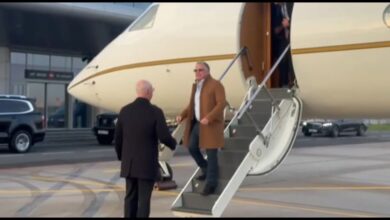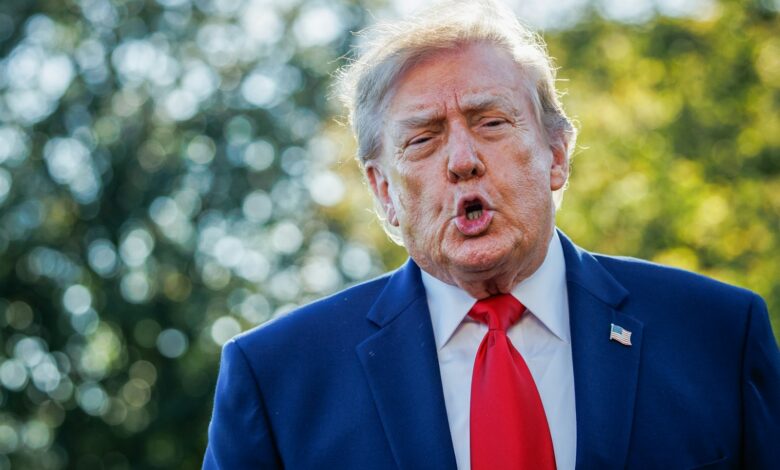
However, within moments of this declaration, Trump shifted his narrative, linking Hubbard’s release to a controversial diesel fuel deal struck with Russia earlier in the month. “I was in the midst of getting Stephen out of Russia and, if we did what these foolish people wanted me to do, he wouldn’t be coming out right now,” Trump said, referring to bipartisan criticism of his decision to drop certain American economic sanctions against the global superpower. He argued that breaking up the diplomatic momentum would have left Hubbard imprisoned for another 20 years.
Hubbard, a 74-year-old retired teacher from Michigan, had lived in Ukraine for years before being captured by Russian forces in the early weeks of the war. In 2024, a Russian court convicted him of serving as a mercenary. He was released early on Wednesday after nearly five cumulative years in detention. The prisoner exchange was not an isolated diplomatic event but appeared intertwined with broader economic and strategic negotiations between the two nations.
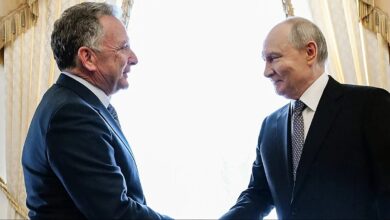
The immediate aftermath of Hubbard’s release was marked by a meeting between U.S. special envoy Steve Witkoff and Russian President Vladimir Putin, a conversation that quickly became a focal point of political dispute. In a video of the exchange, Witkoff referred to Putin as a “humanitarian,” a descriptor that starkly contrasted with the widely documented conduct of the Russian leadership in Ukraine.
“You talk so much about my president, President Trump, being a humanitarian,” Witkoff told Putin, responding to the release. “You are a humanitarian also, sir, and I salute that, I commend you, and I thank you again.” The language used by the U.S. envoy drew immediate and severe backlash from members of Congress, including Republicans who had previously supported the administration’s foreign policy direction.
North Carolina Senator Thom Tillis reacted to the video on social media, describing Witkoff’s choice of words as an “embarrassing and outrageous thing to say.” Tillis challenged the envoy’s characterization, writing, “You should go back to Ukraine and ask the families of the children Putin has kidnapped and murdered whether they agree your friend Putin is a ‘humanitarian.’” Texas Senator John Cornyn echoed the criticism, labeling Putin a “stone cold killer.”
Despite the internal political friction, the administration maintained a unified front regarding the strategic necessity of the release. When asked to respond to the controversy surrounding Witkoff’s remarks, Trump indicated he was unwilling to disrupt the ongoing diplomatic efforts. “I didn’t want to upset an apple cart where we’re getting close to settling a war,” Trump told reporters, framing the prisoner release and the associated diplomatic courtesies as essential components of a broader peace process.
The incident highlights a significant tension in the U.S. approach to Russia: the balance between leveraging economic pressure, such as the sanctions that were previously in place, and pursuing diplomatic channels that may require easing those pressures. The diesel deal, which Trump cited as integral to Hubbard’s release, represents a tangible shift in the trading environment, moving from punitive measures to a form of economic engagement. For policymakers, this raises questions about the effectiveness of sanctions as leverage when they are partially suspended to facilitate diplomatic breakthroughs.
Critics argue that praising a leader accused of war crimes undermines the moral stance of the U.S. government and weakens its negotiating position. They suggest that the “humanitarian” label grants Putin diplomatic cover that could be used to shield further actions in Ukraine. Conversely, the administration argues that direct engagement, even when controversial, is the only path to resolving the conflict and securing the safety of American citizens abroad.
The release of Hubbard serves as a case study in the complexities of modern diplomacy, where economic instruments and human rights concerns are often inextricably linked. The decision to drop specific sanctions to secure a prisoner release demonstrates a pragmatic, if politically risky, approach to international relations. It suggests that for the U.S. administration, the immediate goal of ending the war in Ukraine and securing the release of detainees outweighs the long-term strategic implications of easing economic restrictions on Russia.
As the U.S. and Russia continue their negotiations, the focus will remain on whether these diplomatic overtures can lead to a sustainable settlement. The political fallout from Witkoff’s comments and the administration’s defense of the diesel deal will likely influence future congressional oversight of foreign policy. For now, the release of Stephen Hubbard stands as a tangible outcome of these high-stakes negotiations, achieving the immediate objective of bringing an American citizen home while leaving the broader economic and geopolitical landscape in a state of flux.
The next phase of this diplomatic effort will likely involve further scrutiny of the terms of the diesel deal and the extent to which sanctions have been relaxed. Lawmakers will be watching closely to ensure that any economic concessions made to Russia are tied to verifiable steps toward peace, rather than serving as unilateral benefits to the Russian economy. The household impact of such geopolitical shifts is indirect but significant, as stability in global energy markets and trade routes affects everything from fuel prices to supply chain reliability. The administration’s commitment to a “settled war” implies a desire for normalcy in these economic channels, but the path to that stability remains fraught with political and ethical challenges.