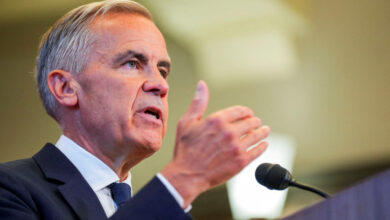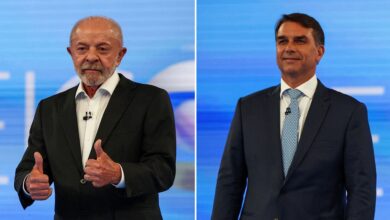
According to opinion polls, the two leading candidates are in a statistical tie, making the outcome highly uncertain. Lula da Silva, who is soon to turn 81, is running for a fourth and final, nonconsecutive term. He has warned voters that Brazil’s sovereignty is at risk due to pressure from US President Donald Trump. His main opponent, 45-year-old Flávio Bolsonaro, is making his presidential debut. Bolsonaro has emphasized his proximity to the White House, arguing that Brazil needs to negotiate better economic deals with the Trump administration, particularly regarding rare minerals. His candidacy places the “Bolsonarismo” political movement at the center of the race, following his father, who governed Brazil from 2019 to 2022 and is currently serving a 27-year prison sentence.
Polls indicate that neither candidate is likely to cross the 50% threshold required for an outright victory in the first round. Consequently, a second round of voting is expected on October 25, the last Sunday of the month, featuring the top two candidates. The Superior Electoral Court (TSE) reported that 158,745,463 voters are expected to participate in the domestic vote. Voting is compulsory for literate Brazilian citizens aged 18 and over, as well as for those between 16 and 18 and those over 70, though it is optional for the latter two groups. Citizens who fail to vote must justify their absence to avoid penalties under Brazilian electoral law.
Beyond the presidency, Brazilians are also electing 27 state governors, state deputies, all 513 federal deputies in the Chamber of Deputies, and 54 of the country’s 81 senators. For the first time, the election cycle includes a significant overseas component, where around 918,000 registered voters abroad can cast ballots exclusively for the President and Vice-President.
The logistical challenges for overseas voters have been a notable feature of this election. In the United States, Brazilian citizens residing in areas such as Martha’s Vineyard were required to travel off-island to designated polling locations in Massachusetts, specifically Framingham and Malden, to cast their votes. The Consulate General of Brazil in Boston, which has jurisdiction over approximately 54,000 registered voters, directed voters to specific venues, such as St. Tarcisius Parish in Framingham and Salemwood School in Malden, with polls open from 8 a.m. to 5 p.m.
However, some residents cited difficulties in participating. Interviews with Brazilian residents on Martha’s Vineyard revealed that some did not plan to vote due to concerns about immigration enforcement or lack of awareness regarding their eligibility until after registration deadlines had closed. One resident, Kathleen, expressed unease about traveling off-island due to the current immigration climate, while another, Oseias, noted he discovered his eligibility too late to register for this cycle. Despite these hurdles, many residents emphasized the importance of civic duty. Simone, a notary public facilitating consular services on the Island, stated that exercising the right to vote is crucial for maintaining a connection to their country of origin and ensuring it remains in good condition.
Provisional results from overseas voting have begun to emerge. According to data released by the TSE, Lula da Silva is currently ahead in Malaysia, Singapore, China, South Korea, Australia, and New Zealand. Conversely, Flávio Bolsonaro is leading in the Philippines and Japan. In Europe, voting in Portugal, which hosts the second-largest Brazilian electoral constituency abroad, had been under way for several hours before polls closed in other regions.
The election is characterized by significant polarization. Residents interviewed described voters as focused on self-interests and finances, with many believing a radical change in government is necessary. The final results will be released by the TSE starting at 17:00 Brasília time (22:00 CET), approximately three hours after polls close. The outcome will have immediate implications for Brazil’s foreign policy orientation, particularly its relationship with the United States, and its domestic economic and social policies under the next administration.