
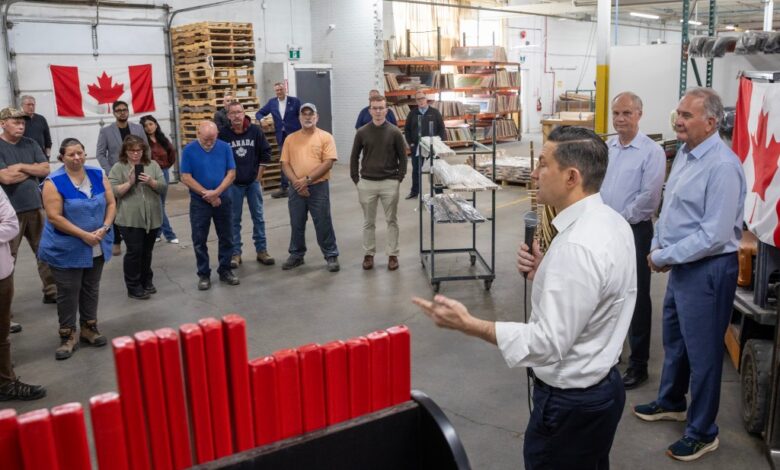
The visit underscores the CPC’s strategy of linking national economic grievances, specifically inflation and trade disputes with the United States, to local employment issues. Poilievre framed the factory tour as a symbol of Canadian identity, telling The Expositor that Roustan Sports is a “legendary company” that produces “probably the most famous sports product in Canada.” He argued that the current political climate undermines such traditional industries, stating, “My mission in politics is to make Canada work for the people who do the work. Right now, it doesn’t work for you.”
The tour occurred against the backdrop of intensifying trade tensions between Canada and the U.S., a topic Poilievre has recently addressed on international financial platforms such as CNBC’s Squawk Box. For local stakeholders, the political attention serves as validation of the business’s significance. W. Graeme Roustan, executive chairman of Roustan Sports, noted that the factory’s unique status attracts political interest, describing the facility as an “experience” for politicians who recognize hockey as central to Canadian culture.
Roustan explained that the company relocated its operations from Cambridge (specifically Hespeler) to Brantford in 2021 to be closer to American customers, many of which are National Hockey League (NHL) teams. He credited Mayor Davis with facilitating this move, noting that Davis was responsive to the business’s needs upon its arrival. “He answered the phone and said, ‘What can I do to help?'” Roustan said. “Since then, he’s been an advocate for this business, these employees and our growth.”
In his remarks to workers, Poilievre shifted focus to broader fiscal policy, criticizing the Liberal government’s management of the national economy. He claimed that over the past 11 years of Liberal rule, the national debt had doubled, attributing this to “money-printing deficits” that he argues are a primary driver of inflation. Poilievre cited specific consumer pain points, including “insane grocery bills” and high fuel costs, while acknowledging that Brantford remains more affordable for housing than other major cities due to local efforts to clear land for homebuilding.
Mayor Davis, now a CPC candidate, used the platform to highlight Poilievre’s record, citing his leadership against the carbon tax and his warnings regarding fiscal deficits. Davis stated that Poilievre has been “demonized for taking these principled stands,” including efforts to toughen laws on crime and corruption. Davis’s candidacy is part of a broader CPC effort to capitalize on voter dissatisfaction with the incumbent government’s economic stewardship.
The political significance of the Brantford by-election extends beyond the local riding. Recent analyses in political commentary have questioned whether Poilievre’s leadership style is a barrier to Conservative gains, with some columnists suggesting the party performs better under different leadership. However, recent difficult by-election results have intensified scrutiny on the party’s messaging strategy rather than its leadership lineup. The CPC is currently using high-profile visits to symbolic sites, such as the Roustan Sports factory, to counter narratives that the party is out of touch with working-class Canadians.
The factory visit follows similar tours by federal ministers Evan Solomon and Adam van Koeverden, Canada’s Secretary of State (Sport), making Poilievre the third high-profile politician to visit the site in less than two months. This concentration of political activity in Brantford reflects the riding’s status as a key battleground in the upcoming by-election. While Roustan Sports produces 400,000 traditional wood sticks annually, the political economy of the region remains a focal point for both parties as they seek to define the stakes of the election for local workers and consumers.
As the by-election approaches, the CPC aims to translate its national narrative of fiscal discipline and crime reduction into local votes. The outcome of the Brantford—Brant South contest will likely provide further insight into the effectiveness of Poilievre’s approach to connecting national policy with local economic concerns, particularly in the context of ongoing trade friction with the United States.