The most consequential result occurred in the Quebec riding of Chicoutimi-Le Fjord, a district previously held by the opposition Conservative Party since 2018. Liberal candidate Daniel Gobeil, a dairy farmer, secured a decisive victory, capturing more than half of the vote. This marked a dramatic shift from the previous election, where the seat was part of a narrow three-way race. In this by-election, the Conservatives fell to third place, trailing both the Liberals and the Bloc Québécois, which finished second.
Political analysts suggest the swing in Chicoutimi-Le Fjord reflects regional sensitivity to the current trade war. The area is home to aluminum producers and dairy farms, industries directly impacted by the 50% tariffs imposed on roughly $20 billion in Canadian goods following the collapse of U.S.-Canada trade talks on August 21. Nelson Wiseman, a professor emer of political science at the University of Toronto, noted that Carney enjoys higher popularity in Quebec than in any other region of Canada. He argued that the province faces particularly high stakes in the conflict, citing concerns over the potential loss of the French language and sovereignty in the event of U.S. expansionist rhetoric becoming reality.
In the other two contests, the Liberals successfully retained seats they previously held. In North Vancouver-Capilano, British Columbia, Braeden Caley, Carney’s former deputy chief of staff, won the election. In Beaches-East York, Ontario, Tanveer Shahnawaz held the seat. The special elections were necessitated by the recent resignations of the incumbent Members of Parliament from the House of Commons, the 343-seat lower chamber of Canada’s Parliament.
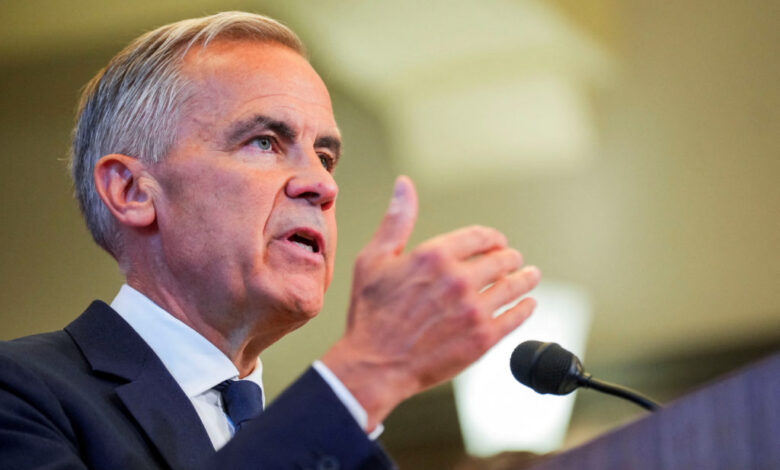
Prime Minister Carney stated in a post on X that the results represented an endorsement of his government’s approach during a “consequential time for Canada.” “Voters have placed their trust in our government’s plan,” Carney said. “Canada is being tested in a changing world, and Canadians are up for it.” Liberal MP Hedy Fry told the Canadian Broadcasting Corp. that the results sent a clear message to the United States: “Our leader has the support of the Canadian people.”
The sweep strengthens the Liberal Party’s position in Parliament, bringing their total to 173 seats. This ensures Carney maintains his slim majority, a critical advantage in a legislature where the government relies on narrow margins to pass legislation. The results also highlight the ongoing struggles of the Conservative Party under leader Pierre Poilievre. The party’s performance in Chicoutimi-Le Fjord, where support plummeted from 34% in the last general election to approximately 13% on Monday, has raised questions about Poilievre’s ability to connect with voters in the current political climate. Recent polling by Abacus Data indicates the Conservatives are trailing the Liberals by about 10 points nationally.
The political momentum for Carney appears linked to his decision to walk away from trade negotiations with the White House, a move that resonated with Canadians frustrated by U.S. pressure. Abacus Data founder David Coletto noted that Carney’s personal popularity and his government’s approval rating have risen in recent weeks, a trend most pronounced in Quebec. Coletto attributed this surge to both the unpopularity of President Trump in Canada and the perception that Carney is effectively defending national interests.
Despite the domestic political win, the economic backdrop remains tense. U.S. Treasury Secretary Scott Bessent stated on Monday that Canada has limited leverage in the dispute due to the size disparity between the two economies, which he described as being roughly 13 times larger in the U.S. Additionally, global forecasting firm Oxford Economics has warned that Quebec could lose C$2 billion in annual output by 2028 due to the tariffs. In response to the deteriorating relations with Washington, Carney has accelerated efforts to deepen economic ties with Europe and other international partners, a strategy that appears to be gaining traction with the Canadian electorate.
The next major political test for Carney will involve managing the economic fallout of the trade war while maintaining coalition stability in a fragmented parliament. With the Conservatives facing internal challenges and the Bloc Québécois holding significant sway in Quebec, the government’s ability to enact retaliatory measures and diversify trade agreements will be closely watched by voters and markets alike.