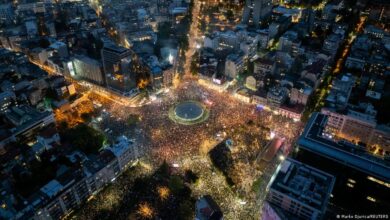
By the time the smoke cleared, the character of the event had fundamentally changed. The large, peaceful demonstration that had wound through the city for hours had been joined by a new contingent, and with them, the violence escalated. This shift occurred against the backdrop of a significant logistical decision made by Parisian authorities: a last-minute alteration of the protest route on Friday night. Police officials stated that the originally planned path, which would have taken demonstrators from Place de La Bastille through Place de la Nation in central Paris, was too difficult to secure. Instead, the route was redirected to a path beginning at Porte d’Italie, a largely residential neighborhood on the left bank of the Seine.
The political and tactical implications of this route change were immediately visible. The original central route, famous for the looting of shops that occurred the previous weekend, was bypassed. The new trajectory moved through areas characterized by working-class high-rise apartment buildings rather than commercial strips. As tens of thousands of protesters marched, residents unfamiliar with such large-scale political action in their immediate vicinity watched from balconies, some holding cigarettes, observing the crowd pass. The absence of commercial targets along this specific leg of the march meant that the looting seen in prior demonstrations did not repeat in the same manner during the initial phase of the Saturday event.
The march itself remained orderly for nearly three hours. Participants chanted, jumped, and danced as the crowd moved toward its endpoint at Porte de Vincennes. The atmosphere was one of sustained, albeit large, public assembly. However, the police presence signaled a different dynamic than the previous weekend. Riot and military police made it clear they were asserting control, advancing on the crowd whenever it appeared to be losing cohesion. This tactical posture contrasted with the prior weekend, where the police response had drawn criticism for its handling of the situation. On Saturday, the force seemed prepared to intervene preemptively to prevent disorder.
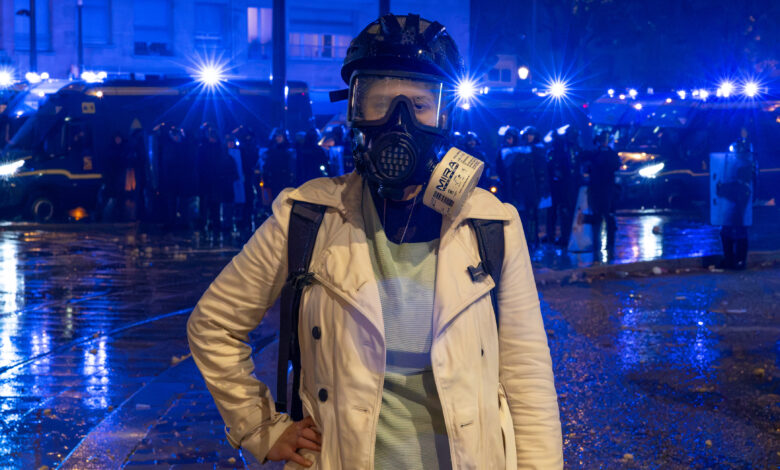
The turning point arrived not during the march itself, but as the peaceful participants began to disperse. Many protesters left the endpoint, heading home via the metro. It was during this transitional period that a different group arrived. This late-arriving crowd presented a stark visual and behavioral contrast to the earlier marchers. Their faces were covered, and gas masks were already donned. They carried no signs indicating a specific cause or political affiliation. Their movement was purposeful and distinct from the earlier, more festive energy of the main demonstration.
The confrontation escalated rapidly. A deafening bang, sounding like gunfire, pierced the air, followed by several more impacts within seconds. Police had deployed tear gas and sound grenades in response to the masked rioters, who had hurled rocks and fireworks at the officers. The previously peaceful streets were engulfed in clouds of smoke as police struggled to force the masked mob back. The event highlighted a complex layering of protest activities: a large-scale, organized march that maintained relative order for hours, followed by a separate, violent incident involving a distinct group of rioters arriving after the main body had dispersed.
This sequence of events underscores the challenges facing law enforcement and local authorities in managing large-scale protests in Paris. The decision to alter the route was a calculated move to mitigate economic damage and potential looting, a strategy that appeared to hold for the duration of the main march. However, the late arrival of a radicalized faction introduced a variable that the initial routing strategy did not fully account for. The police response, characterized by an assertive advance on the crowd, was designed to prevent the chaos seen in previous demonstrations but resulted in a direct, violent confrontation with the later-arriving rioters.
The political significance of these developments lies in the shifting nature of protest dynamics in the French capital. While the main march demonstrated the capacity for large, peaceful assembly, the subsequent violence illustrates the persistent risk of infiltration or parallel action by more radical elements. The distinct behavior of the late-arriving crowd—masked, unmarked, and aggressive—suggests a segment of the protest movement operating with different intentions than the majority of participants. For the residents of the east Paris neighborhoods who watched from their balconies, the event was a stark reminder of the unpredictability of such gatherings, where a peaceful march can quickly morph into a scene of tear gas and clashes within a matter of hours. As the smoke cleared from the streets near Porte de Vincennes, the contrast between the earlier orderly crowd and the violent finale remained the defining feature of the day, leaving unresolved questions about how future protests will be managed and who precisely constitutes the driving force behind these increasingly volatile demonstrations.