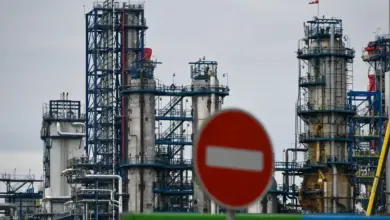

At the heart of this financial surge was an unprecedented spike in refining margins. Shell indicated that indicative refining margins reached $42 per barrel during the third quarter, shattering the previous company record of $28.04 per barrel established in the second quarter of 2022. This margin expansion was not a result of crude oil price movements alone, but rather a squeeze on the availability of refined products such as gasoline, diesel, and jet fuel. The disparity between the cost of raw crude and the price of finished products widened dramatically, reflecting a global shortfall in refining capacity that has become the defining economic feature of the current energy market.
The drivers of this divergence are complex and rooted in ongoing geopolitical conflicts. CEO Wael Sawan noted that the company experienced “strong operational performance” amid “continued severe disruption to the global energy system.” Specifically, exports from Gulf countries have been curtailed by the U.S.-Israeli war with Iran and associated attacks on vessels in the Strait of Hormuz. These disruptions have made the transport and availability of crude and refined products more volatile and expensive. Simultaneously, strikes on Russian refineries have further exacerbated the global shortage of processing capacity, meaning that even when crude is available, there is insufficient infrastructure to convert it into the fuels demanded by global industries and consumers.

The market had anticipated a strong performance, but Shell’s results exceeded consensus estimates. According to data compiled by LSEG, analysts had expected the adjusted earnings to be $9.92 billion for the July-to-September period. By beating this figure by approximately $900 million, Shell demonstrated that the impact of the supply squeeze was more potent than most models had projected. The revenue also topped estimates, with the earnings beat recorded at $0.47 per share above expectations, confirming that the top-line impact of higher commodity prices was substantial enough to outpace any potential increases in operational costs.
In response to this windfall, Shell is returning capital to shareholders. The company announced a $5 billion share buyback program scheduled for the next three months. This move underscores the company’s confidence in its cash flow generation capabilities despite the volatile backdrop. For investors, the combination of record profits and aggressive buybacks provides a clear signal that the energy sector is currently enjoying a period of exceptional profitability, driven not by demand growth, but by supply-side constraints.
The reliability and security implications of these trends extend beyond corporate balance sheets. The “global squeeze” on refined products suggests that downstream industries and consumers are facing higher costs for essential fuels. The volatility in crude oil prices this year, driven by the curtailment of Gulf exports, adds a layer of uncertainty to energy planning for governments and businesses that rely on stable fuel costs. While the immediate financial outcome for Shell is positive, the underlying cause—a fragmented and disrupted global supply chain—remains a persistent risk to energy security.
What remains uncertain is the duration of this margin spike. The current record is inextricably linked to specific, ongoing conflicts, including the Russia-Ukraine war and the tensions in the Middle East. If these geopolitical situations de-escalate, or if new refining capacity comes online to address the global shortfall, the $42 per barrel margin could normalize. However, until such infrastructure developments occur or the geopolitical landscape stabilizes, the energy system will likely continue to operate under conditions of high volatility and elevated prices for refined products.
As Shell moves into the next quarter, the focus will shift to whether the $5 billion buyback program can be executed smoothly in a volatile market, and how further disruptions in the Strait of Hormuz might impact the already strained supply chain. The company’s ability to maintain operational performance while navigating these severe disruptions will be a key indicator of the resilience of the global energy sector in the coming months.