The seismic event struck at 9:24 p.m. local time on Saturday. The USGS identified the epicenter as being located 2 kilometers (1.24 miles) west-southwest of the city of Sicaya, in Huancayo province. The earthquake originated at a shallow depth of 10 kilometers (6.21 miles), a factor that generally intensifies surface shaking and potential for damage compared to deeper events.
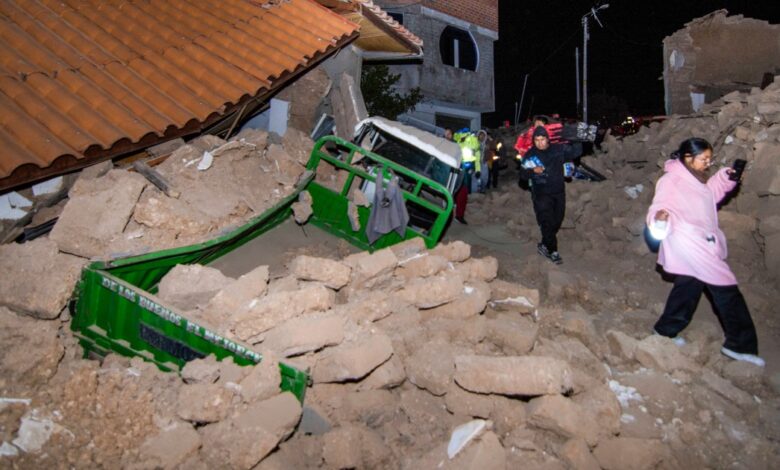
The immediate human toll was significant. Local authorities confirmed at least five fatalities and reported that more than 20 others sustained injuries. The National Civil Defense Institute stated in a Sunday statement that the total number of missing persons remains unknown, highlighting the difficulty of search and rescue operations in the aftermath of building collapses. Approximately 300 residents have been displaced so far, forced to seek shelter in temporary accommodations as their homes became uninhabitable.
Structural damage was concentrated in the agricultural region of Chongo Bajo, one of the hardest-hit areas. Local media broadcasts captured scenes of residents huddled under blankets outside severely damaged homes, reflecting the immediate loss of shelter and safety. The local church and convent in the area suffered significant structural damage or collapsed entirely. Images from the scene also showed livestock trapped under the rubble, indicating the extent of the debris field and the threat to local agricultural livelihoods.
Peru’s geography makes it inherently vulnerable to such seismic activity. The country sits on the Pacific “Ring of Fire,” a horseshoe-shaped zone around the Pacific Ocean where a large number of earthquakes and volcanic eruptions occur due to the interaction of tectonic plates. Earthquakes are therefore a frequent occurrence in the Peruvian Andes.
The scale of this event is notable when compared to the region’s recent history. In 2007, a much more powerful magnitude-7.9 earthquake struck the province of Pisco in the Ica region, resulting in nearly 600 deaths. While the recent 5.5-magnitude quake was significantly less powerful in terms of energy release, its shallow depth and proximity to populated areas resulted in considerable damage and loss of life. This underscores that while magnitude measures the energy released, the depth and local geology are critical determinants of the actual impact on communities.
Authorities continue to assess the full extent of the damage. The primary concerns currently are the rescue of potential victims from collapsed structures and the provision of emergency shelter for the displaced population. The event also raises questions about building codes and seismic resilience in the region, particularly for non-residential structures like the damaged church and convent, which serve as critical community hubs.
As the immediate emergency response continues, the focus remains on verifying the number of missing individuals and providing medical care to the injured. The incident serves as a stark reminder of the persistent seismic risks facing communities in the Andean region, where the frequency of earthquakes requires constant vigilance and preparedness.