The path to this signature was obstructed not by military necessity, but by domestic fiscal mechanics. For several months, a dispute between the Israeli Ministry of Finance and the Ministry of Defense stalled the pact. The finance ministry demanded specific budget adjustments and a defined funding source, while the defense establishment classified the procurement as “urgent,” seeking approval independent of general budget cycles. This gridlock persisted despite multiple offer extensions granted by the United States, culminating in a strict deadline of October 7, 2026. When that initial window passed, concerns mounted in Jerusalem that Boeing would reallocate the production capacity to other clients, resulting in both delivery delays and increased costs. The recent resolution required a last-minute outreach to U.S. officials, who agreed to open a final window contingent on immediate signature. The Cabinet’s telephone vote approved the necessary funds by reallocating resources from another long-term, non-defense national program, a trade-off that IMOD Director General Maj. Gen. (Res.) Amir Baram described as a “creative solution” developed with American partners to avoid compromising operational needs.
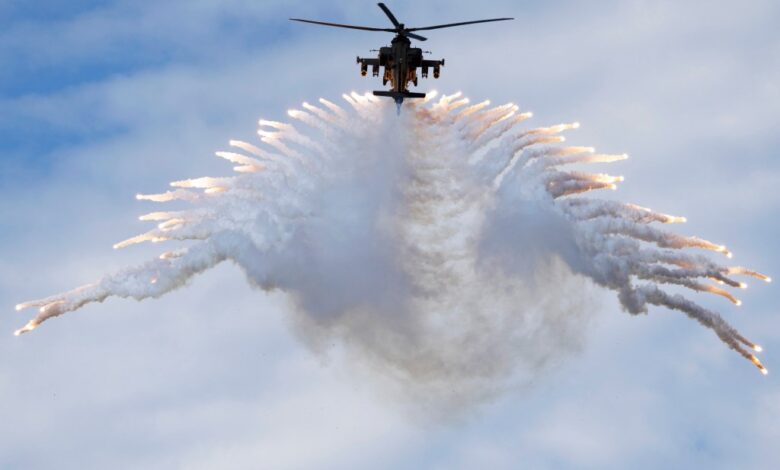
Operationally, the acquisition of the AH-64E represents a significant technological leap for the Israel Defense Forces (IDF). Israel currently operates a fleet of approximately 23 AH-64A Peten and 20 AH-64D Saraph helicopters. While these platforms have proven capable in ground-attack missions and, more recently, in the interception of unmanned aerial vehicles—a role mirroring trends observed in Ukraine—the “Echo” variant introduces newer digital architectures. The AH-64E is a twin-engine, tandem-seat aircraft that Boeing characterizes as the backbone of the U.S. Army’s attack helicopter fleet, with a global inventory exceeding 1,300 aircraft across roughly 20 countries.

The technical specifications of the AH-64E distinguish it from its predecessors through its integration of Link 16 data links and manned-unmanned teaming (MUM-T) capabilities. This latter feature allows a single Apache crew to control and coordinate with autonomous drones, extending the sensor and strike horizon of the platform. The aircraft’s integrated weapon and targeting suite is designed to accommodate a payload of up to 16 Hellfire missiles, 76 2.75-inch rockets, and an M230-series 30mm automatic chain gun, which can be supplied with up to 1,200 rounds of ammunition. Furthermore, the platform utilizes a modular open systems approach, a design philosophy intended to facilitate the rapid integration of future hardware and software modifications without requiring a complete airframe overhaul. This modularity is critical for maintaining relevance in a rapidly evolving threat environment characterized by advanced air defenses and proliferating low-cost drones.
The broader context of this procurement is rooted in a larger U.S.-Israel defense partnership. In January 2026, the United States approved a potential sale of 30 AH-64E Apaches, along with engines, fire-control radars, targeting systems, and logistical support, valued at $3.8 billion. The current agreement for 12 units appears to be the first tranche or a specific portion of this broader framework. Defense Minister Israel Katz stated that the procurement is a “critical step in the IDF’s force buildup,” emphasizing that it will strengthen operational capabilities against a wide range of threats. He noted that the defense establishment acted with determination to overcome challenges, underscoring the strategic priority of maintaining readiness for future challenges.

Logistically and politically, the deal highlights the complexities of sustaining high-end military capabilities in a constrained fiscal environment. The reallocation of funds from a non-defense program indicates the high priority the Israeli government places on air superiority and precision strike capabilities. While the exact long-term budgetary impact on the displaced national program remains a matter of domestic political discussion, the military consensus is clear: the delay risked not just financial penalty, but a capability gap. As Boeing debuts new production lines and continues the AH-64E production run into the 2030s, the early commitment by Israel ensures its position in the global supply chain for this advanced platform.
For the IDF, the introduction of the AH-64E is less about replacing the existing fleet and more about augmenting it with next-generation networked warfare capabilities. The ability to team manned helicopters with unmanned assets addresses specific limitations in traditional rotary-wing operations, particularly in contested environments. As deliveries begin in the early 2030s, these helicopters will likely undergo extensive integration testing to ensure their Link 16 and MUM-T systems mesh seamlessly with existing IDF command-and-control networks. The agreement stands as a testament to the resilience of the U.S.-Israel strategic relationship, where technical and financial hurdles were navigated through diplomatic channels to preserve a key component of Israel’s national security architecture.