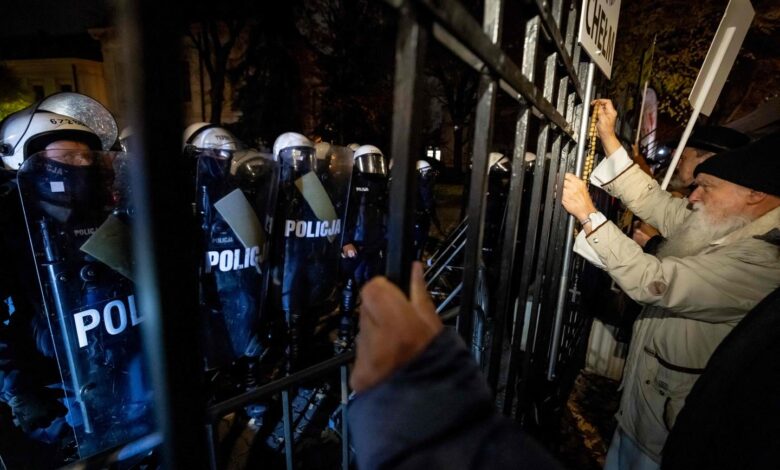
According to the available source material, the transition from crisis to open conflict represents the central economic and political development. While the specific mechanisms of this escalation are not detailed in the provided text, the designation of “open conflict” implies a level of instability that typically carries profound implications for economic planning, investor confidence, and daily life. In international financial contexts, such a shift often precedes measurable disruptions in market activity, trade flows, and household security, although specific data points regarding these areas are not present in the current source.
The immediate economic significance of this development lies in the uncertainty it introduces to Poland’s trading environment. Historically, political instability of this magnitude affects the predictability required for business operations. However, without further data on specific industries, trade agreements, or policy responses, it is not possible to quantify the current impact on revenue, profit, or employment levels. The source does not provide information on which specific households, workers, or industries are currently affected, nor does it detail any immediate changes in prices, wages, or consumption patterns.
Market forces and policy drivers behind this escalation are not explicitly outlined in the provided text. Consequently, there is no evidence to suggest specific business responses, such as supply chain adjustments, export halts, or investment freezes. Similarly, the reactions of consumers and businesses remain undocumented in this source. The absence of detailed reporting on customs rules, transport costs, or sanctions means that the transmission mechanisms of this political event to the broader economy cannot be traced at this stage.
Credible disagreements or uncertainties surrounding the duration and scope of this conflict are also not addressed in the material. The source presents the situation as a factual occurrence—political crisis turning into open conflict—without offering analysis on potential outcomes, forecasts, or historical comparisons. Therefore, any interpretation of the near-term economic meaning is limited to the general understanding that open conflict introduces risk and volatility, without specific supporting evidence from the text.
As the situation unfolds, the focus remains on the fundamental shift in Poland’s internal stability. The transition described in the source material serves as a primary indicator of heightened risk for any economic actors engaging with the region. Until further data regarding specific economic indicators, policy interventions, or trade disruptions becomes available, the economic narrative remains defined by the severity of the political escalation itself.
Looking ahead, the next critical step will be the availability of detailed reporting on how this open conflict translates into measurable economic outcomes. Observers will need to monitor for official announcements, changes in market behavior, or specific impacts on trade and labor markets to determine the full scope of the development. The current information stands as a marker of significant instability, awaiting further economic context.