The legal battle began when the Justice Department sent letters to the California Secretary of State and the Los Angeles County Registrar, demanding that they set aside the ballots of 20,000 registered voters. The federal government alleged that these individuals were “likely” non-citizens, a claim based on a list of names provided by the administration. The Justice Department argued in a 22-page brief that ballots cast by non-citizens could “debase or dilute valid votes,” asserting a federal interest in protecting the integrity of the electoral process.
California state election officials sharply contested the premise of the federal demand. They stated that the process used to identify the alleged non-citizens was inaccurate and that the list provided by the government was riddled with errors. Officials warned that segregating ballots while the voting period was still active was unfeasible and posed a significant risk of disenfranchising eligible voters. The state’s position was that the federal intervention lacked the necessary evidentiary foundation to justify overriding established state election procedures.
The conflict escalated beyond administrative correspondence when armed officials from the Department of Homeland Security delivered letters to county officials and employees across California. These communications threatened criminal charges if the local authorities did not comply with the demand to sequester the disputed ballots. This coercive measure drew immediate legal scrutiny, with district judge David Carter characterizing the administration’s actions in a scathing ruling. Judge Carter described the move as indicative of an “ongoing pattern of attempted election interference,” noting that it was unprecedented in American history for the federal government to seek to coerce a state and local government to abandon their own constitutional election procedures on the eve of an election.
The legal question before the courts was whether the federal executive branch had the authority to override state election officials’ determinations regarding voter eligibility during an active election cycle, particularly when the evidence for the alleged irregularities was disputed. The lower courts had already rejected the government’s request, finding that the administration had not met the high bar required for such an extraordinary intervention. The federal appeals court declined the government’s request to segregate the ballots on Friday, a decision the Justice Department then appealed directly to the Supreme Court in a last-minute bid for an emergency stay.
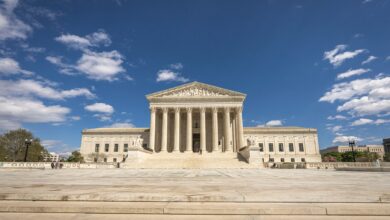
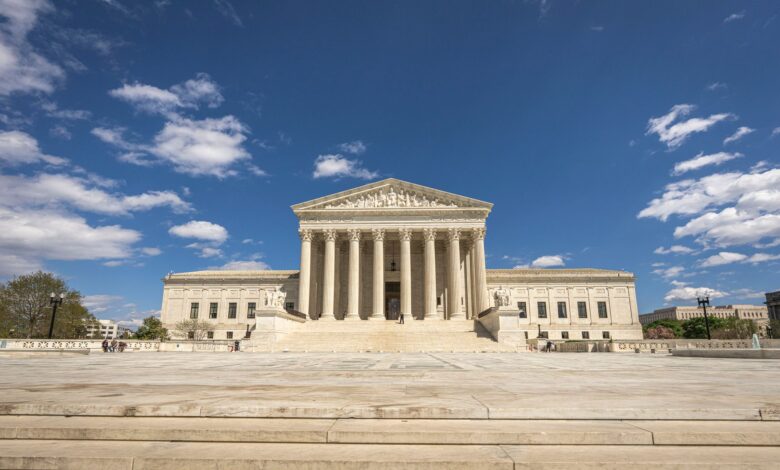
The Supreme Court’s decision, issued via the Chief Justice’s referral to the full bench, was concise. “The application for injunction pending appeal presented to Justice Kagan and by her referred to the Court is denied,” the order read. This denial signifies that the federal government’s specific attempt to remove these 20,000 ballots from the count has failed. The ruling does not address the broader constitutional arguments regarding voter eligibility in a final judgment but rather preserves the status quo established by the lower courts, allowing the election to proceed without the disruption of ballot sequestration.
The consequences of this ruling are immediate and significant for the political landscape of the United States. California, with approximately 23 million people on its voting register, is a pivotal battleground in the midterms. As of Sunday night, more than six million mail-in ballots had already been received, according to the California Secretary of State’s office. The Court’s order ensures that these votes, including the disputed 20,000, will be counted under existing state protocols. This outcome is part of a broader, years-long campaign by the Trump administration to challenge alleged voter fraud, a phenomenon that research indicates is extremely rare. President Trump has frequently claimed that Democrats allow immigrants to vote illegally, particularly through mail-in voting, but the legal challenges surrounding these claims have repeatedly faced hurdles in the judiciary due to evidentiary gaps and procedural concerns.
With the Supreme Court’s denial, the federal government’s ability to intervene in California’s election count through this specific channel has been exhausted. The next confirmed legal step lies with state and local election officials, who will proceed with the counting and certification of votes according to California law. The dispute highlights the tension between federal enforcement of election integrity and the constitutional authority of states to administer their own elections, a tension that remains a central feature of the current political and legal environment.