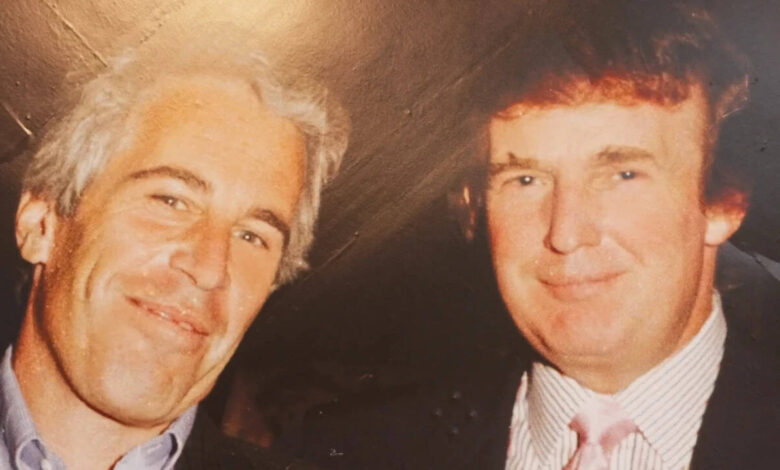
The dispute centers on a report published by The Wall Street Journal last year, which detailed a letter and drawing allegedly bearing Trump’s name within a birthday album compiled for convicted sex offender Jeffrey Epstein’s 50th birthday in 2003. According to the newspaper’s investigation, the album was assembled by Ghislaine Maxwell, Epstein’s associate and convicted sex trafficker. The letter, which predated Epstein’s 2006 arrest, contained text framed by the outline of a hand-drawn naked woman and concluded with the phrase, “Happy Birthday — and may every day be another wonderful secret.” The publication of this story occurred during a period of intense bipartisan scrutiny regarding the administration’s handling of Epstein-related documents.
Trump’s legal team alleged that the letter was a fabrication, asserting that the defendants “knowingly and recklessly” published false and disparaging statements that caused “overwhelming financial and reputational harm.” The complaint accused the Journal and its reporters of devising the story to defame the President. However, the core of the legal battle revolved not merely on the truth or falsity of the letter’s contents, but on the state of mind of the publishers. Under U.S. law, specifically the landmark 1964 Supreme Court ruling in New York Times Co. v. Sullivan, public figures must demonstrate “actual malice” to win a defamation suit. This standard requires proof that the defendant knew the statement was false or acted with reckless disregard for whether it was true.

Judge Gayles determined that the amended complaint did not meet this threshold. The judge noted that the allegations regarding malice were “conclusory, vague, sometimes inconsistent with the article, and often irrelevant to whether defendants knew or should have known that the statements in the article were purportedly false.” The ruling highlighted that the Journal’s coverage was the product of a “thoughtful and detailed investigation,” rather than a malicious attempt to harm the President’s reputation. Crucially, the judge pointed out that the article did not ignore or minimize Trump’s response to the allegations. Instead, the report informed readers that the President had denounced the letter as a fake and denied writing it.
Trump’s counsel had argued that because the President denied authoring the letter, the newspaper should have disregarded other investigative findings and refrained from publishing the story. Judge Gayles rejected this logic, stating that such a standard would violate the First Amendment’s protection of freedom of the press. “But that is not what the actual malice standard requires and runs afoul of the First Amendment,” the judge wrote. He further warned that if a public figure’s denial alone were sufficient to block publication, it would effectively silence negative or contradictory press, a result that “flies in the face of the ‘American privilege to speak one’s mind’.”

This dismissal follows a prior procedural victory for the defendants. In April, Judge Gayles had already dismissed an earlier version of the lawsuit, ruling that Trump had not adequately argued that the publication was intended to be malicious. At that time, the judge granted the President leave to file an amended complaint, which was subsequently filed in May. The Saturday ruling represents the final judgment on this specific claim, barring any further litigation on these grounds. The decision underscores the high burden of proof placed on public officials seeking to challenge journalistic investigations, reinforcing the editorial independence of major media outlets in the face of political pressure.
The case also highlights the broader context of Trump’s frequent legal clashes with media organizations during his second term, where he has often accused news outlets of spreading “fake news.” While the White House did not immediately issue a public reaction to the Saturday decision, the ruling serves as a significant precedent in the ongoing legal tensions between the executive branch and the press. The underlying facts regarding the 2003 birthday album remain a matter of public record and continued discussion, but the legal avenue for the President to challenge the Journal’s reporting on this specific matter has been closed. The next confirmed legal step is nonexistent for this specific claim, as the dismissal with prejudice ends the litigation permanently.