
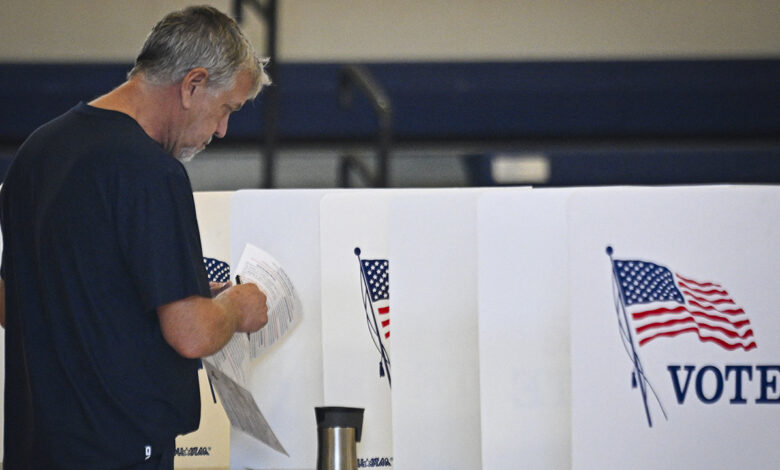
This focus on affordability marks a significant shift in the economic narrative heading into Election Day. A Fox News survey conducted between October 9 and 12 revealed that 74% of respondents gave the economy a negative rating, while 53% expect conditions to worsen in the coming year. Only 18% of voters believe their family is in a better financial position than it was two years ago. These figures suggest that despite official claims of economic growth, the lived experience of many consumers is defined by persistent price pressures rather than tangible gains in purchasing power.
The resurgence of inflation is a central driver of this sentiment. The most recent Consumer Price Index (CPI) data for September showed inflation rising to 3.7% year-over-year, a figure that runs well above the Federal Reserve’s 2% target rate. This increase follows a period where inflation had been on a downward trend, reaching a low of 2.3% in 2025 and starting 2026 with a 2.4% reading in January. The recent acceleration signals that the post-pandemic inflationary environment, which peaked at 9.1% in June 2022, has not fully dissipated, but rather settled into a new, higher plateau.
Economists and policymakers are divided on the primary causes of this renewed pressure, though several factors are consistently cited. Ben Lieberman, a senior fellow at the Competitive Enterprise Institute, points to geopolitical events, specifically the Iran war, as a key catalyst. He estimates that the conflict has added $860 to the cost of living for U.S. households through higher energy prices. Lieberman argues that the visibility of gasoline prices—where consumers know the cost down to the tenth of a penny—amplifies the psychological impact of inflation, even if other components of household budgets are more stable.
Meanwhile, Olivia Mitchell, an economics and public policy professor at the Wharton School of the University of Pennsylvania, emphasizes the structural impact of trade policies. She notes that tariffs are making much of what consumers purchase more expensive, contributing to a cycle of frustration that is likely to be reflected in the election results. Mitchell highlights that while headline inflation may have eased from its peak, prices have not returned to pre-surge levels. “We don’t get a refund on that,” Mitchell explained, noting that the high inflation of previous years has created a permanent shift in the cost baseline, leaving households with less discretionary income.
The consequences of these economic conditions are visible in consumer behavior and household finances. Families are facing high mortgage rates, auto loan payments, and credit card balances, which collectively hinder the ability to rebuild savings or prepare for retirement. Lieberman observed that this financial strain has led to observable changes in spending habits, such as consumers downsizing vacation plans to manage budget constraints. The inability to easily undo price increases means that even if inflation stabilizes, the cumulative effect on household budgets remains a persistent burden.
For the political landscape, these economic indicators present a significant challenge. Democrats have characterized the administration’s record on inflation as a failure, while the White House continues to cite broader measures of economic growth. However, Mitchell argues that the affordability debate is forcing policymakers to move beyond abstract claims of growth and instead demonstrate how their policies improve the financial security of everyday households. The disconnect between macroeconomic metrics and microeconomic realities is at the heart of the current economic tension.
As the votes are tallied, the outcome will likely set the trajectory for future economic policy, including decisions on public spending, regulatory frameworks, and trade relationships. The midterm elections serve as a direct referendum on the cost of living, with voters weighing the tangible impacts of energy prices, tariffs, and debt against the administration’s economic record. The next policy decisions will be scrutinized for their ability to address these specific household pressures, marking a critical moment for both the U.S. economy and its political direction.