Political analysts note that one dynamic is already clear: candidates can no longer afford to maintain half-baked AI agendas. The election cycle has seen the emergence of a distinct type of political spending, where interest groups are attempting to make AI policy itself a central campaign issue rather than simply supporting or opposing candidates based on their existing positions.
The Breakthrough of AI as a Campaign Issue
Advocacy groups on both sides of the regulatory spectrum are testing the waters with targeted advertising. The Guardrails Alliance, a pro-regulation group, has launched ads in Arizona, Montana, North Carolina, and California, targeting both Republicans and Democrats over their specific positions on AI. In Michigan, the alliance backed Senate candidate Abdul El-Sayed, who has identified AI as the most important issue heading into Election Day, explicitly tying it to concerns about jobs and affordability.
Democratic group Tomorrow Together has similarly launched advertisements in Michigan, Wisconsin, Arizona, and Pennsylvania, focusing on the Republican track record regarding AI. Conversely, competing AI-focused groups Public First and Leading the Future spent more than $50 million through affiliated super PACs across nearly 50 races. However, a notable distinction in strategy is evident: while these groups invested heavily, their television and digital advertising largely avoided the issue of AI itself, suggesting a more indirect approach to influencing the political landscape. These divergent strategies offer an early test of whether explicitly campaigning on AI is a viable tactic for the 2028 cycle.

Musk’s Political Influence: Asset or Liability?
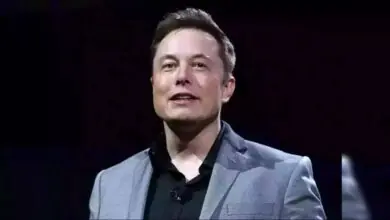
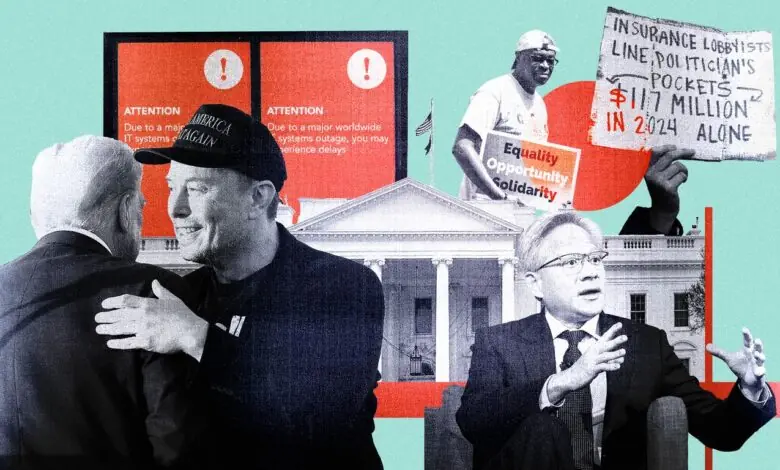
Elon Musk’s political spending, his involvement with the Department of Government Efficiency (DOGE), and his ties to the Trump administration have made him both a powerful political backer and a target for Democratic attacks. Musk was the largest donor in the midterms by a significant margin, contributing more than $400 million. Several high-profile races will serve as barometers for whether Musk’s financial support helped elect Republican allies or provided Democrats with a useful target for opposition.
In Texas’ 10th District, Republican Chris Gober, who represented Musk in connection with DOGE, faces Democrat Caitlin Rourk. In Kansas’ 1st District, Democrat Lauren Reinhold has leaned into her experience with DOGE, criticizing Musk’s influence over the federal government in her challenge against Republican Representative Tracey Mann. At the state level, the dynamics are equally pronounced. In the Ohio Senate race, Republican Jon Husted has benefited from spending by Musk’s America PAC in his contest against Democrat Sherrod Brown. Similarly, in Texas, Musk-affiliated spending has made the Senate contest between Democrat James Talarico and Republican Ken Paxton another key test of the billionaire’s political influence.
The Rise of the AI Safety Movement in Congress
Beyond the influence of major donors, the 2026 midterms will help determine the size and influence of the AI safety movement within the next Congress. A handful of candidates aligned with stronger AI safeguards could form a vocal bloc, pushing back against industry efforts to limit regulation. The outcome of these races is an important indicator of where the fight over AI regulation is headed in 2027 and beyond.
Key races include the Michigan Senate contest, where El-Sayed seeks to establish a new cabinet-level federal agency to regulate AI and implement a ban on superintelligence. He has utilized Musk’s political involvement to attack Republican opponent Mike Rogers, who has benefited from Musk-affiliated spending. In Colorado’s 8th district, Democrat Manny Rutinel, who sponsored the nation’s first comprehensive AI bill, is also focused on advancing regulatory frameworks. In California’s 11th district, Democrat Scott Wiener’s AI transparency legislation, which was at the center of a regulatory fight that divided the industry, offers a preview of the battles likely to unfold in Washington. Finally, in Minnesota’s 2nd district, Democrat Matt Little is seeking to add to the national push to ban data center construction and non-disclosure agreements.
While many factors will shape the outcomes of races across the country, the competing AI factions will be quick to claim victories, explain away losses, and draw lessons about what worked before the 2028 presidential cycle. The upcoming election day will thus serve not just as a test of local and state leadership, but as a foundational assessment of the political viability of the AI agenda.