The US sanctions were imposed on Wednesday, aiming to disrupt the logistical channels through which Iran secures air-defense capabilities. The operation is part of a broader American effort to economically isolate Tehran and end the ongoing conflict between the two countries. By targeting nodes in Belarus, Russia, and Nigeria, Washington is signaling that its sanctions regime extends beyond direct state-to-state transactions to encompass the transnational networks that facilitate arms transfers. The inclusion of a Nigerian entity highlights the complex, multi-jurisdictional nature of illicit arms procurement, where third-party states often serve as intermediaries in the shadow of international restrictions.
While Washington tightened its economic grip, the FT uncovered a production schedule from Vympa, a major Russian defense manufacturer, indicating a substantial arms transfer to Iran. The documents, described as recently uncovered, outline a 2024–2025 production schedule for helicopter-mounted missile launchers. These systems are noted for their extensive use in the Russia-Ukraine War. The production schedule lists seven Russian customers and two foreign buyers: China and an entity designated as “K-10.” According to a person familiar with the matter and internal Russian documents obtained by the FT, “K-10” is the code name used by Russia’s state-owned arms agency to refer to Iran.
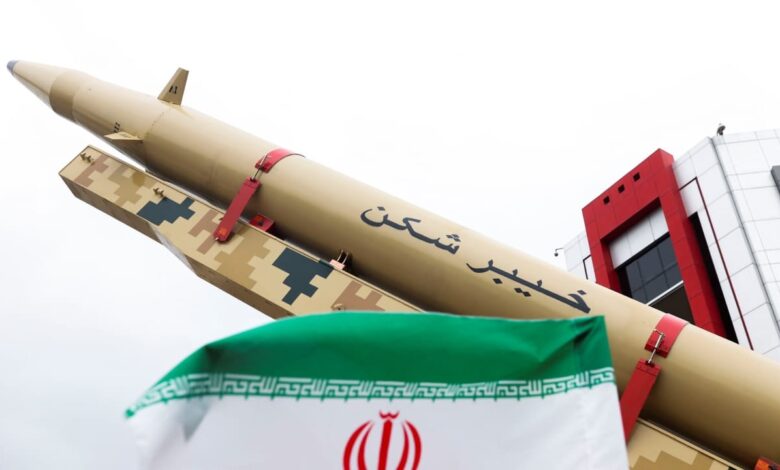
The technical specifications of the weapons in question underscore the strategic shift in Iran’s air-defense capabilities. A representative of Dallas Analytics explained to the FT that the missiles in question are significantly faster than drones, traveling at approximately 230 meters per second and covering 14 kilometers in about a minute. The tactical doctrine associated with these systems is described as “shoot-and-scoot,” involving moving to a firing position, launching the missile, and withdrawing quickly before counter-battery fire can be mounted. This capability represents a qualitative leap in Iran’s ability to protect its infrastructure and challenge aerial threats, moving beyond static defense to mobile, high-speed engagement.
These developments do not occur in a vacuum but are part of a broader trajectory in Iranian-Russian relations. The relationship has evolved from a largely transactional arrangement into a structured, strategic alliance that deepens across military, economic, and geopolitical domains. This shift was formalized by the Iranian-Russian Treaty on Comprehensive Strategic Partnership, signed in January 2025. The treaty expanded economic cooperation despite US and international sanctions while simultaneously strengthening military ties. The FT has previously reported on other aspects of this cooperation, including Russian assistance in the manufacturing of supersonic cruise missiles, the sale of shoulder-launched anti-air missiles, and support for Iran’s nuclear weapons program.
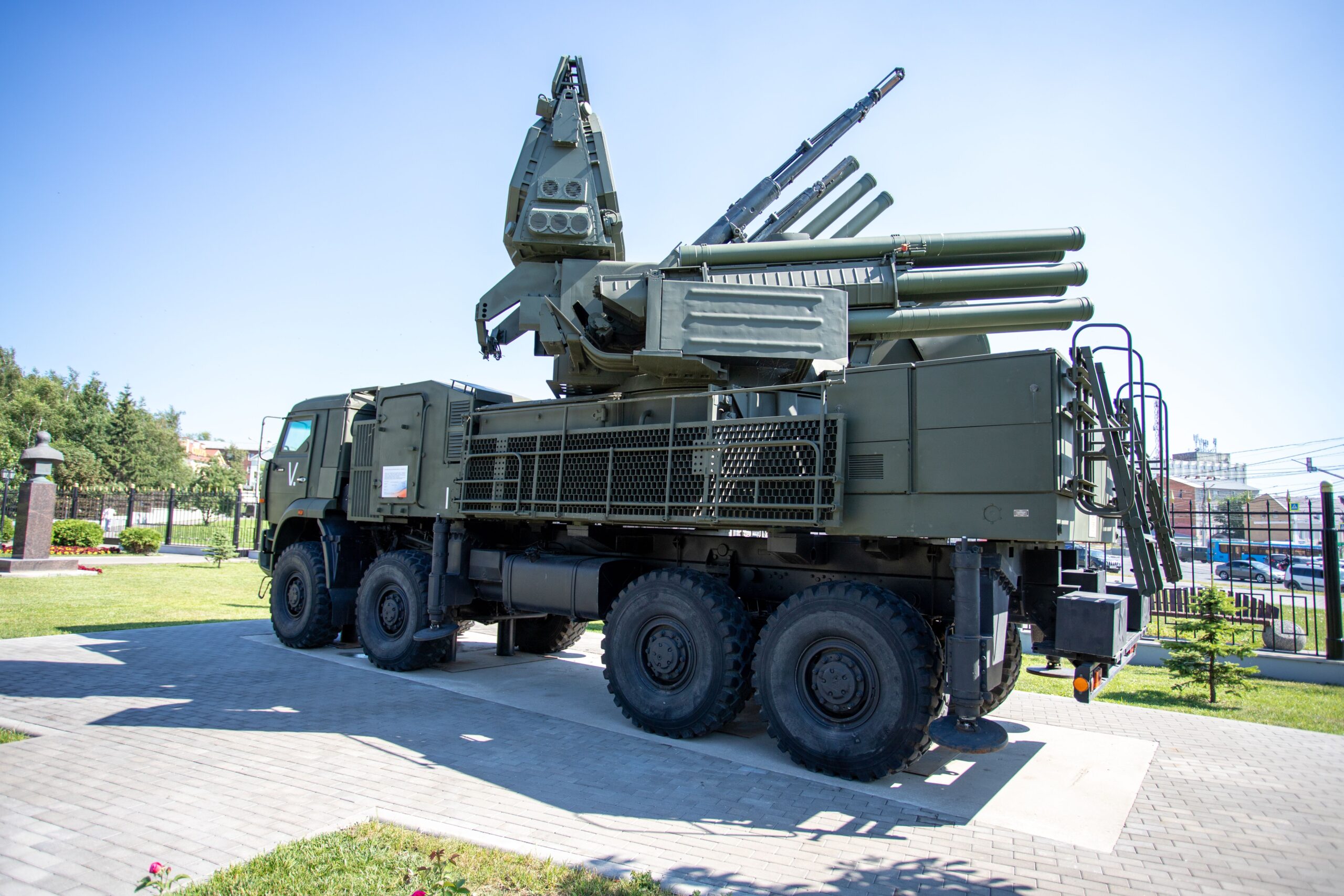
The implications of this alliance are further highlighted by additional contracts and statements from Iranian officials. The FT noted that at least one contract for Yak-130 jet trainers and light attack aircraft aligns with publicly reported deliveries to Iran in 2023 and 2024. Furthermore, earlier this week, General Mohammad Akraminia, a spokesman for the Iranian Revolutionary Guard Corps (IRGC), told local media that Iran is expected to receive Russian-made Su-35 fighter jets after the conclusion of the US-Iran war. Akraminia claimed that before the war began at the end of February, the IRGC was in the final stages of procuring these jets, which were originally meant to arrive prior to the conflict. He stated to the Persian-language outlet Tabnak, “We have also made progress domestically. Of course, purchasing equipment from abroad will bring us closer to advanced technologies, which we can then use as a foundation for further development.” While Akraminia did not explicitly name Russia in the interview, the Su-35 is exclusively designed and produced by Russia’s Sukhoi, part of the United Aircraft Corporation.
Analysts suggest that Russia’s willingness to continue supplying Iran, despite its own heavy wartime demands in Ukraine, signals a shift in Moscow’s strategic priorities. Nicole Grajewski of the Carnegie Endowment for International Peace told the FT that the deals are indicative of Russia’s decreased concern regarding Western objections. “It is indicative of Russia’s willingness to continue supplying Iran despite its own wartime demands and with far less concern about Western objections than in the past,” she said. This posture suggests that Moscow is prioritizing its long-term geopolitical partnership with Tehran over the potential diplomatic friction with the West, viewing the alliance as a critical component of its global strategy.
The convergence of US sanctions and Russian arms deliveries creates a tense dynamic in the region. For the United States, the sanctions represent an attempt to choke off the technological and material flows that enhance Iran’s military resilience. For Iran and Russia, the continued flow of advanced weaponry, from MANPADS to Su-35 fighters, demonstrates a commitment to a security architecture that operates largely outside the purview of Western enforcement mechanisms. The designation of Iran as “K-10” in Russian state documents and the specific production schedules for missiles used in the Ukraine conflict reveal the depth of industrial and logistical integration between the two nations.
As the US continues Operation Economic Outcast, the focus on specific individuals and entities in third countries like Nigeria and Belarus underscores the difficulty of enforcing isolation in a globalized economy. The revelation that Russia is supplying advanced, fast-moving missile systems to Iran complicates the security calculus for regional actors and US military planners. The “shoot-and-scoot” capability of these systems, combined with the anticipated arrival of Su-35 fighters, suggests that Iran is building a layered, mobile air-defense network designed to withstand prolonged conflict. The next phase of this geopolitical standoff will likely involve further US enforcement actions against the supply chains identified in the recent sanctions, while Russia and Iran continue to operationalize the military capabilities outlined in their 2024–2025 production agreements.