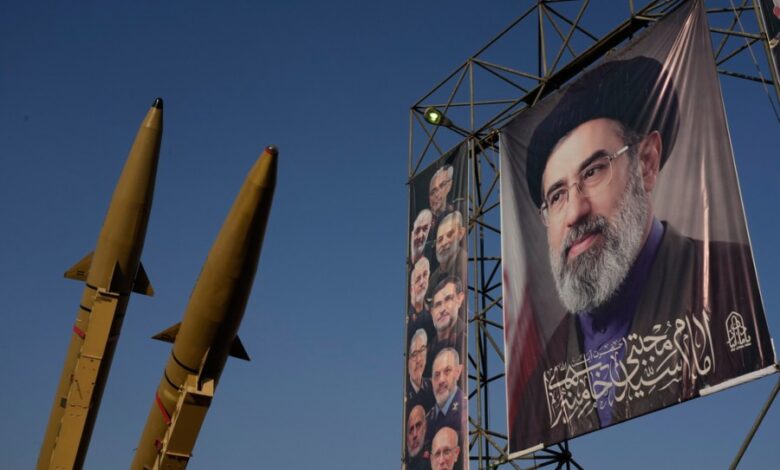
Iranian officials are interpreting the timing of these strikes as a sign of weakness ahead of the vote. Tehran is likely to conclude that Iran is the biggest winner of Tuesday’s election. This assessment follows a 25-page letter sent last month by Gen. Hossein Mohebbi, the spokesperson for the Islamic Revolutionary Guard Corps, to the “Honorable People of the United States of America.” In that letter, Mohebbi encouraged American citizens to vote against President Trump in the midterms to change U.S. policy toward Tehran. The recent military strikes appear to align with this narrative, suggesting that the U.S. may be resorting to covert or limited kinetic actions rather than broader diplomatic or military escalation as the election approaches.
The political dynamic is further complicated by recent statements from U.S. officials. Iran’s parliament speaker mocked Vice President JD Vance’s assessment of the midterm race, characterizing it as exhibiting “losing gambler energy.” This public rebuke highlights the tension between the two nations’ leaderships on the eve of the U.S. vote. While the U.S. has engaged in military operations, Iranian rhetoric has shifted toward framing the domestic political outcome as a direct consequence of U.S. foreign policy, aiming to mobilize domestic sentiment against the current administration.

The interplay between U.S. military actions and the midterm election cycle creates an uncertain environment for regional stability. The strikes on Qeshm Island and other targets in the Strait of Hormuz underscore the continued volatility in the region. However, the specific strategic goals of these limited strikes, beyond the immediate neutralization of anti-aircraft capabilities, have not been fully detailed in public statements. The focus remains on whether the outcome of Tuesday’s election will lead to a shift in U.S. policy toward Iran, as anticipated by Tehran, or if the current trajectory of intermittent military engagement will continue regardless of the electoral result.
The immediate consequence of the Monday strikes is a heightened state of alert in the Strait of Hormuz, though no further large-scale engagements have been reported. The next significant event will be the outcome of the U.S. midterm elections on Tuesday, which will determine the political landscape in Washington and potentially influence future U.S. interactions with Tehran.