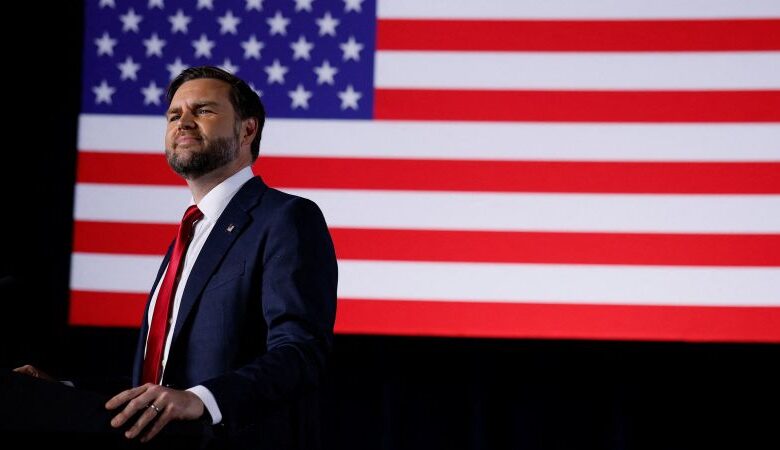
The remark represented a sharp, public acknowledgment of a political fracture within the administration. While Vance has previously backed the conflict, which began with US and Israeli attacks on Tehran in February, Washington insiders report that he expressed opposition in private meetings with administration officials. Until Wednesday, those disagreements remained behind closed doors. Now, facing a “bruising election defeat,” Vance made clear that he viewed the decision to go to war as a significant political mistake.
“If you’d like to argue it was worth it, that losing the Senate for the next 6 years was worth it, then do so,” Vance wrote. “Argue it was a worthwhile cost to pay. Agree or disagree, that’s at least honest.”
Analysts describe the statement as striking, noting it is difficult to recall a similar moment in recent US political history where a sitting vice president has so sharply diverged from the president on a signature foreign policy issue. Daniel Byman, a foreign policy expert at the Center for Strategic and International Studies, characterized the post as “a way of separating himself from Trump.” However, Byman added that drawing such contrasts will be a delicate balancing act should Vance seek the presidency in 2028.

President Trump, who has traditionally demanded steadfast loyalty from senior advisers, responded to the criticism with an unexpected degree of tolerance. In interviews late Tuesday and Wednesday, Trump defended the war but conceded that it played a factor in the midterm results. “I know how he feels about it. I think it was — I think it was fine,” Trump told reporters. “I knew that when I went in, and we stopped them from having a nuclear weapon, and they will never have a nuclear weapon.”
Trump further stated that he would “do it again” if given the same choices, suggesting that while he accepts the political cost, he does not regret the strategic decision. This response was interpreted by some as an early sign that Trump may grant Vance a “wide berth” if the vice president launches a presidential campaign. According to The New York Times, Vance showed the message to Trump before posting it online, a detail that adds complexity to the narrative of a public break.
Beyond the war, Vance’s post outlined a broader political roadmap, distilling the party’s strategy for regaining voter trust into a four-point plan: 1) End the war, 2) Focus on cost of living/inflation, 3) Put America First, 4) Change our relationship to Israel. The list, which encapsulates much of Vance’s worldview since his rise to national prominence, read like the core argument for a future stump speech.
Vance also addressed domestic enforcement policies, stating he was “open to the idea that we should change enforcement —by focusing more on businesses that hire illegal labor.” He framed this not as a retreat on immigration, but as a shift in tactics, contrasting it with “amnesty” pushed by “gaslighting” establishment politicians. Additionally, Vance defended Fox News host Rachel Campos-Duffy’s calls for a diplomatic end to the Iran war, a move that signals a potential breach with Trump, who is reported to be considering new strikes.
The juxtaposition of the two leaders’ post-election activities highlighted the diverging paths ahead. While Vance focused on salvaging an electoral coalition, Trump appeared to celebrate his own legacy. In his half-built White House ballroom, Trump watched the final beam rise to the roof, describing the space with visions of chandeliers and marble floors. “Envision chandeliers all over here soon. Envision marble floor. Oh, it’s going to be beautiful,” he said. Observers noted that this focus on a “vanity project” epitomized the disregard for cost-of-living concerns that doomed the GOP in the midterms, even as Vance agonized over how to pull the party out of its defeat.
The midterm results have flipped Congress, limiting Trump’s domestic powers while leaving his foreign policy leverage intact. For Vance, the next two years will be a test of whether his “toe in the water” comments represent a genuine shift in Republican strategy or a calculated maneuver to position himself for 2028. Ashley Davis, a Republican strategist, told the BBC that Vance “put his toe in the water to see what he’s going to do.” The vice president’s office has not yet made an official decision on a presidential run, with aides insisting he is still mulling it over.
As the Republican Party surveys the wreckage of the midterm elections, the tension between the president’s strategic conviction and the vice president’s electoral pragmatism remains unresolved. Whether this marks the beginning of a formal split or merely a temporary realignment will depend on how each leader navigates the upcoming legislative session and the growing pressure to address the economic anxieties that drove voters away.