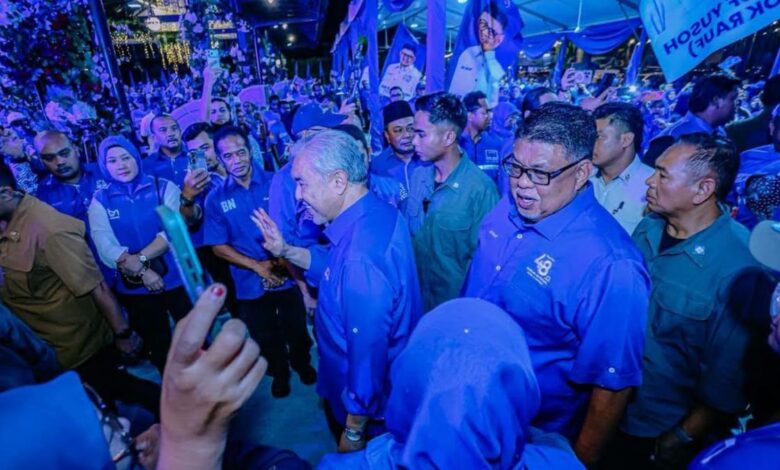
The political significance of this state poll extends far beyond the local issues of jobs and cost of living. It is a simulation of the coalition dynamics that will define national politics. Following the 2018 general election, Melaka experienced two state administration collapses within a single term. The Pakatan Harapan (PH) administration fell in March 2020, weeks after the “Sheraton Move,” a hotel-suite coup in which defecting Members of Parliament toppled the federal government led by Mahathir Mohamad. The incoming Barisan Nasional (BN) administration was itself toppled in October 2021 when four assemblymen withdrew support. The subsequent snap election in November 2021 produced pitched three-way contests for the dominant ethnic Malay vote, with BN prevailing. Notably, 13 of the state’s 28 seats were won by margins of under one thousand votes, underscoring the state’s volatility.
As the campaign enters its final days, the factors that produced earlier havoc have been replaced by new, intricate, and sometimes contradictory arrangements. The BN coalition, led by the United Malays National Organisation (UMNO), and the Perikatan Nasional (PN) coalition, currently dominated by Parti Islam Se-Malaysia (PAS), are campaigning as allies under a seat-sharing pact known as Penyatuan Ummah (Malay unity). Their objective is to defend existing strongholds while making inroads into PH-held constituencies. Melaka, traditionally a BN stronghold in its predominantly Malay rural areas, has also seen PH, particularly the Democratic Action Party (DAP), establish a foothold in urban centers due to the state’s substantial non-Malay minority population.

In a stark reversal of history, PH appears to have an informal arrangement with Parti Pribumi Bersatu Malaysia (Bersatu), the very party whose defection in 2020 brought down the PH federal government. This 11th-hour electoral pact is aimed at arresting PH’s string of recent electoral setbacks. However, the alliance faces significant skepticism. Bersatu enters the race severely weakened following a falling-out with PAS in June and a wave of high-profile defections among its Melaka leadership. Notable figures who switched allegiances to Wawasan, a splinter party led by former Bersatu secretary-general Datuk Seri Hamzah Zainudin, include Masjid Tanah MP Datuk Mas Ermieyati Samsudin and N24 Bemban incumbent Dr Mohd Yadzil Yaakub. Whether PH and Bersatu can overcome their bitter history to convert their understanding into actual votes remains an open question, especially as the two parties are still locked in direct clashes across several state seats.
Adding a new variable to the equation is Parti Bersama Malaysia (Bersama), launched just over five months ago by former PKR leader Datuk Seri Rafizi Ramli. Despite its newcomer status, Bersama has demonstrated potential to influence outcomes, particularly in constituencies where it fields its 16 candidates. The party combines conventional grassroots engagement with an extensive online presence, mirroring its previous strategy in Johor. Its “Jelajah Trak Kancil” campaign involves candidates holding speeches from a small truck, streamed live on YouTube, drawing approximately 80,000 views per broadcast. Former economy minister Rafizi Ramli has been accompanying candidates on the ground, using government data to scrutinize the incumbent administration’s financial position. He has called for better revenue collection and a review of spending priorities, reflecting a data-driven approach to public administration.

Bersama’s platform centers on reform, including a pledge by all 16 of its candidates for a fresh investigation into the death of Teoh Beng Hock, the introduction of an Anti-Torture Act, and comprehensive reforms of the Malaysian Anti-Corruption Commission. The party has also invited Teoh’s sister, Teoh Lee Lan, to campaign events, reviving messages from previous elections. Meanwhile, political analyst Amir Fareed Rahim of KRA Group notes that despite competing national narratives, campaigning has been relatively subdued, with local economic concerns taking precedence. Jobs, the cost of living, and the tangible benefits of development projects to local communities are the primary drivers of voter sentiment.
The electoral arithmetic is tight. PH will contest 24 seats, with PKR fielding 10 candidates and DAP and Amanah seven each. BN will contest 22 seats, with UMNO fielding 18 candidates. PN, as a strategic partner to BN, has named candidates for five seats, while Bersatu is set to contest eight. The Election Commission has set November 14 as polling day, with early voting scheduled for November 10. As the war drums beat for this final pre-general election state poll, the outcome in Melaka will provide the clearest indication yet of which coalitions have successfully navigated the post-Sheraton political landscape and which remain fractured.