
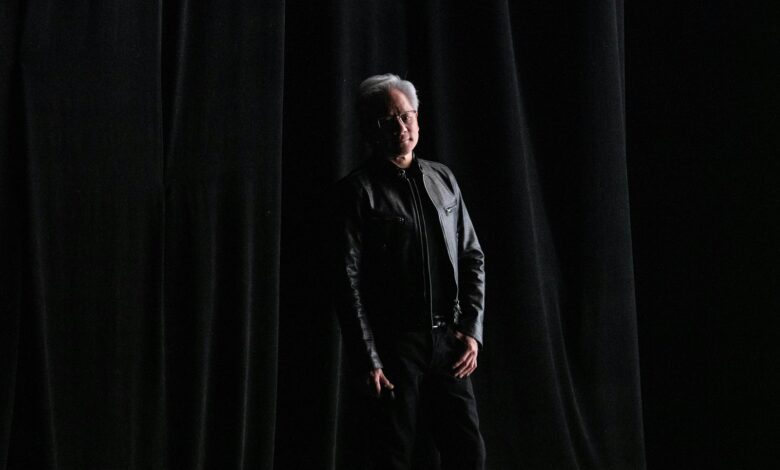
The resignation comes amid a complex web of personal and legal issues. Huang admitted to being “unfaithful” to his wife, acknowledging an affair with Alice Huang, a Chinese citizen and former executive at Megaspeed, a Singapore-based data center company. U.S. intelligence agencies allege Alice Huang is a spy for China. The New York Times reported that Huang was caught on video in March engaging in inappropriate conduct with Kimberly Powell, Nvidia’s vice president of healthcare, and Reuters later reported a second affair with another Nvidia employee. These revelations triggered a board investigation into whether Huang was the target of a foreign intelligence effort, and class-action lawsuits have already been filed, citing potential conflicts of interest and violations of securities law.
Technologically, Huang’s departure is significant because he was the architect of Nvidia’s transformation from a graphics chipmaker into the dominant force in AI computing. Since co-founding the company in 1993, Huang steered the pivot from gaming GPUs to general-purpose AI semiconductors, backed by a robust software ecosystem. This strategy drove a near 500% rally in Nvidia’s shares over the past five years. At one point, Nvidia accounted for 8% of the entire S&P 500; while that figure has since slipped below 6%, its market capitalization remains gargantuan. The company’s dominance is not merely in hardware sales but in its role as a financier of the AI ecosystem.

This financial role is now under scrutiny. Nvidia provides financing to “neoclouds”—companies like CoreWeave, Nebius, and IREN—to help them build AI infrastructure. According to its last quarterly filing, Nvidia had $36 billion in off-balance-sheet AI cloud agreements, or backstops, for these partners. Goldman Sachs analyst James Schneider noted that while Nvidia is expected to fulfill existing commitments, it may be more difficult for the company to negotiate new multi-party investments at the same scale going forward. The credit market has reacted with caution. Although there has been no broad shock, tech bond yields have risen, and spreads on credit default swaps have widened, particularly for lower-rated names. The yield on Nvidia’s 4.5% bond due in 2031 sat at 5.77% on Friday, nearly 6% higher week to date, while CoreWeave’s 9.75% bond due in 2031 traded at a 14.75% yield. These metrics suggest investors are reassessing the risk profile of AI debt, with smaller AI companies potentially feeling the impact if Nvidia scales back its financing support.
The leadership vacuum raises questions about corporate governance and the “imperial CEO” model. Management experts note that Nvidia’s situation is distinct from previous founder transitions. When Steve Jobs resigned from Apple in 2011, the company had an internal successor, Tim Cook, who had considerable preparation and evolved the company’s strategy in chip design and services. Similarly, when Larry Page and Sergey Brin stepped back from Google’s executive roles in 2019, the transition was planned, and shares have risen more than 300% under Sundar Pichai. Travis Kalanick’s departure from Uber in 2017, while scandal-driven, unfolded over months and paled in comparison to the suddenness of Huang’s exit. Michael Withers, a professor of management at the University of Notre Dame, stated that the successor will face challenges “well beyond those of a typical CEO replacing a founder,” as Huang’s charisma and bullish drive were central to Nvidia’s market positioning.
Currently, CFO Colette Kress serves as interim CEO. The board is searching for a permanent successor, but the task is complicated by Huang’s removal of potential sources of accountability. Critics argue that Huang made himself “indispensable,” a sentiment echoed by former Goldman Sachs CEO Lloyd Blankfein, who noted that “the graveyards are filled with indispensable men.” The resignation highlights the tension between the personal brand of a tech leader and the institutional stability required for a company of Nvidia’s scale. While the immediate credit market shock has been contained, the long-term implications for AI financing and corporate governance remain unresolved.
As the search for a new CEO begins, the focus shifts to whether Nvidia can maintain its role as the engine of the AI boom without the specific vision and market presence that Huang cultivated over three decades. The next confirmed development will be the appointment of a permanent chief executive, a decision that will test the resilience of Nvidia’s market position and its ability to continue supporting the expansive, debt-fueled growth of the AI infrastructure sector.




2 Comments