The statistical reality of United’s current form is stark. Across all competitions, the Red Devils have managed only three victories in 15 matches. More concerning for a squad assembled at considerable expense is the defensive fragility, having conceded 30 goals in that same span. This performance represents the worst start to a league campaign in 40 years. The situation reached a breaking point following a defeat to Bournemouth, an event that saw supporters boo the players off the pitch—a visible indicator of the fractured relationship between the club and its fanbase. Carrick, who had previously enjoyed a successful stint as interim boss before being handed the full-time role, was relieved of his duties on Thursday, paving the way for Pochettino’s arrival.
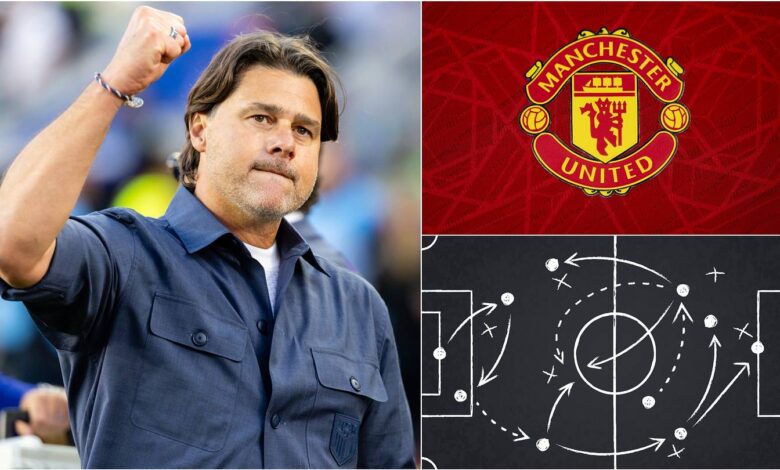
Pochettino, 54, is not a stranger to the scrutiny of Old Trafford. Reports suggest his appointment was “10 years in the making,” with links first surfacing in 2016, 2019, and 2024. He becomes the eighth permanent manager at Manchester United since Sir Alex Ferguson’s departure in May 2013. The club triggered a £7 million release clause in Pochettino’s contract with the U.S. Soccer Federation to secure his immediate availability. United stated that an agreement was reached with the US Soccer Federation to release Pochettino and his staff after the conclusion of their responsibilities with the U.S. Men’s National Team (USMNT).
The transition from national team duty to club football carries significant weight. Pochettino, who took charge of the USMNT in 2024 succeeding Gregg Berhalter, recorded 21 victories in 35 matches. Under his guidance, the co-hosts reached the round of 16 at the 2026 FIFA World Cup in North America. In a statement regarding his departure, Pochettino noted, “The opportunity to represent the USA crest was one of the greatest honours of my career.” He is expected to oversee the USMNT’s upcoming matches against Haiti before linking up with his new team in Manchester on November 18.
United’s hierarchy is banking on Pochettino’s tactical identity to stabilize a squad described as lacking confidence and identity. The club’s official statement highlights his “high-intensity, attacking style of football, his dedication to building strong, cohesive teams and his outstanding record of developing individual players.” This profile aligns with his most celebrated period at Tottenham Hotspur, where he led the club to the 2019 Champions League final and a runners-up finish in the Premier League in 2017. However, his subsequent managerial chapters at Paris Saint-Germain and Chelsea have been viewed with mixed assessment. While he won the Ligue 1 title with PSG and reached the League Cup final with Chelsea, these stints did not deliver the sustained dominance seen in North London. Critics point to an underwhelming Chelsea spell and a mixed time in the United as factors that may have pushed his Spurs achievements further into the rearview mirror.
The tactical puzzle Pochettino inherits is complex. The squad includes high-value assets that have yet to reach their potential, such as Carlos Baleba, a £70 million signing who has not yet established himself as a lynchpin. Conversely, players like Bryan Mbeumo have been among the more dependable elements since arriving in the summer of 2025. Reports indicate that Pochettino may favor a backline featuring dynamic fullbacks, with Alex Freeman and Alejandro Balde cited as potential options to refresh the wide areas. The center of the park presents a wealth of options, with Kobbie Mainoo and Baleba likely contesting for roles reminiscent of Mousa Dembélé’s technical yet physical presence during the Tottenham era.

Defensively, the arrival of an Argentine manager may offer a psychological boost to Lisandro Martínez, who has been described as “way off the pace” this season. The club is also reportedly targeting reinforcements, with Nathan Collins and Calvin Bassey identified as potential January window additions to address defensive concerns. Meanwhile, the future of Bruno Fernandes remains uncertain following reports that a second contract offer was turned down, leaving the club’s most creative player in a transitional phase.
Pochettino’s baptism by fire will come quickly. His first assignment at Old Trafford is a trip to Anfield to face Liverpool on November 22. The match serves as an immediate litmus test for the new regime, pitting United’s current crisis against one of the league’s strongest contenders. The wait to see if Pochettino can translate his historical tactical success into immediate stability for Manchester United begins now, with the clock ticking on a season that has already become a historic low point for the club.