The verdict was secured by a pivotal change in stance by Justice Carmen Lúcia, who cast the tie-breaking vote in favor of granting the habeas corpus petition filed by Lula’s defense. In 2018, when the proceedings initially began, Justice Lúcia had voted against the petition. However, she stated that new information presented since that time “may indicate the infringement on the impartiality of the judge.” “What is being discussed here is something very basic: everyone has the right to a fair trial, that includes due process and also the impartiality of the judge,” Justice Lúcia said. Her vote joined those of Justices Gilmar Mendes and Ricardo Lewandowski, who had voted to confirm the misconduct, overcoming the initial opposition from Justices Lúcia and Edson Fachin before the panel’s composition shifted.
The court’s findings identify specific instances of partiality that compromised the integrity of the trial. Justice Lúcia highlighted a series of violations, including irregularities in the summoning process, the illegal wiretapping of phone calls belonging to Lula, his family, and his attorneys, and the leak of sealed testimony from former Minister Antonio Palocci to the media. The justices noted that the illegal monitoring of defense communications allowed investigators to follow the defense strategy in real time, rendering a fair defense impossible. “Anyone who has been a lawyer knows that the interview with the lawyer is essential so that the right to defense is broad,” Lúcia remarked, underscoring the fundamental breach of legal rights.
This ruling follows a series of significant legal developments in the case. On March 8, Justice Edson Fachin had already annulled Lula’s two convictions, ruling that he had been tried in a court without proper jurisdiction. That decision established that Lula could be retried in federal court in Brasília. The March 23 ruling on judicial bias reinforces the annulment of the convictions by addressing the conduct of the judge who presided over the 13th Federal Court of Curitiba. The implications extend beyond Lula’s individual case; the ruling suggests that other proceedings against the former president handled by the same court under the scope of Operation Car Wash may also be subject to scrutiny.
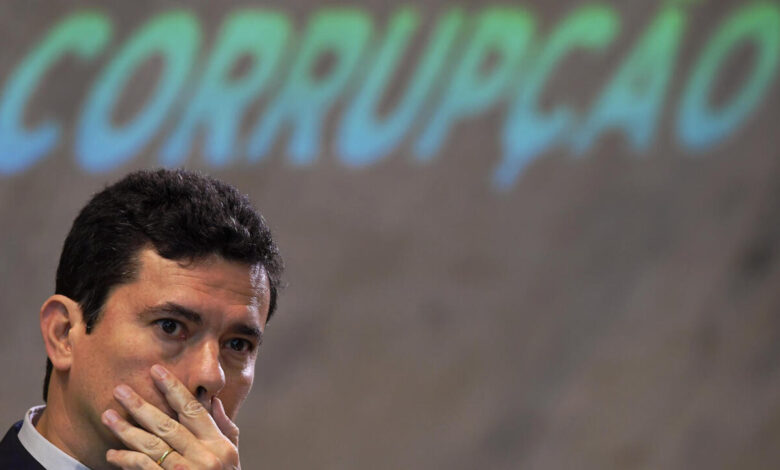
The decision casts a dark shadow over the reputation of Sérgio Moro, who transformed himself from a judge into one of Brazil’s most prominent public figures during the Car Wash investigation. Moro had sentenced hundreds of business and political leaders, earning reputations as both a hero and a zealot depending on one’s political perspective. Leaked messages published by The Intercept Brasil in 2019 had previously shown apparent collusion between Moro and Car Wash prosecutors during the process that ultimately jailed Lula for corruption and money laundering. Those convictions had sidelined Lula from the 2018 presidential elections under Brazil’s Clean Slate law, allowing Jair Bolsonaro to win the presidency. Moro subsequently served as Bolsonaro’s justice minister before resigning.
Lula’s attorneys, Cristiano Zanin Martins and Valeska Martins, described the decision as “historic and reinvigorating.” “We proved that Moro never acted as a judge, but as a personal and political adversary of former President Lula,” they stated in a public statement. They also cited the illegal monitoring of their phones as a key illegality that had been described in the ruling. For Lula, the legal victories have restored his political rights, positioning him as a strong candidate for the 2022 presidential election. Despite disapproval rates that run neck and neck with Bolsonaro’s, Lula is gaining momentum, particularly in light of the government’s handling of the coronavirus pandemic and the resulting economic inflation.
The political ramifications are extensive. Bolsonaro, who had previously relied on the Car Wash narratives, now faces a weakened position regarding the investigations. His attempts to court the “Centrão” bloc of politicians, many of whom were targeted by Car Wash, have been complicated by the Supreme Court’s actions. Meanwhile, Moro, who is still seen as a potential presidential candidate for 2022, faces serious obstacles in his political ambitions due to the censure from the Supreme Court. The ruling does not clear Lula of all charges, as the possibility of retrial in Brasília remains, but it fundamentally alters the legal and political landscape by confirming that the original trial was compromised by the lack of judicial impartiality.
As the legal battle continues, the focus shifts to the potential retrial in the capital. The Supreme Court’s intervention ensures that any future proceedings must adhere to strict standards of due process and judicial independence, a principle that Justice Lúcia emphasized as the central tenet of the ruling. The next confirmed legal step will be the organization of a new trial venue in Brasília, where Lula’s case will be re-examined by a judge unconnected to the previous irregularities identified by the STF.