
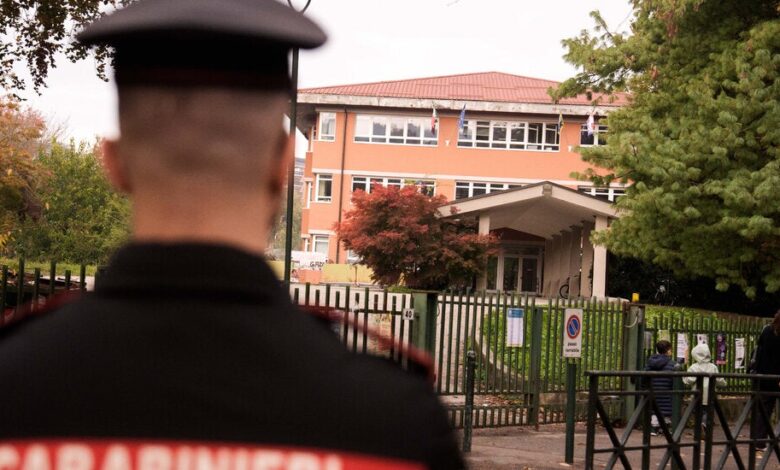
The directive, issued by the Italian government in a formal statement, clarifies that a “simple mass email” does not constitute sufficient grounds for evacuation. This guidance comes amid a surge in similar incidents across Europe, with reports of disruptions in Ireland, France, Spain, Poland, and other nations. While the specific perpetrators remain unidentified, European officials have characterized the events as part of a broader hybrid warfare strategy intended to sow confusion. Prime Minister Giorgia Meloni stated on Wednesday that the messages are not designed to inflict physical injury but to generate fear, mistrust, and chaos. “Above all, those who write them want our fear, wasted days, mistrust and chaos,” Meloni said.
From a tactical and operational perspective, the incidents represent a low-intensity, high-impact disruption to civilian infrastructure and air travel. The Italian Ministry of Defense and civil protection agencies have been tasked with distinguishing between genuine security threats and these coordinated hoaxes. The new protocol requires authorities to verify threats through concrete evidence before initiating the resource-intensive process of evacuation. This approach seeks to preserve public trust and ensure that emergency services are not diverted from genuine crises by repetitive, unverified alerts.
The scale of the disruption, while significant in terms of public perception, remains limited in operational terms. Officials noted that the number of flights affected this month constitutes a fraction of the tens of thousands of daily operations across Europe. For instance, when a new wave of emails threatened hundreds of Italian schools on Thursday, only a handful were evacuated, according to ANSA, Italy’s main news agency. This suggests that the initial shock of the campaign is wearing off, and compliance with the new “concrete evidence” standard is reducing the tangible operational impact on schools and transport hubs.

The strategic context of these incidents is increasingly linked to the spillover effects of Russia’s war against Ukraine. European security analysts have long warned of hybrid warfare tactics that target public morale and institutional resilience. By targeting high-visibility institutions such as schools and airports, the perpetrators aim to create a pervasive sense of insecurity. However, the limited number of actual evacuations and the restricted impact on air traffic suggest that the campaign has not yet succeeded in causing systemic failure or widespread panic.
The distinction between stated capability and demonstrated impact is crucial here. While the threats have caused significant anxiety and temporary disruptions, they have not resulted in confirmed casualties or major infrastructure damage. The focus of national security services is now on identifying the origin of the emails and the coordination mechanism behind the cross-border attacks. The lack of a single, identifiable state actor or non-state group responsible for the campaign complicates attribution, though the timing and nature of the attacks align with broader geopolitical tensions on the continent.
For defense and security planners, the incident highlights the vulnerability of civilian infrastructure to non-kinetic attacks. The response requires a coordinated effort between law enforcement, intelligence agencies, and civil protection services. The Italian government’s stance reflects a broader European trend toward resilience and skepticism toward mass-media driven panic. By requiring concrete evidence for evacuation, authorities are attempting to normalize the response to such threats and prevent the erosion of public confidence in institutional security.
The immediate next steps involve continued monitoring of email networks and social media for coordinated threats, as well as enhanced security protocols for critical infrastructure. The effectiveness of the new Italian directive will be measured by the number of unnecessary evacuations avoided and the ability to maintain normal operations in schools and airports. As the campaign continues, European officials are likely to issue further guidance to harmonize responses across borders, ensuring that the hybrid threat does not lead to a disproportionate or fragmented security response.
The unresolved question remains the identity of the actors behind the campaign and the extent of their resources. While the immediate threat to physical safety appears minimal, the psychological and economic costs of sustained disruption require careful management. The focus will remain on balancing public safety with the need to prevent the normalization of fear-driven responses, ensuring that the security apparatus remains agile and evidence-based in its operations.