
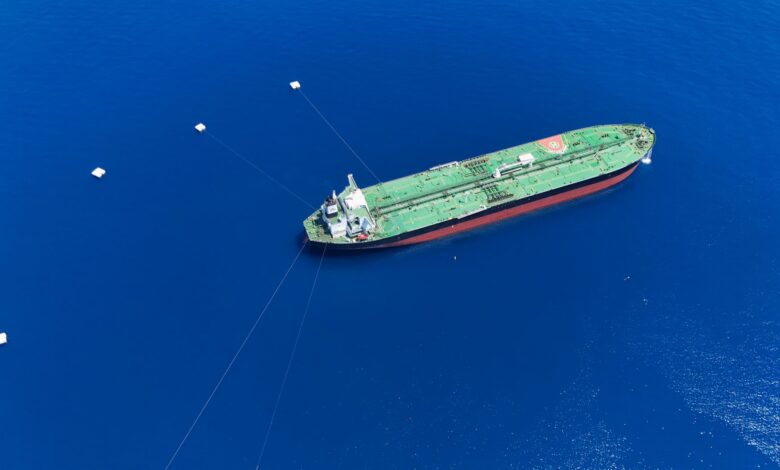
Maritime security sources have identified the weapons used in this specific incident as limpet mines, explosives designed to be attached directly to a vessel’s hull. Martin Kelly, Head of Advisory at EOS Risk Group, noted that this represents the first reported successful use of this tactic against merchant shipping in the waterway since the war began. The last time Iran utilized limpet mines against commercial vessels was in May 2019, when four ships anchored off Fujairah were attacked, followed by strikes on the tankers KOKUKA COURAGEOUS and FRONT ALTAIR in the Gulf of Oman the following month.
The attack occurred approximately 25 nautical miles northeast of Khasab, Oman, while the tanker was completing an outbound transit of the strait. UKMTO Warning 187-26 confirmed that the crew was safe, the fire had been extinguished, and there was no environmental impact. The vessel has since resumed its voyage. However, security analysts warn that the introduction of limpet mines adds a precarious layer to the threat environment. Kelly highlighted that the implications could be particularly severe for vessels waiting at anchor, where explosives could potentially be placed below the waterline without detection. “A limpet mine below the waterline will cause significant damage and water ingress,” Kelly said, noting the potential for catastrophic structural failure compared to the above-waterline strikes that occurred on the LOUISE 1.
This incident is part of a broader pattern of maritime instability that has affected multiple jurisdictions in the region. In a separate but related development, British military authorities confirmed on Thursday that an oil tanker was struck by two projectiles while navigating off the coast of Qatar in the Persian Gulf on Wednesday. The region around Qatar is of significant strategic importance, as the waters off the Qatari coast are central to the operations of QatarEnergy, the state-owned entity overseeing the nation’s extensive natural gas and oil production assets. At the time of the announcement, the nature and extent of the damage to the Qatari-bound tanker remained unclear, with technical assessments still underway to determine the ship’s structural integrity. Officials stated that the status of the crew had not yet been confirmed, adding a layer of uncertainty to the maritime security landscape.
Earlier in the week, on Saturday, the UKMTO reported that a cargo ship was involved in an incident with military forces in the Gulf of Oman. The event took place about 18 nautical miles east of Khor Fakkan in the United Arab Emirates. In that instance, the agency did not identify the specific vessel or the military forces involved, and details regarding the crew’s status, possible damage, and environmental effects remained unknown. Investigations into that earlier incident are continuing, and vessels in the area have been advised to monitor maritime security updates and remain alert.
Iranian authorities have also weighed in on recent maritime incidents, stating that a tanker hit a naval mine and caught fire east of the Strait of Hormuz. Tehran accused the vessel of operating in a prohibited area. While the specific linkage between this claim and the UKMTO-verified attack on the LOUISE 1 or the projectile strike off Qatar is not explicitly detailed in the available reports, the convergence of these events highlights a fragmented and volatile security environment. The lack of immediate information regarding the identity of attackers or their specific objectives in some incidents, such as the projectile strike off Qatar, complicates the assessment of intent. No group has yet claimed responsibility for the projectile attack off Qatar, though previous incidents in these waters have often been tied to broader regional tensions.
The economic implications of these disruptions are significant for global energy markets. The Strait of Hormuz and the Persian Gulf serve as critical arteries for the international transport of hydrocarbons. Repeated missile and drone strikes, now joined by contact mines, have forced increased vigilance by international naval coalitions operating in the area. For businesses and consumers, these events translate into heightened risk premiums for insurance and freight, as well as potential delays in the delivery of oil and gas. The shift in tactics—from distant missile fires to close-quarters mine attachments—suggests an evolving strategy aimed at maximizing disruption with minimal resources.
As of Friday, the incident involving the LOUISE 1 remained the primary focus of maritime safety reports in the region. Authorities are expected to conduct full investigations into these security breaches to determine whether vessels are being singled out for their commercial activities or if the events point to a broader shift in the security environment. For now, vessels operating in the immediate area have been advised to exercise caution and report any suspicious activity to relevant maritime authorities. The next critical data points to watch will be the results of the structural assessments on the tanker off Qatar and any formal attribution or policy response from regional powers regarding the use of naval mines in international transit lanes.




One Comment