The disruption stemmed from a failure in the nation’s air traffic control telecommunications system. Around 3:15 p.m. ET, pilots and controllers in the Midwest began reporting radio communication difficulties, with reports spreading from Grand Rapids, Michigan, to Moline, Illinois. President Donald Trump attributed the incident to “very, very old equipment that had a heart attack,” speaking to the press on Monday. While the immediate cause was technical, underlying staffing issues have been cited as a vulnerability; data indicates the FAA is currently facing a shortfall of 3,000 controllers, with pay structures tied to efficiency metrics that demand increased on-position time.
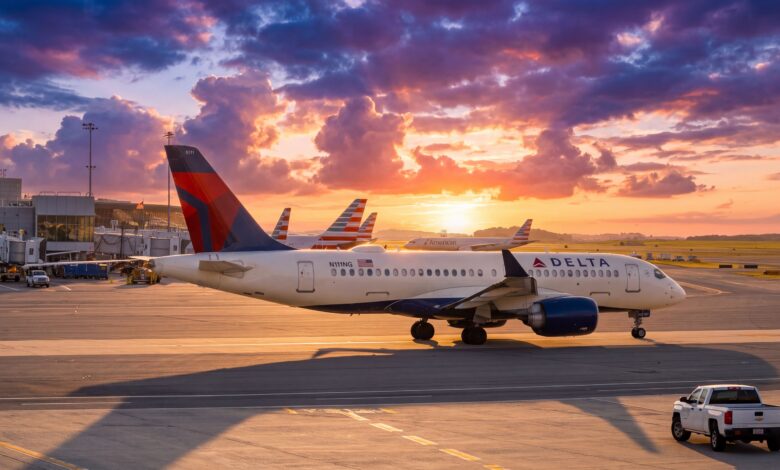
The four-hour ground stop resulted in significant cascading delays and cancellations. According to FlightAware data, American, Delta, Southwest, and United Airlines each canceled more than 1,000 flights on Friday, representing 26% to 34% of their respective schedules. By Sunday, the total number of canceled US flights exceeded 17,000. Saturday was particularly severe for American Airlines, which recorded 1,428 cancellations (42% of its schedule) and 1,062 delays. The chaos left approximately 1.5 million flyers stranded, with many, such as families connecting through Atlanta, facing indefinite delays and a lack of clear information from authorities.
Recovery efforts focused on repositioning displaced aircraft and crews over the weekend. By Sunday night, Transportation Secretary Sean Duffy stated that operations were nearing “full capacity,” while Delta Air Lines reported that “most flights are operating normally.” United Airlines CEO Scott Kirby described the recovery as a “call to action” to modernize US air traffic control facilities and address staffing levels. American Airlines confirmed it was prepared for a “largely normal schedule” on Monday, citing favorable weather and the repositioning of crews and aircraft.
As of Monday morning, operational metrics have improved significantly. Delta and United each registered only 10 cancellations, compared to 159 for American Airlines. While airlines have returned to standard schedules, they warn that residual disruptions may persist as the final displaced assets are sorted out. Delta noted that some customers may still experience delays, urging patience as the system stabilizes. The incident has reignited debate over the resilience of US aviation infrastructure, with recent safety concerns, including a midair collision over Reagan National Airport in 2025, heightening public scrutiny of air traffic control protocols.